


























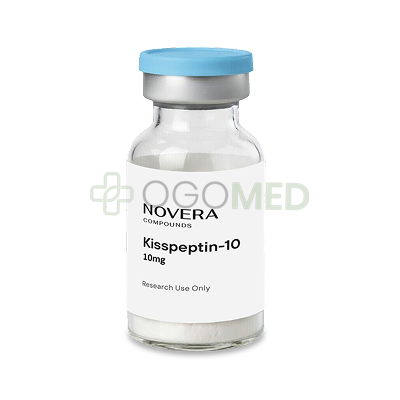
Novera Kisspeptin-10
In Stock
| Category: | Peptides |
| Brand | Novera |
| Strength | 10mg |
| Form | Lyophilized powder |
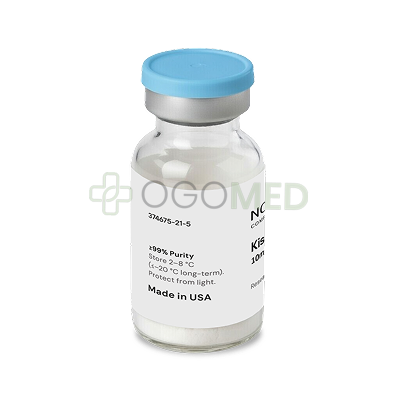
| Purity (%) | ≥99 |
| CAS number | 374675-21-5 |
| Chemical Formula | C₆₃H₈₃N₁₇O₁₄ |
| Molecular weight | 1302.4 |
| Synonyms | KP-10, Metastin-10, Kisspeptin-fragment, KISS1-peptide |
| Peptide sequence | Tyr-Asn-Trp-Asn-Ser-Phe-Gly-Leu-Arg-Phe-NH₂ |
| Storage | Store at 2-8 °C. Protect from light and moisture |
| Shelf Life (lyophilized) | 12-24 months |
| Shelf Life (after reconstitution) | 7-14 days |
Learn more...
Interest in Kisspeptin-10 has expanded considerably as researchers continue to investigate the molecular signals that coordinate endocrine communication, reproductive physiology, and neuronal function. Produced to a high purity standard, Novera Kisspeptin-10 is a synthetic peptide developed exclusively for laboratory research and other controlled scientific research settings.
The peptide has attracted attention because it represents the biologically active portion of a naturally occurring signaling molecule that participates in several interconnected physiological processes. Although investigations continue to reveal new aspects of its biological activity, this product is supplied intended strictly for research purposes and is not manufactured for human or veterinary use.
What Is Novera Kisspeptin-10?
Kisspeptin-10 is the shortest biologically active fragment derived from the larger family of kisspeptin peptides encoded by the KiSS1 gene. It was originally identified during investigations into mechanisms associated with tumor metastasis, yet subsequent studies demonstrated that its influence extends far beyond oncology and into endocrine regulation, developmental biology, and neurophysiology.
Today, the peptide is recognized as a valuable tool for researchers seeking to understand how individual signaling molecules coordinate communication between different tissues. Because it possesses a well-defined amino acid sequence and reproducible molecular characteristics, it is frequently incorporated into experimental models designed to examine receptor activation, hormone secretion, and neuronal signaling.
Unlike many regulatory peptides that participate in isolated cellular events, Kisspeptin-10 functions within interconnected endocrine networks. This makes it particularly useful for comparative studies exploring how multiple biological pathways converge to maintain physiological balance under different experimental conditions.
Kisspeptin-10 Characteristics
The growing scientific interest in Kisspeptin-10 is largely driven by its distinctive molecular profile and the diverse biological functions associated with this peptide, particularly its role in regulating gonadotropin releasing hormone GNRH. Although relatively short in length, it participates in complex signaling processes that continue to be investigated across endocrinology, neuroscience, and reproductive biology. Understanding its structural characteristics provides important context before examining the specific mechanisms through which the peptide exerts its biological effects.
Peptide Structure and Composition
One reason Kisspeptin-10 is widely selected for research is its relatively simple yet highly conserved molecular architecture. Its compact sequence retains the region responsible for receptor recognition while allowing investigators to work with a peptide that is easier to characterize than many larger protein hormones. The amino acid sequence is: Trp – Asn – Ser – Phe – Gly – Leu – Arg – Phe
Despite its modest size, the molecule demonstrates a defined structure that supports consistent receptor interaction under standardized laboratory conditions. Maintaining that structural consistency is essential because even subtle degradation may influence experimental outcomes.
Researchers generally value several structural features:
- High molecular purity suitable for controlled investigations.
- Reliable batch-to-batch consistency.
- Compatibility with numerous endocrine and neuroscience protocols.
- Stability when handled according to recommended procedures.
- Reproducible performance across different research models.
Because peptides are sensitive biological molecules, appropriate handling remains an important part of every experimental workflow. Proper laboratory practice helps preserve peptide integrity, reducing the possibility that degradation will influence receptor binding or biological responses during long-term investigations.
Reproductive Hormone Release
The best-characterized function of Kisspeptin-10 involves regulation of the reproductive axis, where it acts as one of the principal upstream signaling molecules controlling endocrine communication. Rather than acting directly on reproductive organs, Kisspeptin-10 primarily targets the kisspeptin receptor, a g protein coupled receptor expressed on specialized neuronal populations. Activation of this receptor contributes to gonadotropin releasing hormone secretion from GNRH neurons, initiating a cascade of endocrine events throughout the hypothalamic pituitary gonadal axis.
Under normal physiological conditions, this signaling network contributes to coordinated reproductive hormone release, eventually influencing circulating luteinizing hormone concentrations through pituitary activation. Researchers often summarize this sequence as follows:
- Kisspeptin binds its receptor.
- Neuronal activity increases.
- GNRH release is stimulated.
- Pituitary hormone secretion changes.
- Downstream endocrine responses become measurable.
Current evidence indicates that this communication network represents only part of a much larger regulatory system. Scientists continue examining interactions between Kisspeptin-10, hypothalamic cells, and neighboring hypothalamic neuropeptides, where multiple signaling mechanisms appear to operate simultaneously.
Beyond the G Protein Coupled Receptor
Although reproductive physiology remains the primary focus of investigation, ongoing studies suggest that Kisspeptin-10 may participate in additional intracellular mechanisms that extend beyond endocrine hormone secretion.
Published experimental findings indicate that receptor activation can influence several intracellular responses, including events that may possibly stimulate calcium mobilization as well as arachidonic acid release. These observations continue to support investigations into the broader signaling pathways associated with kisspeptin biology.
Some experimental data have also raised questions about whether selected responses may occur in a kisspeptin receptor independent manner under specific laboratory conditions. While these observations remain under active investigation, they illustrate how much remains to be learned about the complexity of peptide signaling.
Factors That Influence Experimental Results
Even when identical peptide batches are used, experimental outcomes may differ because multiple variables contribute to the final results. For this reason, researchers typically evaluate published findings within the context of each individual study rather than making direct comparisons across unrelated experiments.
Several factors can influence experimental observations:
- Peptide concentration – different concentrations may produce different levels of receptor activation and downstream signaling responses.
- Experimental model – cell cultures, tissue preparations, and animal studies often respond differently despite using the same peptide.
- Exposure time – short-term and prolonged incubation periods can reveal distinct biological effects.
- Analytical methods – hormone assays, molecular techniques, and imaging methods may vary in sensitivity and data interpretation.
- Sample handling – preparation procedures, storage conditions, and reconstitution methods all contribute to the overall consistency of experimental data.
- Study objectives – research focused on endocrine regulation may emphasize different outcome measures than investigations exploring neuroscience or receptor pharmacology.
Carefully standardized protocols help minimize unnecessary variability and improve reproducibility across independent laboratories. By controlling these experimental variables, researchers can more confidently distinguish genuine biological responses from findings that may be influenced by methodological differences.
Who Is Kisspeptin-10 Intended For?
Novera Kisspeptin-10 is manufactured exclusively for qualified professionals conducting research within regulated environments. It is supplied for controlled investigative work rather than therapeutic administration. Typical users include:
- university laboratories studying endocrine physiology;
- biotechnology research groups;
- pharmaceutical discovery teams;
- contract research organizations;
- academic institutions investigating reproductive biology;
- specialists developing new peptide-based experimental protocols.
Within these environments, investigators employ the peptide while examining endocrine regulation, receptor pharmacology, cellular communication, and broader peptide research applications. Its consistent molecular profile allows researchers to compare results across independent studies while minimizing unnecessary experimental variability.
Neuroprotective Effects
Research surrounding Kisspeptin-10 has gradually expanded beyond reproductive endocrinology. While its regulatory function within the endocrine system remains the primary focus, scientists have become increasingly interested in how kisspeptin signaling may influence neuronal communication, cognitive processing, and broader neurobiological networks.
Rather than acting as an isolated signaling molecule, Kisspeptin-10 appears to interact with several interconnected systems responsible for maintaining normal brain function. These observations have encouraged researchers to examine its potential relationship with neuronal plasticity, metabolic regulation, and communication between different populations of specialized neurons.
Research Directions to Focus On
- The interaction between kisspeptin signaling and brain derived neurotrophic factor, a protein associated with neuronal survival and synaptic plasticity.
- Possible effects on emotional brain processing, particularly within regions involved in social recognition and behavioral responses.
- Communication with multiple neurotransmitters involved in neuroendocrine regulation.
- Functional relationships with neuropeptide y, which is widely studied because of its role in energy balance and central nervous system signaling.
- The contribution of kisspeptin signaling to normal appetite regulation through hypothalamic networks.
- Ongoing investigations exploring possible links with appetite control mechanisms under different physiological conditions.
- Interactions involving choline acetyltransferase, an enzyme frequently examined in studies of cholinergic neurons.
- Measurements of dihydroxyphenylacetic acid as part of neurotransmitter metabolism research in selected experimental protocols.
Although these areas remain under active investigation, they illustrate how Kisspeptin-10 research has expanded into multiple scientific disciplines beyond reproductive biology alone. Interest in Kisspeptin-10 has also expanded because several experimental studies suggest that its activity extends beyond endocrine regulation. In neuronal models, researchers have investigated whether Kisspeptin-10 may protect nerve cells from α-synuclein toxicity while reducing apoptosis in cholinergic neurons exposed to excessive α-syn accumulation.
Additional findings indicate that the peptide may mitigate mitochondrial depolarization associated with α-synuclein, supporting continued investigation into its potential neuroprotective properties. These observations remain preclinical and require further validation across different experimental systems.
Neuroendocrine Communication
Another topic receiving considerable attention concerns behavioral neuroscience. Experimental evidence suggests that kisspeptin modulates sexual behavior through coordinated activity involving endocrine signals and higher brain centers, rather than through hormonal regulation alone. Researchers continue investigating these mechanisms to better understand how reproductive physiology and neural processing influence one another.
The expanding scope of neuroscience research has encouraged investigators to include Kisspeptin-10 in increasingly diverse experiments, where endocrine physiology, neurochemistry, and cellular signaling are evaluated together instead of as separate biological systems.
Proper Storage and Handling
Obtaining reliable experimental results depends not only on peptide quality but also on appropriate laboratory handling after delivery. Even a highly purified peptide may gradually lose activity if storage recommendations are ignored or preparation procedures are inconsistent.
To help maintain sample quality, researchers generally follow several practical guidelines:
- Kisspeptin-10 is supplied in lyophilized powder form according to recommended proper storage conditions.
- Reconstitute only with suitable laboratory-grade solutions specified by the research protocol.
- Prepare working aliquots whenever possible instead of repeatedly opening the original vial.
- Avoid unnecessary exposure to heat, direct light, and prolonged room-temperature conditions.
- Prevent repeated freeze thaw cycles, as these may reduce peptide stability over time.
- Handle every sample carefully to maintain overall peptide integrity throughout the duration of the study.
Careful storage practices improve experimental consistency while reducing variables that could affect downstream analysis. Although handling procedures may vary between laboratories, maintaining molecular stability remains an essential component of reproducible peptide research.
Potential Side Effects
Novera Kisspeptin-10 is supplied exclusively for research use, meaning it is not intended for personal administration or therapeutic purposes. Consequently, the manufacturer does not provide dosage recommendations or safety information for consumer use, as the product is designed solely for controlled scientific investigation. Long-term safety and side effects of continuous Kisspeptin-10 administration remain unknown.
Most published information regarding safety comes from carefully monitored studies rather than routine use. While researchers continue evaluating possible clinical applications, current knowledge should not be interpreted as evidence that the peptide has been approved for medical treatment.
In experimental literature, investigators may monitor several parameters depending on the study design, including endocrine responses, cardiovascular measurements, and biochemical markers. Any observed effects should always be interpreted within the context of controlled research protocols rather than generalized beyond the study population.
Certain investigations have examined Kisspeptin-10 in connection with endocrine disorders such as hypogonadotropic hypogonadism. These studies are intended to improve scientific understanding of hormonal regulation and should not be viewed as recommendations for diagnosis or treatment. Additional research remains necessary before broader conclusions can be drawn.
Research Applications and Comparative Studies
Kisspeptin-10 continues to receive considerable attention across numerous fields of molecular sciences because of its involvement in endocrine signaling and neuronal communication. Researchers use the peptide to investigate mechanisms that would be difficult to isolate using larger protein hormones, making it particularly useful when studying interactions between signaling molecules and specialized cell populations.
Current projects performed in professional laboratory settings frequently examine how Kisspeptin-10 contributes to regulation of the reproductive system, where it is considered to play a crucial role in coordinating communication between the hypothalamus and downstream endocrine tissues. This has also made the peptide valuable for investigations focused on female reproduction, including the hormonal events associated with reproductive physiology.
Research extends well beyond endocrinology. Scientists continue exploring neuronal activation, receptor pharmacology, developmental biology, and intracellular communication. Particular attention has been given to kisspeptin excitation, which describes the activation of specific neuronal populations following receptor stimulation and helps explain how endocrine signals influence broader physiological networks.
Peptide Research Use
- receptor pharmacology using genetically modified and wild type animal models;
- comparison of Kisspeptin-10 with other smaller peptides involved in neuroendocrine regulation;
- analysis of intracellular signaling cascades under different physiological conditions;
- evaluation of endocrine feedback mechanisms;
- development of standardized experimental protocols for future translational research.
Some receptor-binding studies have also investigated interactions displaying relatively low affinity, helping researchers distinguish primary receptor-mediated responses from secondary signaling mechanisms. Although these observations require careful interpretation, they contribute to a more complete understanding of kisspeptin biology.
Kisspeptin-10 Legal Status for Scientific Research
The legal status of Kisspeptin-10 varies between countries and regulatory jurisdictions. In many regions, high-purity research peptides may be purchased by qualified laboratories and research organizations provided they are used exclusively for scientific investigation and comply with all applicable local regulations.
Researchers should always verify national requirements before purchasing, importing, storing, or using peptide materials. Institutional policies, ethics committee approvals, and laboratory regulations may impose additional responsibilities beyond general legislation.
From Metastasis Suppressor Discovery to Modern Research
Historically, the KiSS1 gene attracted scientific attention because it was identified as a metastasis suppressor, leading to extensive investigation of the signaling pathways associated with cancer biology before its central role in reproductive endocrinology became widely recognized. Since then, research has expanded into neuroscience, metabolism, and developmental biology, further increasing interest in Kisspeptin-10 as a laboratory compound.
Because regulatory frameworks continue to evolve, manufacturers generally market Novera Kisspeptin-10 exclusively for scientific investigation and not for diagnostic, therapeutic, or consumer applications. Purchasing institutions remain responsible for ensuring that all research activities comply with local laws, institutional policies, and ethical standards.
Where to Buy Kisspeptin-10
When selecting a supplier, consistency in manufacturing standards and transparent product documentation are often just as important as peptide purity itself. OGOmed offers Novera Kisspeptin-10 for laboratories and qualified professionals whose work focuses on gonadotropin releasing hormone GNRH signaling and related areas of endocrine investigation. Every batch is produced and supplied intended strictly for research purposes, giving researchers confidence that the material aligns with the quality expectations required for controlled experimental studies.
| Category: | Peptides |
| Brand | Novera |
| Strength | 10mg |
| Form | Lyophilized powder |
| Purity (%) | ≥99 |
| CAS number | 374675-21-5 |
| Chemical Formula | C₆₃H₈₃N₁₇O₁₄ |
| Molecular weight | 1302.4 |
| Synonyms | KP-10, Metastin-10, Kisspeptin-fragment, KISS1-peptide |
| Peptide sequence | Tyr-Asn-Trp-Asn-Ser-Phe-Gly-Leu-Arg-Phe-NH₂ |
| Storage | Store at 2-8 °C. Protect from light and moisture |
| Shelf Life (lyophilized) | 12-24 months |
| Shelf Life (after reconstitution) | 7-14 days |
Learn more...