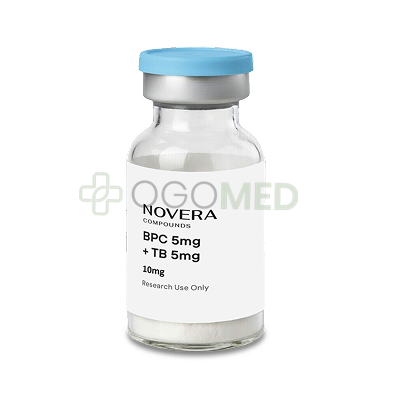








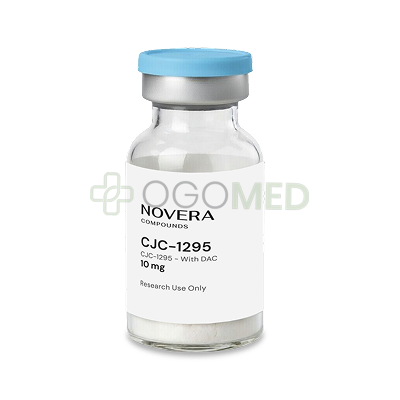
Novera CJC-1295 without DAC 5mg + IPA 5mg
In Stock
| Category: | Peptides |
| Brand | Novera |
| Strength | 10mg |
| Form | Lyophilized powder |
| Purity (%) | ≥99 |
| CAS number | CJC-1295: 863288-34-0 Ipamorelin: 170851-70-4 |
| Chemical Formula | CJC-1295 without DAC: C₁₅₂H₂₅₂N₄₄O₄₂ Ipamorelin: C₃₈H₄₉N₉O₅ |
| Molecular weight | CJC-1295 without DAC: 3357.9 g/mol Ipamorelin: 711.9 g/mol |
| Synonyms | CJC-no-DAC-Ipamorelin-blend, GHRH-GHS-combo |
| Peptide sequence | Mixed peptides |
| Storage | Store at 2-8 °C or -20 °C. Protect from light |
| Shelf Life (lyophilized) | 12-24 months |
| Shelf Life (after reconstitution) | 24-72 hours |
Learn more...
Novera CJC-1295 without DAC 5mg + IPA 5mg pairs a short-acting GHRH analog with a selective growth hormone secretagogue in a single lyophilized research peptide blend. Laboratories studying growth hormone signaling use this combination to activate two distinct receptor systems on pituitary somatotrophs simultaneously: the GHRH receptor (cAMP/PKA pathway) and the growth hormone secretagogue receptor GHS-R1a (Gq/Ca²⁺ pathway). The intended application is dual-pathway growth hormone research, from pulse dynamics and receptor cross-talk to downstream IGF-1 and metabolic marker readouts in animal and in vitro models.
This product is supplied for laboratory research use only and is not an approved medicine, supplement, or finished dosage form. The FDA has not approved CJC-1295 or Ipamorelin for human medical use. No statements on this page have been evaluated by a regulatory authority as claims to treat, cure, or prevent any disease, and the compound is not intended for human or veterinary administration.
What Novera CJC-1295 without DAC 5mg + IPA 5mg Is
CJC-1295 without DAC, often called Modified GRF(1-29), is derived from the first 29 amino acids of human growth hormone releasing hormone. Several amino acid substitutions protect it from rapid cleavage by the enzymes (primarily dipeptidyl peptidase IV) that degrade native GHRH in circulation within minutes. Unlike the DAC-conjugated version of CJC-1295, this analog lacks the maleimidopropionyl extension that covalently binds serum albumin. That absence produces a much shorter in vivo exposure profile: growth hormone release rises and falls in a pattern closer to endogenous pulsatile secretion rather than the prolonged stimulation observed with the DAC form. For researchers modeling pulse amplitude and frequency, this difference is methodologically significant.
Ipamorelin (NNC 26-0161) is a pentapeptide ghrelin mimetic that acts as a highly selective agonist at GHS-R1a on anterior pituitary gland somatotrophs. Raun et al. reported in a 1998 study in the European Journal of Endocrinology that Ipamorelin triggers immediate growth hormone release with an in vitro EC₅₀ of approximately 1.3 nmol/L in rat pituitary cells, achieving roughly 85% of the maximal efficacy of GHRP-6. Critically, even at doses exceeding 200 times its ED₅₀ for growth hormone, Ipamorelin did not significantly increase ACTH, cortisol, or prolactin in those animal models. This selectivity profile is the core reason researchers describe it as the first selective growth hormone secretagogue.
Combining these two molecules in a single blend targets the same somatotroph population through separate receptors and second messengers. The GHRH analog drives cAMP accumulation via the GHRH receptor, and Ipamorelin works through GHS-R1a to mobilize intracellular calcium. Investigators studying receptor interaction, signal integration, or the whole process of GH pulse generation can examine both pathways without sequential dosing artifacts. The blend is supplied as a lyophilized powder for reconstitution in laboratory settings and is not a medication or supplement for any species.
Why Researchers Study CJC-1295 without DAC 5mg + IPA 5mg
Interest in this ipamorelin blend centers on what happens when GHRH receptor activation (cAMP/PKA) and GHS-R1a activation (Gq/11 and Ca²⁺) occur concurrently in pituitary somatotrophs. The combination lets laboratories ask whether dual stimulation changes growth hormone levels in ways that neither pathway achieves alone, and whether downstream markers such as IGF-1 or metabolic readouts shift accordingly. Most published evidence for related compounds comes from in vitro work or animal models, not from controlled clinical use of this exact blend. The subsections below break down key research areas, each with named studies, species, and quantified outcomes.
Growth Hormone Secretion And Pituitary Signaling
Dispersed rat anterior pituitary cells provide the clearest window into how concurrent GHRH and ghrelin-receptor stimulation affects GH release at the single-cell level. In a 1996 reverse hemolytic plaque assay published in the Journal of Neuroendocrinology, Mitani et al. exposed these cells to human GHRH (10 nM) and GHRP-6 (100 nM) separately and combined. Individually, GHRH raised the percentage of plaque-forming cells to 39.15% against 24.3% for vehicle, and GHRP-6 raised it to 29.4%. Mean plaque area reached 124.04 for GHRH and 94.80 for GHRP-6 against 44.57 for vehicle (x 10-2 square microns). Adding both together raised the figures further, to 46.4% of cells and a mean plaque area of 142.55, but the authors report the effect as additive, not synergistic. A double plaque assay in the same paper found three distinct somatotroph populations: cells responding only to GHRH (23.3%), only to GHRP-6 (11.9%), and to both (7.8%).
“Simultaneous addition of both secretagogues caused a further increase in GH release … although the effect was additive but not synergistic.” Mitani et al., 1996, Journal of Neuroendocrinology.
Raun et al. provided the most detailed pharmacological profile of Ipamorelin in 1998 (European Journal of Endocrinology). In vivo, rats receiving Ipamorelin showed a GH Emax of approximately 1,545 ng/ml with an ED₅₀ near 80 nmol/kg. In swine, the compound was more potent, with an ED₅₀ of about 2.3 nmol/kg and an Emax around 65 ng/ml plasma GH. No significant rise in ACTH or cortisol accompanied these GH responses, a finding that distinguishes Ipamorelin from older secretagogues such as hexarelin.
“ipamorelin did not release ACTH or cortisol in levels significantly different from those observed following GHRH stimulation.” Raun et al., 1998, European Journal of Endocrinology.
Although these data support additive or greater GH release when GHRH-pathway and ghrelin-pathway agonists act on the same somatotrophs, the exact quantitative profile for the combined CJC-1295 without DAC plus Ipamorelin format has not been systematically mapped in any species to date.
Dual-Pathway Research On IGF-1 And Anabolic Markers
Many laboratories measure IGF-1 as a downstream indicator of sustained growth hormone axis activation. CJC-1295 increases growth hormone and IGF-1 levels, as demonstrated by Teichman et al. in a 2006 Phase I human trial of the DAC-conjugated form (Journal of Clinical Endocrinology and Metabolism). After a single injection in healthy adults, IGF-1 rose 1.5- to 3-fold above baseline and remained increased for 9 to 11 days. With repeated dosing, IGF-1 stayed above baseline for up to 28 days.
No published peer-reviewed study has administered the no-DAC analog plus Ipamorelin together and measured IGF-1, lean mass, or nitrogen balance as controlled endpoints in any species. The Teichman data are for the DAC form alone, and extrapolating those results to a different molecular format combined with a second peptide would be speculative.
Metabolic And Glucose-Homeostasis Models
Research teams pair GHRH analogs with ghrelin receptor agonists when studying fat metabolism, glucose tolerance or insulin sensitivity in rodent models, because growth hormone axis manipulation shifts both hepatic glucose output and peripheral insulin action. No published study reports a fat-loss, lipolysis, substrate-oxidation or glucose-tolerance endpoint for ipamorelin, for CJC-1295 without DAC, or for the two together. The metabolic rationale for this blend rests on general GH physiology, not on any measurement made on these two molecules.
Ipamorelin’s selectivity may reduce confounding stress-axis activation in metabolic studies: Raun et al. (1998) showed no significant cortisol or ACTH release in rats or swine even at very high doses. Direct data on the combined CJC-1295 without DAC plus Ipamorelin blend in diet-induced obesity models, HOMA-IR assays, or fasting glucose panels remain sparse. Any extrapolation from single-agent preclinical findings to complex human metabolic disease would be speculative and falls outside the scope of responsible laboratory claims.
Body Composition And Musculoskeletal Research
GH and IGF-1 manipulation is a common tool in experimental work on bone density, muscle fiber characteristics, and connective tissue properties in non-human models. No peer-reviewed study in any species has administered this exact no-DAC plus Ipamorelin combination and reported controlled lean mass gain, bone mineral content changes, or muscle cross-sectional area with measured endpoints. CJC-1295 with DAC in human studies (Teichman et al., 2006) measured hormonal biomarkers only, not body composition or strength outcomes. Ipamorelin alone in rats and swine demonstrated GH release comparable to GHRP-6 in magnitude, but published reports stop at acute hormone endpoints without tracking downstream musculoskeletal growth.
“growth hormone-releasing hormone (GHRH) and its analogues (e.g. CJC-1293, CJC-1295, sermorelin and tesamorelin)” World Anti-Doping Agency, 2026 Prohibited List, section S2.2.4.
Performance and anti-aging claims about CJC-1295 and ipamorelin are not grounded in controlled experiments on this blend in any species. No study has measured recovery, sleep architecture or cognitive endpoints for the combination, and the one-to-three-week timelines repeated in online summaries have no measured source behind them.
How CJC-1295 without DAC 5mg + IPA 5mg Compares With Related Compounds
Researchers evaluating whether to buy CJC 1295 Ipamorelin as a blend or as separate reagents face a practical question: does the experiment require concurrent dual-pathway activation, or would isolated receptor stimulation yield cleaner data? The table below contrasts the Novera blend with a standalone CJC-1295 without DAC product and a single-agent Ipamorelin peptide on receptor target, evidence base, and typical research focus.
| Compound | Primary Receptor Target | Main Evidence Base | Typical Research Focus |
|---|---|---|---|
| Novera CJC-1295 without DAC 5mg + IPA 5mg | GHRH receptor + GHS-R1a on pituitary somatotrophs | Mechanistic rationale from separate GHRH analog and Ipamorelin animal and in vitro studies; no published trial of the exact combination | Dual-pathway GH secretion, synergy or additivity screens, pulse dynamics, downstream IGF-1 and metabolic markers |
| CJC-1295 without DAC (single peptide) | GHRH receptor on pituitary somatotrophs | Rodent and in vitro work on GH pulses and cAMP-mediated signaling; no published human trials of the no-DAC form alone | Isolated GHRH-pathway pharmacology, receptor binding kinetics, basic GH axis characterization |
| Ipamorelin (single peptide) | GHS-R1a (ghrelin receptor) in pituitary and hypothalamus | Rat and swine in vivo data (Raun et al., 1998); one phase 2 human trial in postoperative ileus that missed its efficacy endpoint (Beck et al., 2014) | Ghrelin-receptor selectivity, GH release without ACTH or cortisol activation, digestive system motility models |
A laboratory designing receptor pharmacology or binding-affinity experiments typically benefits from single-agent reagents, because isolating one pathway removes the confound of cross-receptor activation. The blend becomes the better choice when the hypothesis involves signal integration, GH pulse architecture under concurrent stimulation, or quantifying whether the combination produces outcomes different from the sum of individual effects. The difference in delivery method (pulsatile no-DAC exposure versus sustained DAC exposure) also matters: the no-DAC analog in this blend is suited to modeling shorter bursts of GHRH-receptor activation, more closely approximating the frequency and amplitude of natural growth hormone pulses.
What Research on CJC-1295 without DAC 5mg + IPA 5mg Does Not Establish
Most evidence cited for this compound class involves related molecules tested individually, or the DAC-conjugated form tested in a small number of human subjects. No controlled trial has administered the exact combination of CJC-1295 without DAC plus Ipamorelin to any human population and measured endocrine, metabolic, or body composition endpoints. The following points outline specific limitations and unsupported claims:
“There were no significant differences between ipamorelin and placebo in the key and secondary efficacy analyses.” Beck et al., 2014, International Journal of Colorectal Disease.
-
There is no human trial of this combination at all, long or short. The only human safety data for any CJC-1295 format come from Teichman et al. (2006), two ascending-dose trials of the DAC-conjugated analogue running 28 and 49 days, which reported no serious adverse reactions. Nothing comparable exists for the no-DAC form, for ipamorelin beyond acute dosing, or for the two in combination.
-
Anti-aging, improved body composition, fat loss, and performance-enhancement promises commonly associated with CJC 1295 Ipamorelin lack controlled, published data. Claims about vitality, overall health, or tissue repair from this blend originate in anecdotal reports and marketing materials, not structured experiments.
-
There are no synergy findings to extrapolate from. The one direct measurement of combined GHRH plus GHRP-6 stimulation on dispersed rat somatotrophs (Mitani et al., 1996) found the combination additive, not synergistic, and even that comes from an isolated cell model in which somatostatin feedback, hepatic IGF-1 production and circadian GH regulation are all absent.
-
Dose-response mapping for the combined format does not exist in any species. Neither ED₅₀, Emax, nor safe chronic exposure levels are known for the blend, so assumptions about linear scaling or predictable ceiling effects remain speculative. Researchers cannot yet define consistent dosing parameters even in animal models.
-
Beck et al. (2014, International Journal of Colorectal Disease) ran the one completed human efficacy trial of ipamorelin: a multicentre, double-blind, placebo-controlled phase 2 study in 117 bowel-resection patients. Median time to first tolerated meal was 25.3 hours on ipamorelin against 32.6 hours on placebo, P = 0.15, and no key or secondary efficacy analysis separated the groups. Acute GH release in rats and swine did not predict a clinical outcome in humans.
-
This product is not approved as a drug, not validated for diagnosis or treatment, and is supplied strictly as a laboratory research reagent.
Where to Buy Novera CJC-1295 without DAC 5mg + IPA 5mg
Laboratories and licensed professionals searching for where to buy CJC 1295 Ipamorelin for research can order this Novera blend directly from Ogomed hosting this page. CJC-1295 and Ipamorelin are available for online purchase as research reagents, and this cjc 1295 ipamorelin buy online option ships to institutional and professional buyers for documented laboratory use. The product format supports controlled GH-axis experiments requiring concurrent GHRH-receptor and GHS-R1a activation.
-
Estimated delivery time 3 to 7 days.
-
Free shipping on orders over $750.
-
All US import fees and tariffs are covered by Ogomed, so the buyer pays nothing extra; customs checks under the new US import rules can add a little time to delivery.
-
Price match: if the same product is listed for less elsewhere, Ogomed will try to match it.
-
Support by phone +1-650-457-5621 and email, 10am to 6pm EST.
-
Sold to licensed professionals, for laboratory research use only.
All orders of this CJC 1295 Ipamorelin buy option are fulfilled exclusively for documented research use, and the peptide is not supplied for human or veterinary treatment.
References
- Raun, K., Hansen, B. S., Johansen, N. L., et al. (1998). Ipamorelin, the first selective growth hormone secretagogue. European Journal of Endocrinology, 139(5), 552-561. DOI: 10.1530/eje.0.1390552
- Teichman, S. L., Neale, A., Lawrence, B., et al. (2006). Prolonged stimulation of growth hormone (GH) and insulin-like growth factor I secretion by CJC-1295, a long-acting analog of GH-releasing hormone, in healthy adults. Journal of Clinical Endocrinology and Metabolism, 91(3), 799-805. DOI: 10.1210/jc.2005-1536
- Mitani, M., Kaji, H., Abe, H., & Chihara, K. (1996). Growth hormone (GH)-releasing peptide and GH releasing hormone stimulate GH release from subpopulations of somatotrophs in rats. Journal of Neuroendocrinology, 8(11), 825-830. DOI: 10.1046/j.1365-2826.1996.05283.x
- Beck, D. E., Sweeney, W. B., McCarter, M. D., & Ipamorelin 201 Study Group (2014). Prospective, randomized, controlled, proof-of-concept study of the ghrelin mimetic ipamorelin for the management of postoperative ileus in bowel resection patients. International Journal of Colorectal Disease, 29(12), 1527-1534. DOI: 10.1007/s00384-014-2030-8
The blend combines a modified GHRH analog fragment (CJC-1295 without DAC) with a selective ghrelin-receptor agonist (Ipamorelin) in a single lyophilized peptide for laboratory research use only. It is not an approved therapeutic product or supplement. Researchers use it to study dual-pathway growth hormone modulation in pituitary somatotroph models, examining how concurrent GHRH receptor and GHS-R1a activation shapes GH release profiles.
The CJC-1295 analog binds GHRH receptors on somatotrophs to stimulate cAMP accumulation and PKA-mediated signaling, while Ipamorelin activates GHS-R1a to promote Gq/11-coupled calcium mobilization and GH granule exocytosis. Using both together allows laboratories to examine whether the combined pathway stimulation produces additive or synergistic GH pulses. Mechanistic insights to date come primarily from in vitro and animal work on related molecules, not from human trials of this specific blend.
In dispersed rat pituitary cells (Mitani et al., 1996, Journal of Neuroendocrinology), GHRH alone raised plaque-forming cells to 39.15% against 24.3% for vehicle and the two secretagogues together reached 46.4%, an effect the authors describe as additive rather than synergistic. Raun et al. (1998) showed Ipamorelin achieves about 85% of GHRP-6’s maximal GH release in rat pituitary cells with an EC₅₀ near 1.3 nmol/L. These are preclinical findings and do not establish clinical benefits or safety of the combined Novera blend in any human population.
Single-agent Ipamorelin primarily informs ghrelin-receptor pharmacology and selectivity studies, while standalone CJC-1295 without DAC isolates GHRH-receptor responses and cAMP-driven GH secretion. The combined format is most useful when a laboratory needs to examine receptor interaction, signal integration, or GH pulse shaping under concurrent stimulation. Any difference in outcomes between single and combined approaches must be empirically measured in each model system rather than assumed from separate datasets.
Most published work on related peptides employs dispersed rat anterior pituitary cell cultures, intact rodent models with serial blood sampling for GH and IGF-1, or occasionally swine for in vivo pharmacokinetic profiling. Laboratories also design receptor-binding and second-messenger assays to separate GHRH versus ghrelin-receptor contributions at the intracellular level. Use in human subjects is outside the intended scope of this research reagent.
Detailed dose-response curves, full pharmacokinetic profiles, and long-term safety data for this exact 5mg + 5mg format have not been published in peer-reviewed literature. Little is known about how chronic dual-pathway stimulation might affect GHS-R1a internalization, somatostatin-mediated feedback, or receptor desensitization on downstream endocrine axes. The risk of metabolic derangements, including altered glucose homeostasis or insulin resistance under sustained GH secretion, has not been quantified for the blend in controlled experiments.
Both components are named on the 2026 WADA Prohibited List in section S2.2.4, Growth hormone releasing factors: CJC-1295 among the GHRH analogues and ipamorelin among the growth hormone secretagogues. S2 is prohibited at all times, in and out of competition, and all its substances are non-Specified. The product is sold only as a research reagent and is not intended for use in athletes or for any performance-related application.
Licensed professionals and institutional buyers searching ipamorelin cjc 1295 buy or cjc 1295 ipamorelin buy online can order this Novera CJC-1295 without DAC 5mg + IPA 5mg directly from the supplier hosting this product page. The store restricts sales to research customers and provides support by phone and email during business hours as listed above. The peptide is supplied exclusively for laboratory investigations, not for human or veterinary administration.
| Category: | Peptides |
| Brand | Novera |
| Strength | 10mg |
| Form | Lyophilized powder |
| Purity (%) | ≥99 |
| CAS number | CJC-1295: 863288-34-0 Ipamorelin: 170851-70-4 |
| Chemical Formula | CJC-1295 without DAC: C₁₅₂H₂₅₂N₄₄O₄₂ Ipamorelin: C₃₈H₄₉N₉O₅ |
| Molecular weight | CJC-1295 without DAC: 3357.9 g/mol Ipamorelin: 711.9 g/mol |
| Synonyms | CJC-no-DAC-Ipamorelin-blend, GHRH-GHS-combo |
| Peptide sequence | Mixed peptides |
| Storage | Store at 2-8 °C or -20 °C. Protect from light |
| Shelf Life (lyophilized) | 12-24 months |
| Shelf Life (after reconstitution) | 24-72 hours |
Learn more...