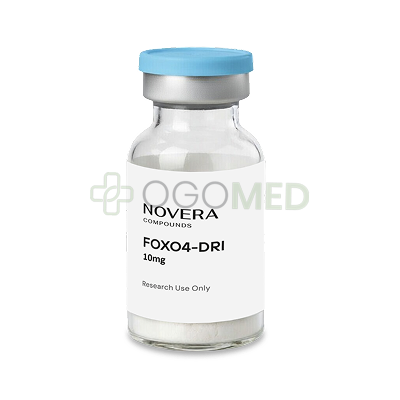








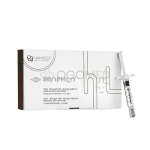




Novera Selank
| Category: | Peptides |
| Brand | Novera |
| Strength | 10mg |
| Form | Lyophilized powder |
| Purity (%) | ≥99 |
| CAS number | 129954-34-3 |
| Chemical Formula | C₃₃H₅₇N₁₁O₉ |
| Molecular weight | 751.9 |
| Synonyms | Heptapeptide-anxiolytic, Tuftsin-analog |
| Peptide sequence | Thr-Lys-Pro-Arg-Pro-Gly-Pro |
| Storage | Store at 2-8 °C. Protect from light and moisture |
| Shelf Life (lyophilized) | 18-24 months |
| Shelf Life (after reconstitution) | 7-14 days |
Learn more...
Selank is a synthetic heptapeptide derived from tuftsin, a naturally occurring immunomodulatory peptide fragment of immunoglobulin G. Researchers study this peptide analogue for its effects on GABA receptors, monoamine neurotransmission, brain derived neurotrophic factor regulation, and inflammatory cytokine balance across rodent behavioral paradigms, in vitro receptor binding assays, and gene expression profiling. For those looking to buy selank peptide for controlled laboratory experimentation, the compound offers a well-documented preclinical profile spanning anxiolytic-like behavior, stress response modulation, and immune-neural signaling.
Novera Selank is supplied strictly for research and laboratory use. It is not an approved medicine by any major regulatory body, and it is intended solely for in vitro testing and in vivo non-human experimental models. Selank is not approved by the U.S. Food and Drug Administration for any medical condition. This product is not intended for human or veterinary use, bodily introduction, or human or animal consumption.
What Novera Selank Is
Selank is a synthetic analog of the endogenous tetrapeptide tuftsin. Tuftsin itself originates from the heavy chain of immunoglobulin G and has long been associated with phagocytic cell activation and innate immune signaling. Selank extends tuftsin with a Pro-Gly-Pro tail at the C-terminus, a modification that changes the compound’s experimental behaviour.
Those added residues reduce susceptibility to enkephalin degrading enzymes and other peptidases that would otherwise cleave the parent molecule within minutes. In preclinical rodent models, this structural change lengthens the compound’s effective duration from rapid degradation to hours of measurable biochemical activity. The Pro-Gly-Pro tail also improves penetration across the blood brain barrier relative to native tuftsin, which is relevant for researchers modeling central nervous system endpoints such as GABAergic neurotransmission or mood regulation pathways in the prefrontal cortex and hippocampus.
Novera Selank is a research peptide, not a therapeutic product. It is intended strictly for laboratory research use, supporting investigators who need a metabolically stable tuftsin analog for controlled work on GABAergic signalling, monoamine turnover and stress-driven cytokine responses.
Why Researchers Study Selank
Four mechanistic domains drive selank research: modulation of GABA receptor function, effects on monoamine systems including serotonin and dopamine, regulation of gene expression encompassing neurotrophic and inflammatory pathways, and interactions between immune cells and neural circuits under stress conditions. Selank functions as a nootropic and anxiolytic neuropeptide in preclinical classifications, though these labels reflect animal and in vitro data rather than confirmed clinical categories.
Most of the evidence comes from rodent experiments and in vitro work on brain membrane preparations. A smaller body of human clinical research exists from Russian and Eastern European groups, but these studies are generally small, open-label, and rarely registered in international trial databases. The subsections below each address one research area, backed by named studies conducted in identified species, with quantitative outcomes and honest statements about what those numbers do and do not establish.
GABAergic Modulation And Anxiolytic Research
The clearest published evidence that the peptide touches the GABAergic system is transcriptional rather than electrophysiological. Volkova et al. (2016, Frontiers in Pharmacology, 7, 31) measured 84 neurotransmission-related genes in rat frontal cortex by real-time PCR one and three hours after 300 µg/kg of Selank or of GABA itself. Expression changed significantly in 45 of those genes at one hour and in 22 at three hours, and the changes produced by Selank correlated positively with those produced by GABA, which is the basis for describing the compound as an allosteric modulator of the GABAergic system rather than a receptor agonist.
A second, non-receptor mechanism is documented in human plasma. Zozulya et al. (2001, Bulletin of Experimental Biology and Medicine, 131(4), 315-317) found that the heptapeptide inhibited enzymatic hydrolysis of plasma enkephalin dose-dependently with an IC50 of 15 µM, and did so more potently than the peptidase inhibitors bacitracin and puromycin. That is an ex vivo enzymology result, not a behavioural one, and it offers a route by which the compound could act without binding a GABA receptor at all.
“Selank caused a number of alterations in the expression of genes involved in neurotransmission” Volkova et al., 2016, Frontiers in Pharmacology.
These preclinical findings indicate that the peptide engages GABAergic signaling in rodent brain tissue and behavioral paradigms modeling generalized anxiety disorders. They do not, however, establish clinical anxiolytic efficacy in humans. Selank’s effects on neurotransmission are primarily studied in animal models, and the precise mechanisms linking allosteric modulation to behavioral change remain under investigation.
Monoamine Neurotransmission And Mood-Related Models
In a 2019 study, Kolik et al. worked with 9-month-old outbred rats that had received 10% ethanol as their only source of fluid for 30 weeks. At 0.3 mg/kg/day intraperitoneally for seven days, Selank prevented the ethanol-induced increase in BDNF content in the hippocampus and frontal cortex measured ex vivo (p<0.05), and produced a cognitive-stimulating effect in age-matched rats that had never received ethanol (p<0.05).
In 2019, Kolik et al. reported in outbred rats given 10% ethanol for 30 weeks that Selank at 0.3 mg/kg i.p. daily for seven days prevented ethanol-induced memory and attention disturbances in the object recognition test (p<0.01), published in Bulletin of Experimental Biology and Medicine, 167(5), 641-644.
These data indicate that the peptide alters neurotrophic and behavioural endpoints under withdrawal conditions, but they do not equate to proven antidepressant activity in humans. No controlled clinical trial has demonstrated that the peptide alters mood regulation in healthy or clinical human populations.
Gene Expression And Neurotrophic Pathways
Gene expression profiling reveals that selank administration affects hundreds of transcripts in stress-relevant brain regions. Filippenkov et al. published a 2024 transcriptomic RNA-Seq experiment in Nanobiotechnology Reports: rats received 300 µg/kg i.p. of the compound 30 minutes before one hour of acute restraint stress. The paper reports changes in hippocampal gene expression in the hours following stress onset. The specific differentially expressed gene counts are given only in the figures of that article, which is not indexed with an abstract on PubMed or Europe PMC, so no number is quoted here.
Earlier microarray work by Kolomin et al. in 2010 screened approximately 12,000 genes in rat hippocampus and spleen after intranasal administration of Selank at 200 µg/kg. Genes involved in immune-neural signalling changed in both tissues, as reported in Doklady Biochemistry and Biophysics, 430, 5-6. That paper is a two-page communication with no indexed abstract, so the individual fold-change values are not reproduced here. The direction of change differed between brain and spleen, which is the point the authors draw out.
For neurotrophic pathways the best-documented result is Kolik et al. (2019): in rats withdrawn from 30 weeks of ethanol, Selank at 0.3 mg/kg/day for seven days prevented the abnormal rise in BDNF content in both hippocampus and frontal cortex (p<0.05). The direction matters here, because the peptide normalised an elevated neurotrophin level rather than driving BDNF upward.
These gene expression shifts support hypotheses about neural plasticity and stress adaptation. Causality remains uncertain: whether transcriptional changes translate into durable functional outcomes, and whether they replicate across species, are open questions.
Immune-Neural Interaction And Cytokine Research
Selank is modeled after tuftsin, a naturally occurring immunomodulatory peptide, so its immunomodulatory effects have drawn sustained research interest. The compound influences receptors on monocytes and macrophages, consistent with tuftsin’s known role in phagocytic activation, but extends into cytokine modulation under stress conditions that tuftsin alone does not replicate.
Yasenyavskaya et al. (2021, Current Reviews in Clinical and Experimental Pharmacology, 16(2), 162-167) housed white non-linear male rats in 20 days of sensory-contact confrontation and gave Selank at 100 µg/kg/day intraperitoneally. Stress produced a statistically significant rise in serum IL-1β, IL-6 and TGF-β1; the shifts in TNF-α and IL-4 were trends that did not reach significance. Selank lowered IL-1β and IL-6, restored IL-4 and suppressed TGF-β1 and TNF-α.
“This peptide is able to reduce the concentration of IL-1β, IL-6 and TNF-α, as well as TGF-β1, practically reaching control values” Yasenyavskaya et al., 2021, Current Reviews in Clinical and Experimental Pharmacology.
The spleen transcriptional response reported by Kolomin et al. is what links the compound back to its tuftsin origins: the same material changes gene expression in an immune organ and in the hippocampus, in different directions. All of these findings are mechanistic and exploratory; they do not constitute evidence for clinical immunomodulatory use in humans.
Alcohol, Stress, And Cognitive Function Models
Chronic ethanol exposure paradigms represent one of the most thoroughly studied applications of Selank in preclinical research. Kolik et al. in 2019 used aged Wistar rats exposed to 30 weeks of 10% ethanol as their sole drinking fluid. At 0.3 mg/kg/day intraperitoneally for seven days during withdrawal, the compound prevented ethanol induced memory impairment in the novel object recognition task (p<0.01). In the same study, BDNF content in hippocampus and frontal cortex, which becomes abnormally elevated during ethanol withdrawal, was normalized by treatment (p<0.05).
“prevented the formation of ethanol-induced memory and attention disturbances (p<0.01) developing during alcohol withdrawal” Kolik et al., 2019, Bulletin of Experimental Biology and Medicine.
Behavioral sensitization to ethanol is another endpoint. In DBA/2 mice, a 2016 study by Kolik et al. in Bull Exp Biol Med found that a single dose of Selank at 0.3 mg/kg i.p. blocked ethanol-induced hyperlocomotion and prevented the progressive increase in locomotor response that normally develops with repeated ethanol exposure.
A separate rat model of stable alcoholic motivation showed that after 48-hour alcohol withdrawal, Selank at 0.3 mg/kg i.p. increased time in open arms on the elevated plus maze and restored social interaction time. Ethanol intake itself was not significantly changed by the peptide in that experiment. These animal-only findings cannot be extrapolated to human treatment or prevention of alcohol-related brain changes.
How Selank Compares With Related Compounds
Researchers working in overlapping areas of neurobiology and immunology frequently weigh Selank against two related peptides: Semax, another synthetic analog with a longer melanocortin-derived sequence, and native tuftsin, the parent tetrapeptide. The table below contrasts these compounds on their primary experimental targets, the strength of available evidence, and the research contexts where each is typically deployed. Compound identity and pathway emphasis, not product specifications, drive the comparison.
| Compound | Primary Experimental Targets | Evidence Level | Typical Research Use |
|---|---|---|---|
| Selank (Novera Selank) | GABAA-associated signaling, monoamine systems, cytokine modulation, BDNF-related gene expression | Rodent behavioral models, in vitro receptor/gene studies, limited human clinical trials | Anxiety-like behavior, stress response, immune-neural interaction, cognition under experimental stressors |
| Semax | Melanocortin-related pathways, neurotrophic factors, antioxidant defense | Rodent ischemia models and cognitive tasks, human post-stroke trials in Russian literature | Cerebral ischemia models, learning and memory, oxidative stress and neuroprotection research |
| Tuftsin | Phagocytic cell activation, innate immune signaling | In vitro immune cell assays, rodent infection and inflammation models | Innate immunity, macrophage activation, infection resistance and inflammatory response studies |
A researcher modeling anxiety-like behavior, GABAergic neurotransmission, or stress-driven cytokine shifts in rodents would typically choose Selank. Semax fits better when the question involves ischemic injury, melanocortin pathways, or oxidative stress in the central nervous system. Tuftsin remains the standard for studies of innate immune system activation and phagocytic function. All three are experimental tools for laboratory research; selection depends on the mechanistic question under investigation rather than any therapeutic claim.
What Research On Selank Does Not Establish
Despite multiple preclinical studies and a small number of human trials, Selank is not established as a treatment for any medical condition.
Popular online claims about Selank include definitive anxiolytic effects in humans, cognitive enhancement for healthy individuals, and antiviral protection against respiratory infections. None of these have controlled human data behind them. The antiviral claims, for instance, rest on in vitro or rodent influenza models; no clinical trial has tested the peptide against any human virus. Claims about cognitive enhancement in healthy volunteers lack any published placebo-controlled study with adequate sample size.
Human data that do exist come from Russian-language, single-centre work. The most frequently cited piece, Zozulya et al. (2001, Bulletin of Experimental Biology and Medicine, 131(4), 315-317), is an enzymology study in patient plasma rather than a controlled efficacy trial: it reports enkephalinase inhibition, not symptom scores. The later comparisons against benzodiazepines that circulate in summaries of this compound are not retrievable on PubMed or Europe PMC with methods sections that can be assessed. No trial outside Russia has attempted to replicate these findings, and none appear in major international trial registries.
Potential concerns regarding Selank include unknown long-term effects and uncertain side effects, as no extended-duration safety study has been published in any species. Dose-response relationships across species remain poorly characterized. Selank is not approved by the U.S. Food and Drug Administration or the European Medicines Agency for any medical condition. Researchers should treat the compound as what it is: a research chemical with a suggestive but preliminary evidence base, not a validated therapeutic.
Where To Buy Novera Selank
For qualified professionals seeking to buy selank peptide online, Novera Selank is a laboratory-grade research peptide available through Ogomed. It does not provide clinical advice, and the compound is supplied strictly for research use in controlled laboratory settings.
-
Estimated delivery time 3 to 7 days.
-
Free shipping on orders over $750.
-
All US import fees and tariffs are covered by Ogomed, so the buyer pays nothing extra; customs checks under the new US import rules can add a little time to delivery.
-
Price match: if the same product is listed for less elsewhere, Ogomed will try to match it.
-
Support by phone +1-650-457-5621 and email, 10am to 6pm EST.
-
Sold to licensed professionals, for laboratory research use only.
Whether you are asking where to buy selank peptide for GABAergic modulation assays or neuroimmune signaling studies, Novera Selank is available from this store for research and laboratory use only. Selank is for research use only, not for human consumption. Handling is strictly forbidden outside established laboratory procedures.
References
- Kolik, L. G., Nadorova, A. V., Antipova, T. A., Kruglov, S. V., Kudrin, V. S., Durnev, A. D. (2019). Selank, Peptide Analogue of Tuftsin, Protects Against Ethanol-Induced Memory Impairment by Regulating of BDNF Content in the Hippocampus and Prefrontal Cortex in Rats. Bulletin of Experimental Biology and Medicine, 167(5), 641-644. DOI: 10.1007/s10517-019-04588-9
- Kolik, L. G., Nadorova, A. V., Seredenin, S. B. (2016). Selank Inhibits Ethanol-Induced Hyperlocomotion and Manifestation of Behavioral Sensitization in DBA/2 Mice. Bulletin of Experimental Biology and Medicine, 162(1), 56-59. DOI: 10.1007/s10517-016-3544-6
- Volkova, A., Shadrina, M., Kolomin, T., Andreeva, L., Limborska, S., Myasoedov, N., Slominsky, P. (2016). Selank Administration Affects the Expression of Some Genes Involved in GABAergic Neurotransmission. Frontiers in Pharmacology, 7, 31. DOI: 10.3389/fphar.2016.00031
- Yasenyavskaya, A. L., Samotrueva, M. A., Tsibizova, A. A., Bashkina, O. A., Myasoedov, N. F., Andreeva, L. A. (2021). The Influence of Selank on the Level of Cytokines Under the Conditions of “Social” Stress. Current Reviews in Clinical and Experimental Pharmacology, 16(2), 162-167. DOI: 10.2174/1574884715666200704152810
- Zozulya, A. A., Kost, N. V., Sokolov, O. Yu., et al. (2001). The inhibitory effect of Selank on enkephalin-degrading enzymes as a possible mechanism of its anxiolytic activity. Bulletin of Experimental Biology and Medicine, 131(4), 315-317. DOI: 10.1023/A:1017979514274
- Kolomin, T. A., Shadrina, M. I., Agniullin, Y. V., Shram, S. I., Slominskii, P. A., Limborska, S. A., Myasoedov, N. F. (2010). Transcriptomic response of rat hippocampus and spleen cells to single and chronic administration of the peptide Selank. Doklady Biochemistry and Biophysics, 430, 5-6. DOI: 10.1134/S1607672910010023
Selank is a synthetic heptapeptide analogue of the endogenous tetrapeptide tuftsin, extended with a Pro-Gly-Pro tail to improve metabolic stability. Its main experimental pathways include GABAA receptor modulation, serotonin and dopamine system effects, BDNF-related gene expression, and cytokine balance under stress. The compound is a non-approved research chemical, not a therapeutic agent. Researchers looking for where to buy selank peptide can find it through qualified suppliers offering products for laboratory use only.
In vitro, the peptide acts as a positive allosteric modulator of GABAA receptors, enhancing GABA’s inhibitory action without direct agonist binding. It also modulates monoamine turnover in the frontal cortex and alters expression of genes involved in synaptic transmission and immune signaling. These mechanisms are inferred from receptor binding assays, HPLC of brain homogenates, and transcriptomic profiling in rodent tissue, with limited human mechanistic evidence available.
Preclinical studies report altered cytokine profiles under social stress (Yasenyavskaya et al., 2021), changes in hippocampal and frontal-cortex BDNF content during ethanol withdrawal (Kolik et al., 2019), and expression changes across 45 of 84 neurotransmission-related genes in rat frontal cortex (Volkova et al., 2016). Selank has also been shown to prevent ethanol induced memory impairment in rodent withdrawal models. These data are preliminary and not a basis for clinical use in humans.
Selank targets GABAA-associated signaling, monoamine systems, and cytokine modulation, making it suited for anxiety-like behavior and stress response paradigms. Semax primarily engages melanocortin pathways, neurotrophic factors, and antioxidant defense, with stronger preclinical data in cerebral ischemia and oxidative stress models. Researchers select between them based on the pathway and endpoint under study, not on any clinical comparison.
Common paradigms include rodent elevated plus maze and open-field tests for anxiety-like behavior, unpredictable chronic mild stress, social confrontation stress, chronic ethanol exposure with withdrawal, and in vitro GABAA receptor binding assays. Gene expression studies use both microarray and RNA-Seq in hippocampal and splenic tissue. Choice of model depends on the specific hypothesis and institutional protocols.
Long-term safety profiles have not been established in any species. Dose-response relationships across rodents, non-human primates, and human tissue remain poorly characterized. The small Russian human trials have not been replicated under modern trial design standards, and potential concerns include unknown long-term effects and uncertain side effects. Larger, well-controlled human studies are needed before any clinical conclusions can be drawn.
Selank is not named anywhere on the 2026 WADA Prohibited List, which is the current one, in any section. Because it holds no approval from a governmental regulatory health authority for human therapeutic use, it falls under S0, the non-approved substances class, prohibited at all times. That is a statement about sport and has no bearing on its status as a laboratory reagent.
Novera Selank is available from this store to qualified professionals seeking to buy selank for controlled laboratory experimentation. Sold to licensed professionals, for laboratory research use only. The compound is strictly forbidden for human or animal consumption.
| Category: | Peptides |
| Brand | Novera |
| Strength | 10mg |
| Form | Lyophilized powder |
| Purity (%) | ≥99 |
| CAS number | 129954-34-3 |
| Chemical Formula | C₃₃H₅₇N₁₁O₉ |
| Molecular weight | 751.9 |
| Synonyms | Heptapeptide-anxiolytic, Tuftsin-analog |
| Peptide sequence | Thr-Lys-Pro-Arg-Pro-Gly-Pro |
| Storage | Store at 2-8 °C. Protect from light and moisture |
| Shelf Life (lyophilized) | 18-24 months |
| Shelf Life (after reconstitution) | 7-14 days |
Learn more...