










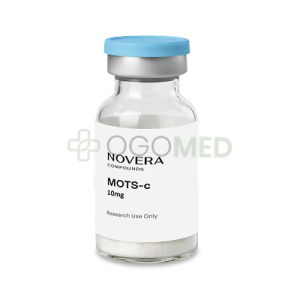








Novera BDNF
| Category: | Peptides |
| Brand | Novera |
| Strength | 10mg |
| Form | Lyophilized powder |
| Purity (%) | ≥99 |
| CAS number | 446262-90-4 |
| Chemical Formula | C₁₆₅H₂₆₉N₄₇O₄₆ |
| Molecular weight | 3647.2 |
| Synonyms | Brain-Derived-Neurotrophic-Factor, Neurotrophin-2, BDNF-protein |
| Peptide sequence | N/A (protein) |
| Storage | Store at -20 °C for long-term storage. Protect from light |
| Shelf Life (lyophilized) | 12-24 months |
| Shelf Life (after reconstitution) | 24-72 hours |
Learn more...
Brain-derived neurotrophic factor, commonly abbreviated BDNF, is a neurotrophic factor encoded by the BDNF gene. BDNF stands for Brain-Derived Neurotrophic Factor and is produced as a precursor (proBDNF) that is cleaved to a mature ~119 amino acid monomer. Two monomers associate as a non-covalent dimer, creating the active BDNF protein that BDNF binds to TrkB receptors to regulate neuronal survival, synaptic plasticity, and energy homeostasis. BDNF is heavily concentrated in the central nervous system, particularly the human brain, though it is also found in peripheral tissues including vascular endothelium, skeletal muscle, and sympathetic neurons.
Novera BDNF provides recombinant human mature BDNF protein in lyophilized form for use as a BDNF peptide research tool in vitro and in vivo. The protein is supplied strictly for laboratory research use only, is not an approved therapeutic product, and must not be used for human treatment, supplementation, or self-experimentation.
What Novera BDNF Is
Novera BDNF is a recombinant form of mature human BDNF protein: a non-covalent homodimer of identical ~119-residue chains that structurally matches the endogenous derived neurotrophic factor BDNF found in the adult brain. The material corresponds to the mature domain only, not the proBDNF or BDNF pro peptide region, and therefore preferentially models TrkB-activating signaling rather than p75NTR-dominated pathways associated with neuronal apoptosis and synaptic weakening.
Produced in a heterologous expression system as a lyophilized recombinant protein, Novera BDNF allows researchers to control BDNF levels precisely in cell culture or animal models without relying on endogenous BDNF secretion. Direct BDNF supplementation in vivo is challenging due to the protein’s size and blood brain barrier permeability limitations, making controlled in vitro and intracerebral delivery protocols especially valuable. The recombinant protein dimerizes in solution to form the active neurotrophin dimer, which is critical for high-affinity TrkB binding. Using a defined preparation also helps separate TrkB-mediated effects from other growth factors and neurotrophic effects of nerve growth factor (NGF), NT-3, and NT-4/5 in mechanistic studies of gene structures, signaling, and cell survival.
Why Researchers Study BDNF
BDNF activates TrkB receptors, members of the Trk family of tyrosine kinases, to initiate signaling cascades that control neuronal survival, synaptic plasticity, neurogenesis, and aspects of metabolism. TrkB activation triggers the MAPK/ERK pathway (promoting neuronal differentiation and survival), the PI3K/Akt pathway (protecting neurons from apoptosis by suppressing cell death), and the PLCγ pathway, which modulates calcium influx and gene expression via transcription factors such as CREB. Downstream signaling through the intracellular domain of TrkB engages multiple mechanisms that influence neurotransmitter release, AMPA receptors, and NMDA receptors at synapses throughout the adult brain.
Most mechanistic knowledge comes from in vitro and rodent models. Human data largely rely on associations between circulating BDNF levels, neuroimaging, and disease phenotypes rather than interventional studies with recombinant protein.
Synaptic Plasticity and Learning
BDNF is crucial for long-term potentiation in the hippocampus and for memory formation. In a 1995 study, Korte et al. (Proceedings of the National Academy of Sciences) showed that BDNF knockout mice had severely impaired LTP at CA1 synapses, establishing a causal role for the protein in synaptic plasticity. The same paper reported that both the magnitude of the potentiation and the proportion of slices in which LTP could be induced at all were affected, while pharmacological, anatomical and morphological parameters of the hippocampus appeared normal.
BDNF signaling enhances LTP in hippocampal neurons and promotes dendritic growth and spine formation. In adult mice, BDNF increases AMPA receptor insertion and modulates neuronal activity underlying memory formation. Novera BDNF can be applied in vitro to titrate concentration-response relationships for TrkB activation, NMDA receptor modulation, and spine-density changes in cultured hippocampal neurons.
“Quantitative analysis of CA1 synapses revealed a significant reduction in the number of vesicles docked at presynaptic active zones in the mutant mice” Pozzo-Miller et al., 1999, Journal of Neuroscience.
Pozzo-Miller et al. (1999, Journal of Neuroscience, 19(12), 4972-4983) worked with two lines of BDNF knockout mice and found more pronounced synaptic fatigue at CA1 synapses during high-frequency stimulation, fewer vesicles docked at presynaptic active zones, and markedly lower levels of synaptophysin and synaptobrevin in hippocampal synaptosomes. These are presynaptic deficits in a knockout, which is the inverse of an experiment showing that added protein improves anything.
Mood Disorders and Stress Models
Reduced serum BDNF levels have been observed in major depressive disorder. Karege et al. (2002, Psychiatry Research, 109(2), 143-148) reported significantly lower serum BDNF in depressed patients than in healthy controls. These are correlations in circulating protein, not evidence about regional brain BDNF and not evidence about administered protein.
Duman and Monteggia (2006, Biological Psychiatry) is the review that gathered the rodent work on chronic antidepressant treatment raising hippocampal BDNF; it is a synthesis of other groups’ experiments, not a source of primary forced-swim or sucrose-preference data. The BDNF Val66Met polymorphism alters activity dependent secretion of the protein: Egan et al. (2003, Cell) showed that Met carriers had impaired intracellular trafficking of BDNF to secretory granules, reduced BDNF expression during neuronal activity, and altered hippocampal activation during memory tasks. The BDNF transcript for Met-BDNF showed normal constitutive secretion but failed to support activity-dependent release.
“val/met exerts these effects by impacting intracellular trafficking and activity-dependent secretion of BDNF” Egan et al., 2003, Cell.
Neurodegenerative Diseases
BDNF levels are decreased in Alzheimer’s disease and Parkinson’s disease, as compiled by Bathina and Das (2015, Archives of Medical Science, 11(6), 1164-1178). That is a review of observational measurements in patients, so it establishes an association with disease state rather than a direction of causation.
In a 1992 in vitro and in vivo study, Spina et al. (Journal of Neurochemistry) demonstrated that recombinant BDNF protected dopaminergic neurons against 6-hydroxydopamine toxicity. In rat models of partial nigrostriatal dopamine lesion, Altar et al. (1994, Journal of Neurochemistry, 63(3), 1021-1032) tested BDNF and neurotrophin-3 against neurochemical and behavioural deficits, with partial rather than complete rescue. Amyloid-beta oligomers reduce BDNF expression and impair TrkB activation in Alzheimer’s cell-culture models, blunting CREB phosphorylation and downstream gene expression. Recombinant peptide BDNF preparations like Novera BDNF help model neurotrophic support and test rescue paradigms for cognitive function in these disease models, including cerebral ischemia, traumatic brain injury, and spinal cord injury contexts.
Metabolism, Beta Cells, and Type 2 Diabetes
Systemic BDNF lowers blood glucose in obese diabetic mice, an effect first reported by Ono et al. (1997, Biochemical and Biophysical Research Communications, 238(2), 633-637) in db/db animals and absent in non-diabetic db/m controls. Ono et al. (2000, Metabolism, 49(1), 129-133) then showed the effect persists for weeks after treatment stops and survives intermittent dosing. BDNF plays a role in metabolic regulation, and in vitro evidence suggests the protein supports pancreatic beta-cell survival by activating CREB-controlled prosurvival genes that share downstream nodes with IGF-1 signaling pathways. These remain non-human data: BDNF is not an approved antidiabetic therapy and controlled human intervention trials are sparse.
“BDNF administered once or twice per week (70 mg/kg/wk) to db/db mice for 3 weeks significantly reduced blood glucose concentrations” Ono et al., 2000, Metabolism.
Vascular Biology, Endothelial Cells, and the Blood Brain Barrier
BDNF is primarily known for its role in the brain but is also expressed in vascular tissues. Bathina and Das (2015, Archives of Medical Science) describe BDNF as acting on vascular endothelium as well as neurons, through the same TrkB-linked ERK/MAPK and PI3K/Akt cascades. Recombinant BDNF can be used to study neurovascular coupling, barrier responses, and cross-talk between hippocampal neurons and endothelial cells in adult sensory neurons and neural stem cells co-culture systems.
How BDNF Compares With Related Compounds
Researchers often compare recombinant BDNF protein to BDNF mimetic small peptides or other neurotrophin receptors and their ligands to choose the appropriate tool for a given experiment. The extracellular domain structure of Trk receptors determines ligand selectivity, and each compound engages different portions of TrkB or related receptors.
| Compound | Primary Target(s) | Evidence Level | Typical Research Use |
|---|---|---|---|
| Novera BDNF (recombinant human BDNF) | High-affinity TrkB receptor, low-affinity p75NTR | Extensive in vitro and rodent data, limited direct human interventional data | Modeling canonical BDNF signaling, synaptic plasticity, neurodegenerative diseases, beta-cell survival, mood disorder mechanisms |
| LM22A-4 (BDNF mimetic peptide) | Partial TrkB agonist | In vitro and rodent data only | Exploring small-molecule BDNF-mimetic strategies, intranasal delivery, and preclinical neuroprotection models |
| Nerve Growth Factor (NGF) | TrkA, p75NTR | Extensive in vitro, animal, and some human data (e.g., ocular applications) | Comparative neurotrophin biology, sensory neuron survival, pain pathways, and peripheral nerve repair studies |
For canonical TrkB biology and full signaling pathway engagement, most labs prefer recombinant mature BDNF protein. LM22A-4 and related mimetics are useful when delivery properties or oral bioavailability are the research focus. NGF serves comparative studies of Trk receptors and peripheral neurotrophic effects, including work with adult sensory neurons. A BDNF autocrine loop, where neurons both produce and respond to BDNF, can only be modeled accurately when the full-length protein is available as the exogenous input.
What Research on BDNF Does Not Establish
Most mechanistic data on BDNF come from cell culture and animal models. Results from these systems cannot be assumed to predict human clinical benefit. No large, well-controlled human trials have established recombinant BDNF as a treatment for depression, Alzheimer’s, Parkinson’s, type 2 diabetes, or any other condition, despite promising preclinical results.
Many claims circulating online about “BDNF peptide” products improving cognition, mood, or metabolic health are not supported by peer-reviewed trials using recombinant BDNF protein in humans. Val66Met polymorphism and serum BDNF level associations are correlational biomarkers, not proven treatment targets: demonstrating that a polymorphism affects BDNF secretion does not establish that exogenous administration will normalize cognitive function or mood in humans. Some neurotrophin trials for neurodegenerative diseases have faced safety, delivery, or efficacy limitations. In Altar et al.’s 1994 Parkinson’s model, BDNF preserved cell bodies but did not prevent terminal degeneration, illustrating that rescue capacity can be partial and context-dependent. No major regulatory authority recognizes recombinant BDNF as an approved medicine. Readers should examine study design, endpoints, and sample sizes rather than relying on single promising reports.
Where to Buy Novera BDNF
Novera BDNF is available online as a recombinant human BDNF preparation for laboratories seeking a consistent TrkB agonist to control BDNF protein exposure in experimental systems. Researchers looking to BDNF peptide buy for synaptic plasticity, neurodegeneration, or metabolic studies can order through Ogomed with these logistics:
-
Estimated delivery time 3 to 7 days.
-
Free shipping on orders over $750.
-
All US import fees and tariffs are covered by Ogomed, so the buyer pays nothing extra; customs checks under the new US import rules can add a little time to delivery.
-
Price match: if the same product is listed for less elsewhere, Ogomed will try to match it.
-
Support by phone +1-650-457-5621 and email, 10am to 6pm EST.
-
Sold to licensed professionals, for laboratory research use only.
Novera BDNF is sold exclusively to licensed professionals for laboratory research use only, not for human administration or therapeutic use.
References
- Korte, M., Carroll, P., Wolf, E., Brem, G., Thoenen, H., Bonhoeffer, T. (1995). Hippocampal long-term potentiation is impaired in mice lacking brain-derived neurotrophic factor. Proceedings of the National Academy of Sciences USA, 92(19), 8856-8860. DOI: 10.1073/pnas.92.19.8856
- Pozzo-Miller, L. D., Gottschalk, W., Zhang, L., et al. (1999). Impairments in high-frequency transmission, synaptic vesicle docking, and synaptic protein distribution in the hippocampus of BDNF knockout mice. Journal of Neuroscience, 19(12), 4972-4983. DOI: 10.1523/JNEUROSCI.19-12-04972.1999
- Egan, M. F., Kojima, M., Callicott, J. H., et al. (2003). The BDNF val66met polymorphism affects activity-dependent secretion of BDNF and human memory and hippocampal function. Cell, 112(2), 257-269. DOI: 10.1016/S0092-8674(03)00035-7
- Karege, F., Perret, G., Bondolfi, G., Schwald, M., Bertschy, G., Aubry, J. M. (2002). Decreased serum brain-derived neurotrophic factor levels in major depressed patients. Psychiatry Research, 109(2), 143-148. DOI: 10.1016/S0165-1781(02)00005-7
- Spina, M. B., Squinto, S. P., Miller, J., Lindsay, R. M., Hyman, C. (1992). Brain-derived neurotrophic factor protects dopamine neurons against 6-hydroxydopamine and N-methyl-4-phenylpyridinium ion toxicity: involvement of the glutathione system. Journal of Neurochemistry, 59(1), 99-106. DOI: 10.1111/j.1471-4159.1992.tb08880.x
- Ono, M., Itakura, Y., Nonomura, T., Nakagawa, T., Nakayama, C., Taiji, M., Noguchi, H. (2000). Intermittent administration of brain-derived neurotrophic factor ameliorates glucose metabolism in obese diabetic mice. Metabolism: Clinical and Experimental, 49(1), 129-133. DOI: 10.1016/S0026-0495(00)90988-0
BDNF is a neurotrophin protein composed of about 119 amino acids per monomer, forming a non-covalent homodimer in its active form. Many researchers and vendors colloquially call it a “BDNF peptide,” but structurally it is a dimeric protein rather than a short peptide fragment. Novera BDNF supplies the mature recombinant protein in lyophilized form for experimental use.
In vitro and in vivo models use recombinant BDNF to activate TrkB receptors on neurons, glia, and sometimes endothelial cells, initiating MAPK/ERK, PI3K/Akt, and PLCγ signaling cascades. These pathways influence synaptic transmission, neurogenesis, and cell survival, which can be quantified by electrophysiology, morphological analysis, or gene-expression profiling. The protein also interacts with p75NTR, especially when present with other neurotrophins, so context and receptor expression patterns matter.
Rodent studies summarised by Bathina and Das (2015, Archives of Medical Science) indicate that exogenous BDNF can protect neurons in models of Parkinson’s disease, Huntington’s disease and cerebral ischaemia, and that systemic BDNF lowers blood glucose in diabetic mice. Additional in vitro data link BDNF to enhanced synaptic plasticity, dendritic complexity, and neurogenesis in hippocampal preparations. However, these findings are largely preclinical, and there is no consensus human dosing regimen or approved therapeutic indication for recombinant BDNF.
Recombinant BDNF engages the full TrkB signaling profile and closely reproduces endogenous BDNF activity, but it has limited blood brain barrier penetration and is a larger molecule to work with experimentally. LM22A-4 and related mimetics are short peptides or small molecules that partially activate TrkB with varying efficacy, often studied for intranasal or systemic delivery in animals. For mechanistic work on canonical TrkB biology, many labs still prefer full-length BDNF protein, whereas mimetics are useful when delivery properties are the main research focus.
Typical applications include rodent hippocampal slice electrophysiology, primary neuron or neural stem cell cultures, beta-cell survival assays, and endothelial or blood brain barrier co-culture systems. Some groups also employ recombinant BDNF in in vivo rodent models of depression, neurodegeneration, or diabetes to study pathway engagement rather than as a therapeutic candidate. Each model requires its own protocol development and validation under local ethical and institutional guidelines.
Key gaps include how chronic TrkB activation in the adult human brain would affect seizure threshold, long-term synaptic remodeling, and cancer risk in non-neural tissues expressing TrkB. The precise relationship between circulating serum BDNF levels and regional brain BDNF activity also remains incompletely resolved, particularly across different mood disorders and neurodegenerative diseases. More controlled human studies are needed before mechanistic findings from animals can be translated into clinical practice.
BDNF is not named anywhere on the 2026 WADA Prohibited List, which is the current one. Section S2.3 names specific growth factors and growth factor modulators, including IGF-1 and its analogues, thymosin-beta4 and its derivatives, FGFs, HGF, MGFs, PDGF and VEGF, and closes with a catch-all for other growth factors affecting muscle, tendon or ligament protein synthesis, vascularisation, energy utilisation, regenerative capacity or fibre type switching. BDNF is a neurotrophin and is not among the named substances.
Licensed professionals can obtain Novera BDNF through this store. The product page carries the specification details needed for internal documentation and protocol development. It is sold exclusively for laboratory research use and is not intended for human administration or clinical treatment.
| Category: | Peptides |
| Brand | Novera |
| Strength | 10mg |
| Form | Lyophilized powder |
| Purity (%) | ≥99 |
| CAS number | 446262-90-4 |
| Chemical Formula | C₁₆₅H₂₆₉N₄₇O₄₆ |
| Molecular weight | 3647.2 |
| Synonyms | Brain-Derived-Neurotrophic-Factor, Neurotrophin-2, BDNF-protein |
| Peptide sequence | N/A (protein) |
| Storage | Store at -20 °C for long-term storage. Protect from light |
| Shelf Life (lyophilized) | 12-24 months |
| Shelf Life (after reconstitution) | 24-72 hours |
Learn more...