









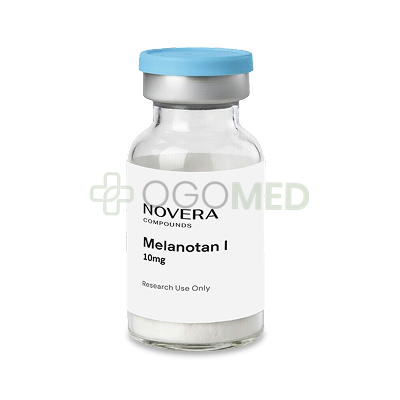
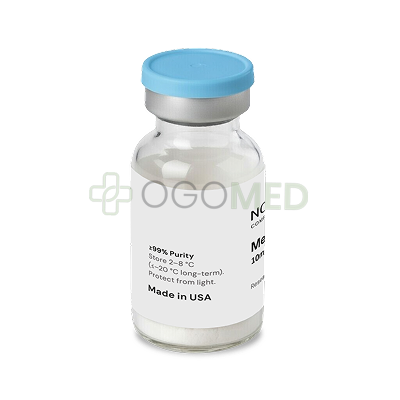
Novera Melanotan I
In Stock
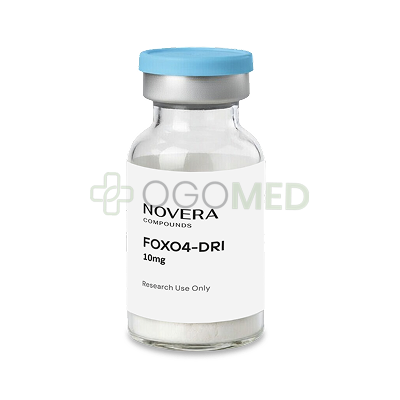
| Category: | Peptides |
| Brand | Novera |
| Strength | 10mg |
| Form | Lyophilized powder |
| Purity (%) | ≥99 |
| CAS number | 75921-69-6 |
| Chemical Formula | C₇₈H₁₁₁N₂₁O₁₉ |
| Molecular weight | 1646.8 |
| Synonyms | Afamelanotide, MT-1, Alpha-MSH-analog |
| Peptide sequence | Ac-Ser-Tyr-Ser-Met-Glu-His-Phe-Arg-Trp-Gly-Lys-Pro-Val-NH₂ |
| Storage | Store at 2-8 °C. Protect from light and moisture |
| Shelf Life (lyophilized) | 18-24 months |
| Shelf Life (after reconstitution) | 7-14 days |
Learn more...
Novera Melanotan I is a research-grade peptide developed for scientific investigation into pigmentation biology, receptor signaling, and several physiological processes associated with melanocortin pathways. The product is intended exclusively for research purposes and is supplied for laboratory applications rather than human consumption. Scientists have shown continued interest in this peptide because it serves as a valuable model for studying how specific signaling molecules interact with specialized receptors across different biological systems.
The name melanotan I is closely associated with a laboratory-developed peptide inspired by the naturally occurring hormone alpha-melanocyte-stimulating hormone (α-MSH). Since the natural molecule has a relatively short biological lifespan, researchers designed a more stable synthetic analog that could remain active for longer periods under experimental conditions.
Composition and Structural Characteristics
Novera Melanotan I belongs to the category of synthetic peptide compounds produced using modern peptide synthesis techniques. Every structure consists of carefully selected amino acids arranged in a precise order that allows interaction with specific biological receptors. Even minor alterations in sequence can significantly influence biological activity, which is why manufacturing quality remains essential for research materials.
One important characteristic frequently documented by scientists is its molecular weight, since this property affects laboratory preparation, analytical verification, and experimental calculations. Alongside molecular mass, factors such as purity, identity testing, and peptide integrity help determine whether a material is suitable for scientific investigation. Clinical investigators typically evaluate several physical properties before beginning an experiment:
- peptide purity, concentration and analytical verification;
- solubility under laboratory conditions;
- recommended storage procedures;
- preparation of an appropriate stock solution;
- dilution into a suitable working solution.
These technical parameters are important because reproducibility depends not only on peptide quality but also on standardized preparation methods. Laboratories working with peptide compounds generally establish validated protocols before any biological testing begins, ensuring that every experiment starts from consistent baseline conditions.
Relationship to the Natural Melanocortin System
To understand why this peptide attracts scientific attention, it helps to first examine the natural melanocortin system. Within the human organism, several hormones participate in communication between skin cells, influencing coloration, metabolism, appetite balancing, and numerous additional physiological activities.
Among these hormones is endogenous α-msh, a naturally produced signaling molecule synthesized from larger precursor proteins. This α melanocyte stimulating hormone binds to specialized receptors located on different cell populations, initiating intracellular communication that influences pigmentation and several other biological responses.
One of the primary receptors involved is the melanocortin receptor, which plays a central role in melanocortin signaling. These receptors function almost like molecular switches. Once activated by a compatible ligand, they trigger intracellular signaling cascades that regulate gene activity and cellular behavior. Scientists continue investigating these receptors because they participate in remarkably diverse biological processes, including:
- modulation of skin coloration;
- maintenance of energy homeostasis;
- immune response and inflammation;
- reproductive physiology and erectile function.
The diversity of receptor activity explains why melanocortin biology remains an active field of biomedical research. Although pigment formation receives the greatest public attention, researchers also investigate whether increased coloration influences the skin’s response to UV radiation. However, Melanotan I is not approved for the prevention of sunlight-induced skin cancers.
How Melanotan 1 Works in Laboratory Models
The biological mechanisms behind MT I involve receptor binding followed by intracellular signal transmission. Once interaction occurs, a sequence of biochemical events begins inside the cell, leading to changes in protein activity and gene control. One important element discussed in scientific literature is protein kinase signaling. Various kinase pathways participate in transmitting information from the cell membrane toward the nucleus, where alterations in gene expression may eventually occur. These signaling events contribute to multiple biological responses depending on cell type and experimental conditions.
The entire signaling pathway involves numerous molecular participants rather than a single isolated reaction. Receptor activation represents only the first stage of a much more complex network of intracellular communication.
Within pigment-producing cells known as melanocytes, these signaling pathways may contribute to stimulating melanogenesis, the biological process responsible for pigment formation. During experimental observations, investigators analyze how receptor stimulation influences pigment-associated enzymes, transcription factors, and cellular metabolism. Rather than viewing the peptide as a single-action molecule, researchers typically investigate it as one compound interacting with an interconnected biological network.
Melanin Production and Skin Pigmentation Research
Perhaps the best-known area of investigation associates with melanin production and its relationship to pigmentation biology. Melanin serves as the primary pigment responsible for differences in skin, hair, and eye coloration across populations. When researchers examine pigment biology, they frequently distinguish between overall melanin synthesis and more specific pathways responsible for eumelanin production, since eumelanin is generally associated with darker coloration and greater natural photoprotection.
Experimental work often explores how Melanotan I can stimulate eumelanin production without UV exposure. Investigators are particularly interested in understanding how pigment responses develop over time and whether changes remain temporary or sustained throughout an observation period. Available research indicates that Melanotan I does not provide adequate protection against UV-induced DNA damage. Consequently, increased pigmentation observed during experimental studies should not be interpreted as a replacement for conventional photoprotection.
Current laboratory investigations frequently examine:
- pigment-related enzyme activity;
- receptor sensitivity under different experimental conditions;
- cellular response following controlled DNA damage;
- changes observed after repeated stimulation cycles.
Skin coloration research continues expanding because scientists hope to better understand normal cellular biology rather than simply cosmetic outcomes. Many studies focus on cellular adaptation, pigment control, and protective biological responses.
Beyond Pigmentation: Expanding Areas of Investigation
Although skin coloration receives considerable attention, researchers have gradually expanded their investigations into many related areas. One frequently discussed topic involves male erectile dysfunction, largely because melanocortin receptors are distributed beyond pigment-producing tissues. Experimental findings have suggested potential connections between receptor signaling and reproductive physiology, although these observations continue to require careful scientific evaluation.
Scientists have also explored possible associations with fat loss, appetite balancing, and metabolic signaling because melanocortin pathways participate in broader physiological regulation. This does not imply approved therapeutic applications but rather illustrates the diversity of ongoing experimental interest.
Another important research direction concerns nucleotide excision repair, one of the cellular systems responsible for repairing certain forms of genetic injury. Since skin coloration may provide protection against ultraviolet radiation, investigators continue studying potential relationships between pigmentation responses and cellular repair systems following environmental stress.
Laboratory Research and Experimental Models
Much of the available scientific knowledge comes from controlled laboratory studies rather than clinical use. Experimental investigations often begin with cultured cells before progressing toward more complex biological models.
In some projects, mice serve as experimental organisms because they allow researchers to examine skin coloration, receptor biology, metabolism, and genetic modulation under carefully controlled laboratory environments. Animal research contributes valuable mechanistic information, although findings always require cautious interpretation before broader biological conclusions are drawn.
Research teams generally define a specific biological target before initiating experiments. Instead of examining every possible biological response simultaneously, investigators focus on clearly defined endpoints, allowing experimental variables to remain manageable and scientifically meaningful.
Comparing Melanotan I and Melanotan II
Scientific literature frequently compares Melanotan I with melanotan II because both peptides originated from investigations featuring melanocortin biology. Despite their shared background, the two compounds demonstrate different receptor preferences and biological profiles:
- Melanotan I was designed to more closely resemble alpha melanocyte signaling while maintaining improved stability compared with naturally occurring hormones.
- MT II, meanwhile, exhibits broader receptor activity, leading scientific experts to investigate additional physiological responses beyond skin coloration. It is a different variant of Melanotan I and is strongly associated with severe side effects.
For this reason, scientific publications generally treat both peptides as separate research tools rather than interchangeable substances. Experimental objectives largely determine which peptide investigators select for a particular study.
MT I Research Purposes and Regulatory Information
It is important to understand the current scientific position regarding Melanotan I. At present, the peptide remains an experimental research material rather than an approved pharmaceutical product for routine medical treatment. There is no quality control regarding the purity or dosage of Melanotan I.
Depending on jurisdiction, regulatory agencies may classify research peptides differently, but Novera Melanotan I is generally distributed as laboratory material intended solely for scientific investigation. It is not marketed as a dietary supplement, cosmetic ingredient, or approved medication. The only FDA-approved use of Melanotan I is to treat Erythropoietic Protoporphyria (EPP).
New findings concerning receptor biology, signaling, metabolic regulation, and cellular communication continue to be published. Every additional study contributes another piece to a much larger scientific picture. As knowledge expands, scientists gain a clearer understanding of how this peptide interacts with biological systems, how receptor signaling influences cellular behavior throughout the body, and which future research directions deserve deeper investigation.
Who Can Purchase Melanotan I
Because Melanotan I is not approved by the FDA for skin tanning, it is primarily obtained by professionals working in research environments. Typical customers include universities, biotechnology laboratories, pharmaceutical development teams, analytical laboratories, and independent scientific organizations conducting peptide-based investigations.
Scientists value standardized peptide materials because consistent quality improves experimental reproducibility. Reliable sourcing reduces unnecessary variability and supports better comparison between independent studies performed across different laboratories.
Where to Buy Melanotan I for Sunless Tanning
Purchasing unapproved Melanotan I for personal use is illegal in many regions so it should only be obtained for legitimate scientific research and handled in accordance with applicable regulations. If you are looking for research-grade Melanotan I, OGOmed offers a product intended exclusively for laboratory use, supported by quality control and analytical testing to help ensure consistency between batches.
Melanotan I must be stored in a refrigerator to remain stablemaking proper handling important from delivery through long-term storage. As with other experimental peptides, scientists should remain aware that Melanotan I can cause serious side effects including headaches, reduced appetite, nausea and vomiting, which is one of the reasons it is not approved for general consumer use.
| Category: | Peptides |
| Brand | Novera |
| Strength | 10mg |
| Form | Lyophilized powder |
| Purity (%) | ≥99 |
| CAS number | 75921-69-6 |
| Chemical Formula | C₇₈H₁₁₁N₂₁O₁₉ |
| Molecular weight | 1646.8 |
| Synonyms | Afamelanotide, MT-1, Alpha-MSH-analog |
| Peptide sequence | Ac-Ser-Tyr-Ser-Met-Glu-His-Phe-Arg-Trp-Gly-Lys-Pro-Val-NH₂ |
| Storage | Store at 2-8 °C. Protect from light and moisture |
| Shelf Life (lyophilized) | 18-24 months |
| Shelf Life (after reconstitution) | 7-14 days |
Learn more...