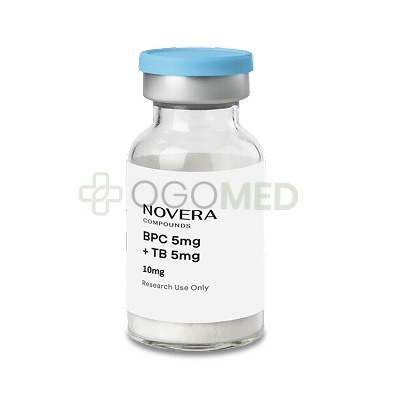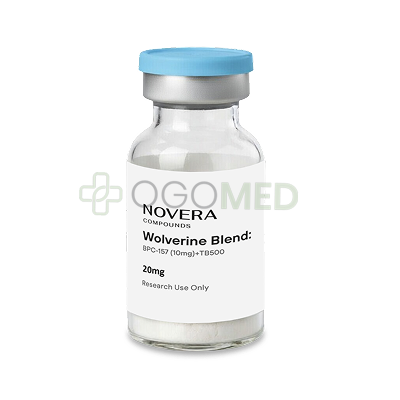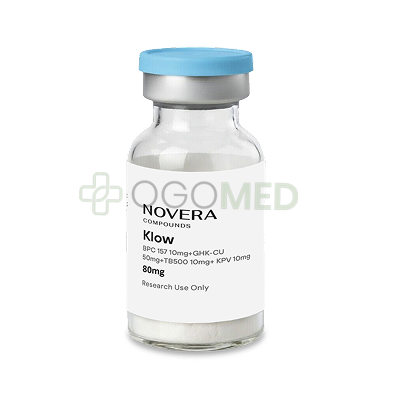






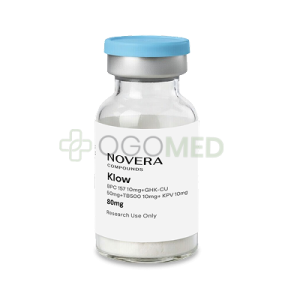
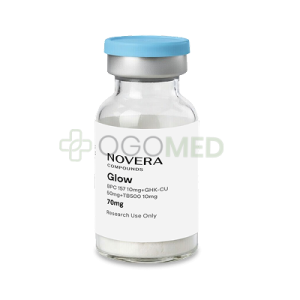



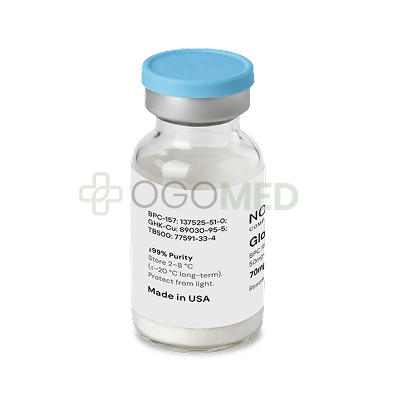
Novera Glow BPC 157 10mg+GHK-CU 50mg+TB500 10mg
In Stock
| Category: | Peptides |
| Brand | Novera |
| Strength | 70mg |
| Form | Lyophilized powder |
| Purity (%) | ≥99 |
| CAS number | BPC-157: 137525-51-0 GHK-Cu: 89030-95-5 TB500: 77591-33-4 |
| Chemical Formula | BPC-157: C₆₂H₉₈N₁₆O₂₂ GHK-Cu: C₁₄H₂₁N₆O₄Cu TB500: C₂₁₂H₃₅₀N₅₆O₇₈S |
| Molecular weight | BPC-157: 1419.5 g/mol GHK-Cu: 402.92 g/mol TB-500: 4963 g/mol |
| Synonyms | Glow-peptide-blend, Skin-rejuvenation-peptide, Glow-complex |
| Peptide sequence | Proprietary blend |
| Storage | Store at 2-8 °C or -20 °C. Protect from light |
| Shelf Life (lyophilized) | 18-24 months |
| Shelf Life (after reconstitution) | 7-21 days |
Learn more...
Novera Glow is a specialized multi peptide research formulation developed for advanced scientific investigation involving tissue biology, cellular communication, and regenerative mechanisms. Combining BPC-157 (10 mg), GHK-Cu (50 mg), and TB500 (10 mg), this proprietary Glow Blend brings together three regenerative peptides in a carefully balanced ratio designed to support experimental work focused on structural repair, cellular signaling, angiogenesis, and extracellular matrix remodeling.
Researchers continue to explore how peptide-based compounds influence biological systems in both in vitro environments and animal models. Novera Glow was developed specifically for research purposes, allowing scientists to investigate the complex biological interactions that occur when multiple peptide compounds are studied together rather than as isolated single peptides. The combination of these compounds creates opportunities to examine coordinated biological responses associated with healing, regeneration, and structural maintenance.
This product is intended exclusively for laboratory research conducted by qualified professionals. It is not intended for human or veterinary use, diagnostic procedures, or therapeutic administration.
What Is the Glow Blend (GHK-Cu, BPC 157, TB 500)
The proprietary Glow Blend combines three well-known research peptides in a single formulation:
- BPC-157 – 10 mg;
- GHK-Cu – 50 mg;
- TB500 – 10 mg;
While each component has been studied independently across a variety of scientific disciplines, the rationale behind this blend is to provide researchers with a platform for investigating how multiple peptide pathways may operate simultaneously. Biological repair and adaptation rarely depend on a single signaling molecule, and many modern studies increasingly focus on network-level interactions rather than isolated mechanisms.
By bringing together peptides associated with tissue organization, cellular communication, vascular responses, and matrix maintenance, Novera Glow allows investigators to explore broader physiological processes across multiple tissue types. This approach may be particularly valuable in studies examining how different signaling systems overlap during regeneration and structural remodeling.
BPC-157: A Stable Gastric Pentadecapeptide
BPC-157 is a stable gastric pentadecapeptide originally derived from a naturally occurring protective protein sequence associated with gastric juice. Over the years, it has become one of the most frequently discussed compounds in peptide research due to the wide range of biological systems in which it has been investigated.
Research involving BPC-157 has extended beyond gastrointestinal physiology into studies of connective and musculoskeletal structures, vascular biology, and cellular adaptation. Rather than being associated with a single mechanism, the peptide appears to interact with multiple signaling pathways that influence how tissues respond to stress and structural disruption.
Areas commonly explored in the literature include:
- Cellular migration;
- Inflammatory modulation;
- Gene expression patterns;
- Extracellular matrix;
- Matrix remodeling;
- Vascular maintenance.
Experimental findings from preclinical models, including studies involving mice, suggest that BPC-157 may participate in complex biological processes related to tissue organization and recovery. Researchers continue to investigate its potential effects on tendon structures, where coordinated cellular activity and matrix reorganization play critical roles.
GHK-Cu: The Copper Peptide Component
GHK-Cu is a copper-binding tripeptide with antioxidant properties composed of glycyl-L-histidyl-L-lysine. It was first identified in human plasma and has since become a major subject of interest in regenerative biology, tissue engineering, and extracellular matrix research.
Unlike many peptides that are studied primarily for a single biological function, GHK-Cu has been examined across a broad spectrum of cellular processes. Laboratory specialists have investigated its relationship with structural proteins, signaling molecules, and gene regulatory pathways that contribute to tissue maintenance and adaptation.
Scientific literature frequently discusses its involvement in:
- Collagen;
- Elastin;
- Angiogenesis;
- Inflammation;
- Fibrosis;
- Gene expression patterns;
- Structural repair.
Particular attention has been given to the peptide’s association with enhanced collagen deposition and organized collagen deposition. Since collagen and elastin form much of the structural framework within tissues, understanding how GHK-Cu influences their production and arrangement remains an important area of investigation. Its broad biological relevance has made GHK-Cu a recurring subject in studies focused on extracellular matrix dynamics, regenerative biology, and cellular communication networks.
TB500: Synthetic Fragment of Thymosin Beta-4
TB500 is a synthetic fragment modeled after thymosin beta-4, a naturally occurring peptide found throughout the body. Researchers became interested in this compound because of its connection to cellular movement, tissue structure organization and adaptation.
One of the defining characteristics of TB500 research is its relationship with the cytoskeleton — the internal framework that helps cells maintain shape, move, and respond to environmental signals. Through its association with actin dynamics, TB500 has been studied as a potential regulator of cellular behavior during tissue remodeling processes.
Research topics commonly associated with TB500 include:
- Cell migration;
- Cellular migration;
- Actin dynamics;
- Cytoskeletal organization;
- Inflammatory regulation;
- Angiogenesis.
Beyond simple cell movement, investigators have explored how TB500 may influence broader patterns of cellular coordination. Studies examining links between TB500 and integrin linked kinase suggest potential involvement in pathways related to cell adhesion, structural organization, and communication between cells and their surrounding matrix. These characteristics have made TB500 a valuable tool in controlled laboratory studies focused on understanding how tissues adapt to injury, stress, and changing biological conditions.
Synergistic Research Potential of Three Regenerative Peptides
The primary advantage of Novera Glow lies not only in the individual properties of its components but also in the opportunity to study them together. Biological repair processes involve numerous overlapping pathways, and laboratory specialists increasingly recognize that examining compounds in isolation may not fully capture the complexity of living systems.
Within this formulation, BPC-157, GHK-Cu, and TB500 contribute distinct areas of scientific interest. Their combined presence allows investigators to explore how signaling pathways related to matrix organization, vascular adaptation, cellular movement, and structural maintenance may interact.
| Research Focus | Relevant Components |
|---|---|
| Tissue repair | BPC-157, GHK-Cu, TB500 |
| Collagen synthesis | GHK-Cu, BPC-157 |
| Cellular signaling | All three peptides |
| Angiogenesis | GHK-Cu, TB500 |
| Matrix remodeling | BPC-157, GHK-Cu |
| Cellular migration | BPC-157, TB500 |
| Vascular support | BPC-157, GHK-Cu |
| Inflammatory modulation | BPC-157, TB500 |
Rather than viewing these categories as isolated functions, researchers often investigate how they influence one another. For example, angiogenesis, matrix reorganization, and cellular migration frequently occur simultaneously during tissue adaptation, making multi-peptide formulations particularly relevant for exploratory research.
Research Areas of Interest
Because the formulation combines peptides associated with several different biological systems, Novera Glow may be relevant across multiple fields of scientific investigation. The following areas represent some of the most common contexts in which researchers may choose to study this blend.
Tissue Biology
Tissue biology research often focuses on how cells coordinate repair, maintain structural integrity, and respond to environmental challenges. Novera Glow may be incorporated into studies examining these processes at both cellular and tissue levels, particularly where regeneration and adaptation are central themes.
Connective Tissue Research and Collagen Synthesis
Connective tissues rely heavily on organized extracellular structures composed of collagen, elastin, and other matrix proteins. Since the blend contains peptides frequently studied in relation to these components, it may be useful in experimental models involving ligaments, cartilage, skin, and tendon tissues.
Extracellular Matrix Studies
The extracellular matrix is far more than a structural scaffold: it actively influences cell behavior, signaling, and tissue organization. Researchers investigating extracellular matrix reorganization may use this formulation to explore how peptide-mediated pathways affect matrix composition, architecture, and organized collagen deposition.
Cellular Migration and Communication
Cells constantly exchange information through signaling molecules and receptor-mediated pathways. Because all three peptides have been examined in relation to cellular signaling, the blend may support studies focused on communication networks that coordinate biological responses across different tissue systems.
Vascular Research
The formation and maintenance of vascular structures remain central topics in regenerative science. Investigators studying vascular support and angiogenic mechanisms may find value in examining how the combined peptide profile influences these interconnected biological processes.
Investigating Inflammatory Processes
Inflammation is a fundamental biological response that influences nearly every stage of tissue adaptation and repair. While often discussed as a single process, inflammation involves a highly coordinated sequence of cellular events that can vary significantly depending on tissue type and experimental conditions.
Research involving BPC-157 and TB500 has explored pathways associated with:
- Reducing inflammation;
- Inflammatory cell infiltration;
- Tissue adaptation following injury;
- Recovery-associated signaling pathways.
Scientists are particularly interested in understanding how inflammatory responses transition into later phases of tissue organization and remodeling. Examining these transitions may provide valuable insights into the broader mechanisms that govern biological recovery and structural adaptation.
Matrix Remodeling and Structural Organization
Tissues are constantly undergoing renewal. Old matrix components are degraded, new proteins are synthesized, and cellular populations reorganize in response to changing physiological demands. This dynamic process, known as matrix reorganization, is essential for maintaining tissue integrity. Within this context, researchers may investigate:
- Matrix protein production;
- Structural protein organization;
- Cellular migration patterns;
- Remodeling enzymes;
- Extracellular signaling molecules.
The inclusion of BPC-157, GHK-Cu, and TB500 within a single formulation allows scientists to examine multiple aspects of remodeling simultaneously. Such studies may help clarify how structural organization emerges from the interaction of cellular, molecular, and extracellular factors across multiple tissue types.
Gene Expression and Cellular Responses
One of the most rapidly expanding areas of peptide science involves the study of gene regulation patterns. Advances in molecular biology now allow researchers to examine how signaling molecules influence transcriptional activity and downstream cellular behavior with remarkable precision. Novera Glow may be relevant in studies evaluating:
- Cell growth pathways;
- Matrix-related gene activity;
- Inflammatory signaling;
- Cytoskeletal organization;
- Cellular coordination mechanisms.
Rather than focusing solely on observable tissue changes, these investigations often seek to understand the molecular events that occur before structural adaptations become visible. Through detailed analysis, researchers can explore how peptide-mediated signaling influences cellular decision-making processes over time.
Research Applications in Preclinical Research and Animal Models
Much of what is currently known about peptide biology originates from preclinical models. These studies provide researchers with controlled environments for examining biological mechanisms before broader scientific conclusions are drawn.
Novera Glow may be incorporated into investigations involving:
- Connective tissue biology;
- Wound healing pathways;
- Vascular adaptation;
- Matrix organization;
- Fibrosis-related processes;
- Cellular migration dynamics.
Research involving experimental animal systems, including mice, continues to play an important role in advancing understanding of regenerative biology. Such studies help clarify how complex biological systems respond to peptide-based interventions under controlled experimental conditions.
Purity and Quality
Reliable research depends on reliable materials. For that reason, Novera Glow is manufactured according to rigorous quality standards intended to support consistency across laboratory applications:
- Analytical verification;
- Purity assessment;
- Identity confirmation;
- Stability evaluation;
- Batch consistency review.
These measures help ensure that researchers receive a formulation with reproducible characteristics suitable for scientific investigation. Consistency between batches is particularly important in peptide research, where even minor variations can influence experimental outcomes. Each peptide batch is tested for 98–99% purity. The formulation is produced exclusively for research use and is supplied with documentation supporting laboratory quality requirements.
GHK-Cu, BPC 157, and TB 500 Storage and Handling
Peptides are sensitive biological compounds, and proper handling is essential for preserving their integrity throughout the research process. Storage conditions can influence stability, making adherence to established laboratory protocols especially important. The GLOW Blend is supplied in a freeze-dried state. Reconstitute peptides with sterile solvent before use. Store peptides at 2–8 °C or ≤–20 °C long-term. Peptides have a shelf life of 24 months from manufacturing.
Recommended storage guidelines include:
- Store in a cool, dry location;
- Protect from direct sunlight;
- Keep sealed until use;
- Avoid repeated temperature fluctuations;
- Follow laboratory handling protocols.
Important Research Use Notice
Novera Glow is intended solely for laboratory research and scientific investigation. This product is designed for use by qualified professionals working in controlled environments for:
- Human consumption;
- Veterinary administration;
- Diagnostic procedures;
- Clinical treatment;
- Commercial therapeutic use.
References to clinical applications, therapeutic agents, or regenerative pathways reflect topics discussed within scientific literature and are provided for informational and research-context purposes only. They should not be interpreted as claims regarding approved medical use.
Why Buy Novera Glow BPC 157 10mg+GHK-CU 50mg+TB500 10mg at OGOmed
OGOmed provides Novera Glow as a premium research formulation developed for advanced regenerative medicine applications and modern peptide investigation. The product features a carefully defined composition that combines three widely studied peptides in balanced concentrations to support reliable laboratory evaluation of cellular signaling, matrix reorganization, vascular adaptation, and biological stimulation processes. Usually, orders are processed within 1–2 business days, though the delivery timelines vary by destination and shipping method. Tracking information will be provided once shipped.
| Category: | Peptides |
| Brand | Novera |
| Strength | 70mg |
| Form | Lyophilized powder |
| Purity (%) | ≥99 |
| CAS number | BPC-157: 137525-51-0 GHK-Cu: 89030-95-5 TB500: 77591-33-4 |
| Chemical Formula | BPC-157: C₆₂H₉₈N₁₆O₂₂ GHK-Cu: C₁₄H₂₁N₆O₄Cu TB500: C₂₁₂H₃₅₀N₅₆O₇₈S |
| Molecular weight | BPC-157: 1419.5 g/mol GHK-Cu: 402.92 g/mol TB-500: 4963 g/mol |
| Synonyms | Glow-peptide-blend, Skin-rejuvenation-peptide, Glow-complex |
| Peptide sequence | Proprietary blend |
| Storage | Store at 2-8 °C or -20 °C. Protect from light |
| Shelf Life (lyophilized) | 18-24 months |
| Shelf Life (after reconstitution) | 7-21 days |
Learn more...