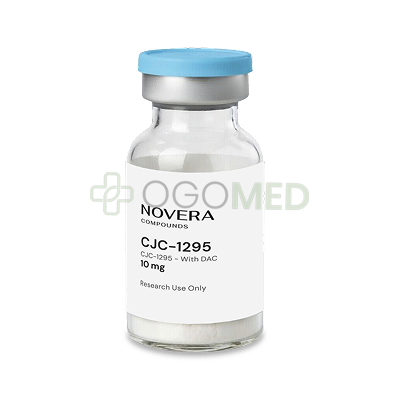







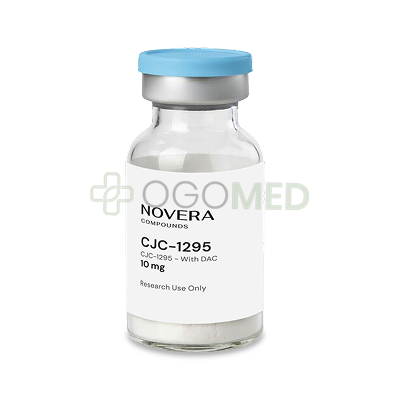
Novera CJC-1295 – With DAC
| Category: | Peptides |
| Brand | Novera |
| Strength | 10mg |
| Form | Lyophilized powder |
| Purity (%) | ≥99 |
| CAS number | 863288-34-0 |
| Chemical Formula | C₁₅₂H₂₅₂N₄₄O₄₂ |
| Molecular weight | 3367.9 |
| Synonyms | CJC-1295-DAC, Long-acting-CJC1295, DAC-modified-GHRH-analog |
| Peptide sequence | Proprietary modified peptide |
| Storage | Store at 2-8 °C. Protect from light and moisture |
| Shelf Life (lyophilized) | 24-36 months |
| Shelf Life (after reconstitution) | 21-28 days |
Learn more...
Novera CJC 1295 with DAC is presented as a 10 mg research peptide in lyophilized form, with a stated purity of at least 99%. CJC-1295 was developed as a synthetic GHRH analog designed to retain receptor activity while remaining in circulation considerably longer than native growth hormone releasing hormone. The material is designated for laboratory research use and is not an approved medicine, supplement, or finished injectable preparation.
The product is supplied with the following specifications:
- Brand: Novera;
- Strength: 10 mg per vial;
- Form: lyophilized powder;
- Stated purity: ≥99%;
- Listed CAS number: 863288-34-0;
- Listed molecular weight: 3367.9 g/mol;
- Storage: 2–8°C, protected from light and moisture;
- Listed shelf life: 24–36 months before reconstitution.
The lyophilized format helps preserve the structural integrity of this synthetic analog during storage and transport. It also allows laboratories to prepare the material according to the concentration, solvent, and assay conditions required by an approved research protocol. Because peptide stability can be affected by moisture, light, temperature changes, and repeated handling, the vial should remain sealed until it is needed for controlled laboratory work.
What Novera CJC-1295 with DAC Actually Contains
CJC-1295 is based on the active 29-amino-acid fragment of GH releasing hormone, with substitutions intended to reduce rapid enzymatic breakdown. The DAC version adds a reactive maleimidopropionamide group through a lysine derivative at the C-terminus. This modification creates the defining drug affinity complex, which can form a covalent bond with a free thiol group on circulating albumin.
The resulting albumin binding mechanism changes the pharmacokinetic behavior of the peptide. Native GHRH disappears from circulation quickly, whereas DAC-modified CJC-1295 showed an estimated long half life of approximately 5.8–8.1 days in an early human study. Binding to albumin reduces rapid clearance and supports prolonged stimulation of the GH axis, but it may also permit interactions with thiol-containing proteins other than albumin. That possibility is among the unresolved molecular interactions identified in the FDA assessment.
CJC-1295 DAC should not be confused with modified GRF(1-29), which is often marketed under a similar name despite lacking the DAC group. Nor is it the same as a growth hormone releasing peptide such as GHRP-2, GHRP-6, or ipamorelin. Those compounds belong to another group of growth hormone secretagogues and act primarily through the ghrelin receptor rather than the GHRH receptor.
How the GHRH Receptor Pathway Works for Muscle Growth and Fat Loss
The biological target is the GHRH receptor on somatotroph cells in the anterior pituitary. These receptors belong to the family of G protein coupled receptors. When activated, they stimulate adenylyl cyclase, increase cyclic adenosine monophosphate, and engage protein kinase A. These events can activate protein kinases that influence secretion within minutes and transcription over a longer period.
The pathway reaches the cell nucleus by phosphorylating transcription regulators capable of interacting with specific DNA sequences and regulatory response elements. This may alter gene expression, including transcription associated with GH production. Measurements such as GH MRNA levels and total pituitary RNA are therefore relevant in experimental models examining whether receptor activity changes hormone synthesis as well as release.
GH entering the circulation subsequently acts on receptors in many tissues. Its receptor signals partly through the janus kinase signal transducer pathway, affecting numerous cellular functions rather than a single outcome. In the liver, GH can influence the IGF-I gene, leading liver cells to produce insulin like growth factor I. IGF-I then participates in growth, metabolism, tissue maintenance, and feedback regulation of the hypothalamic–pituitary axis.
Sustained Exposure Is Not the Same as Natural Pulses
Natural GH secretion is not constant. It follows a pattern of pulsatile secretion shaped by GHRH, somatostatin, sleep, age, nutritional state, sex, exercise, and metabolic health. A long acting GHRH analog can extend receptor exposure, but it does not simply reproduce every detail of normal endocrine timing.
This distinction matters because continuous stimulation and physiological pulses may create different downstream responses. Early clinical work found that CJC-1295 increased mean GH concentrations while preserving detectable pulses, although their amplitude and overall hormonal exposure changed. The compound’s extended activity also means that repeated exposure may produce accumulation instead of a series of fully independent events.
Some experimental questions suited to this mechanism include:
- whether pulse frequency changes while peak growth hormone levels rise;
- how sustained GH exposure affects circulating IGF-I;
- whether receptor responsiveness changes across repeated sampling periods;
- how somatostatin feedback modifies the response;
- whether prolonged exposure produces different transcriptional effects from short GHRH pulses.
These questions require frequent hormone sampling rather than a single measurement. One isolated GH value can miss a pulse or exaggerate its importance, while average IGF I levels reflect a slower downstream response. Timing, assay performance, baseline endocrine status, and the exact form of CJC-1295 can materially change the interpretation.
What Human Research on Growth Hormone Has Shown
The best-known controlled study enrolled 49 healthy adults between 21 and 61 years of age. After one administration, mean plasma GH increased approximately two- to tenfold for six days or longer, while mean IGF-I rose about 1.5- to threefold for nine to eleven days. The estimated half-life was 5.8–8.1 days. With multiple weekly or biweekly administrations, mean IGF-I remained above baseline for as long as 28 days, showing a cumulative response.
The principal observations were:
- sustained, dose-dependent changes in GH and IGF-I;
- hormonal activity extending well beyond the initial exposure;
- evidence of accumulation after multiple administrations;
- no serious adverse reaction reported in that small, short trial;
- predominantly male participation across the limited human evidence base.
That evidence establishes pharmacodynamic activity, not clinical benefit. The studies did not demonstrate improved health, durable fat loss, better physical performance, or successful treatment of growth hormone deficiency. The FDA later noted that the available trials were small, short, and conducted mainly in healthy volunteers. Long-term human safety remains unknown. Any statement that the peptide appears promising must remain separate from a claim that it is effective or appropriate for personal use.
Research into Body Composition and Metabolism
Interest in CJC-1295 often extends to body composition because the GH–IGF-I axis influences lipid turnover, nitrogen retention, and tissue remodeling. Researchers may measure lean mass, subcutaneous fat mass, circulating lipids, glucose regulation, and fat tissue levels of relevant enzymes or signaling molecules. These endpoints describe biological changes within a defined model; they do not establish a cosmetic or weight-management indication.
Common areas of investigation include:
- GH and IGF-I effects on protein synthesis;
- adipocyte responses associated with fat metabolism;
- changes in energy expenditure or substrate use;
- maintenance of muscle and bone structure;
- endocrine feedback during altered nutritional states;
- differences between deficient and intact GH-axis models.
Claims about muscle growth, increased muscle mass, or increased energy are often much stronger than the available CJC-1295 evidence supports. A rise in a hormone or signaling marker is not the same as a proven functional improvement. Food intake, activity, hydration, glycogen, age, sex, and baseline endocrine status can all alter apparent changes in tissue weight or performance.
The phrase normalizes growth also needs careful handling. A model showing increased growth after experimentally impaired GHRH signaling does not prove that the compound improves growth in a healthy organism or restores a human disorder. Likewise, maintaining normal body weight in one animal experiment cannot be translated into an obesity treatment claim.
Insights from GHRH-Deficient Animal Models
Animal work has examined CJC-1295 in the GHRH knockout mouse, a model with reduced pituitary GH production and low circulating IGF-I. These animals provide a way to test whether an intact pituitary can respond when hypothalamic GHRH input is absent. They are not equivalent to people with every form of growth hormone deficiency, particularly when pituitary somatotroph function is severely impaired.
Research using GHRHKO murine models reported activation of the GH–IGF-I axis and changes in growth-related measurements following CJC-1295 exposure. Researchers have examined body length, organ weights, fat compartments, pituitary transcription, and serum hormones. The data suggests that the compound can engage functional GHRH receptors in these models, but translation is limited by species biology, experimental dosing, and the artificially defined genetic defect.
Broader GHRH biology also reaches beyond somatic growth. Receptors or related signaling systems have been studied in connection with neuronal function, metabolism, cellular survival, and tissue-specific regulatory networks. Reviews in publications such as Cold Spring Harbor Perspectives can provide useful background on endocrine control, although a review of the GH axis is not direct evidence for a particular CJC-1295 product.
What CJC-1295 DAC Does Not Establish
Novera CJC 1295 with DAC is not an approved peptide therapy, and no validated therapeutic regimen accompanies the research vial. The available evidence does not establish treatment of growth hormone deficiency, age-related changes, obesity, muscle wasting, osteoporosis, or recovery problems. It also does not show that manipulating GH within or above a reference interval necessarily produces a favorable clinical result.
A laboratory measurement must be interpreted within the whole axis. GH may stimulate IGF-I production, while IGF-I and somatostatin feed back to suppress further release. Sex steroids, insulin status, liver function, nutrition, sleep, and age can alter the response. Even when the compound raises a target biomarker, the downstream effect may differ between tissues and between subjects.
The distinction is especially important when comparing CJC-1295 with direct recombinant GH. One stimulates an existing pituitary system; the other supplies hormone externally. If functional somatotroph capacity is absent, a secretagogue may produce little response. None of this material should be read as preparation guidance, a dosage schedule, or support for once daily administration.
Side Effects Seen in Human Studies
The early trials described CJC-1295 as relatively well tolerated at the lower studied exposures, but adverse events were common and the participant pool was small. Injection-site reactions were reported most frequently. The FDA’s later analysis found that roughly 70% of treated subjects in one study experienced local irritation, redness, firmness, pain, or itching. Transient urticarial reactions occurred in almost 30%. Higher experimental exposures generally produced more frequent or prolonged reactions.
Reported or plausible safety concerns include:
- injection-site erythema, itching, tenderness, swelling, or induration;
- headache, flushing, warmth, and transient low blood pressure;
- diarrhea, nausea, abdominal pain, or loose stools;
- dizziness and dose-related increases in heart rate;
- fluid retention and altered glucose regulation associated with GH activity;
- antibody formation, allergy, or immune reactions to peptide impurities;
- effects caused by excessive or persistent GH and IGF-I signaling.
One subject developed temporary involuntary leg contractions and impaired coordination after a second study exposure, while two experienced transient dizziness and hypotension. No consistent changes in glucose, liver tests, urine findings, or electrocardiograms were identified in the small trials. That absence should not be mistaken for a complete safety profile, particularly because most participants received only one administration and long-term surveillance was not available. The FDA review summarizes the human adverse-event data.
Longer-Term and Product-Quality Risks
Chronic stimulation of the GH–IGF-I system raises questions that short studies cannot answer. These include insulin resistance, edema, joint discomfort, nerve compression symptoms, changes in blood pressure, and the theoretical consequences of sustained growth signaling in susceptible tissues. The FDA also noted that pituitary hyperplasia or tumors resulting from long-term somatotroph overstimulation could not be ruled out from the available evidence.
The DAC group creates another layer of uncertainty. Although it is designed to bind albumin, its reactive chemistry may permit binding to cysteine-containing specific proteins elsewhere in circulation. The biological significance of those off-target attachments has not been adequately characterized. A longer residence time also means that unwanted activity cannot be stopped as quickly as exposure to a short-acting peptide.
Product quality matters just as much as the intended molecule. Purity percentage alone does not confirm identity, sterility, endotoxin control, residual solvents, or absence of aggregates. Peptide-related impurities and aggregation may increase immunogenic risk. A credible laboratory assessment may therefore require identity testing by mass spectrometry, chromatographic purity analysis, water content, endotoxin data, and documentation of the manufacturing batch.
Stability, Oxidation, and Reconstitution Variables
Lyophilization slows degradation, but it does not make a peptide indefinitely stable. Temperature, moisture, light, pH, oxygen exposure, agitation, surface adsorption, and repeated freeze–thaw cycles may affect integrity. Methionine oxidation is one example of a chemical change that can alter the structure or activity of a peptide containing susceptible residues, sometimes without producing a visible difference.
Before laboratory preparation, researchers should document:
- vial and seal condition;
- product name, lot number, and stated active form;
- matching Certificate of Analysis;
- storage and shipping temperature history;
- solvent, final concentration, and preparation time;
- appearance before and after reconstitution;
- aliquot location, test date, and disposal record.
Analytical methods should be selected according to what must be established. HPLC may estimate purity but cannot by itself prove sterility or endotoxin status. A general identity signal may also fail to distinguish every positional modification, salt form, oxidation product, or aggregate. For CJC-1295, the persistent confusion between DAC and non-DAC forms makes orthogonal confirmation particularly valuable.
Storage and Laboratory Handling
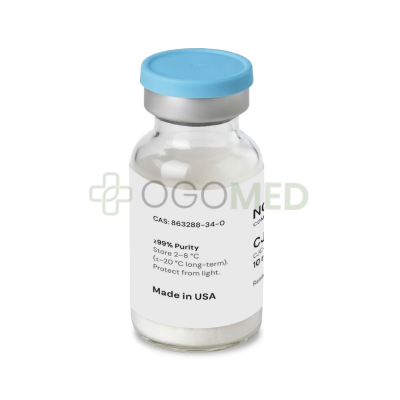
The OGOMed label states that unopened Novera CJC 1295 DAC should be stored at 2–8°C and protected from light and moisture. Its listed shelf life is 24–36 months while lyophilized and 21–28 days after reconstitution. These are supplier specifications rather than universal stability guarantees, so the batch documentation and an institution’s validated protocol take priority.
Keep the vial sealed in its original packaging until the protocol requires it. After reconstitution, stability depends on solvent, pH, concentration, sterility, container material, and storage conditions; the calendar period on a product page cannot replace experimental verification. Repeated warming, vigorous agitation, or multiple freeze–thaw cycles may promote degradation or aggregation.
Novera CJC 1295 with DAC is intended only for controlled work in suitable research models. It is not for human or veterinary administration, self-experimentation, diagnostic use, bodybuilding, or unsupervised performance enhancement. Laboratories should quarantine material if its identity is ambiguous, its seal is damaged, its temperature history is unknown, or its documentation does not clearly distinguish the DAC-modified compound from other CJC-1295 forms.
Where to Buy CJC 1295 with DAC
For laboratories sourcing CJC 1295 DAC, OGOMed provides a detailed product listing that identifies the strength, lyophilized form, stated purity, storage range, and expected shelf life. This makes it easier to assess the material before ordering and determine whether its documented properties fit research involving growth hormone releasing hormone and the pituitary gland.
OGOMed also offers clear delivery information and access to product support when batch or handling details need clarification. Researchers can review the available specifications before using the material in studies of receptor activity, hormone release, or related cellular signaling pathways.
| Category: | Peptides |
| Brand | Novera |
| Strength | 10mg |
| Form | Lyophilized powder |
| Purity (%) | ≥99 |
| CAS number | 863288-34-0 |
| Chemical Formula | C₁₅₂H₂₅₂N₄₄O₄₂ |
| Molecular weight | 3367.9 |
| Synonyms | CJC-1295-DAC, Long-acting-CJC1295, DAC-modified-GHRH-analog |
| Peptide sequence | Proprietary modified peptide |
| Storage | Store at 2-8 °C. Protect from light and moisture |
| Shelf Life (lyophilized) | 24-36 months |
| Shelf Life (after reconstitution) | 21-28 days |
Learn more...