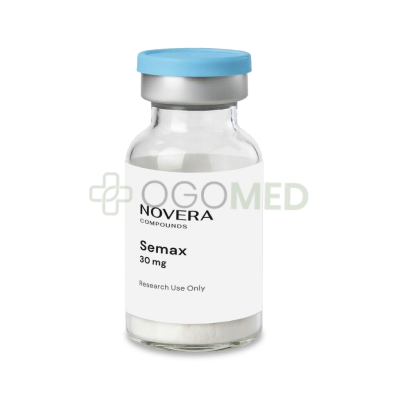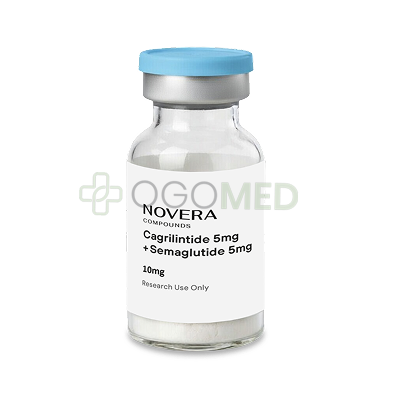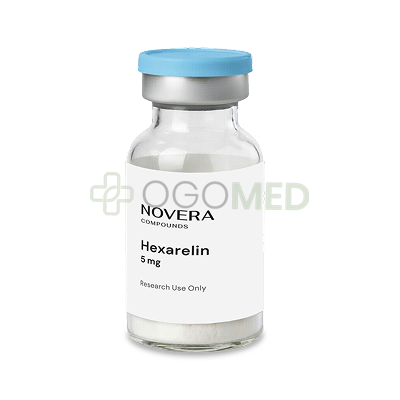












Novera Semaglutide
| Category: | Peptides |
| Brand | Novera |
| Strength | 10mg, 20mg, 2mg, 50mg, 5mg |
| Form | Lyophilized powder |
| Purity (%) | ≥99 |
| CAS number | 910463-68-2 |
| Chemical Formula | C₁₈₇H₂₉₁N₄₅O₅₉ |
| Molecular weight | 4114 |
| Synonyms | GLP S, GLP1-analog, Ozempic-type-peptide |
| Peptide sequence | Proprietary modified peptide |
| Storage | Store at 2-8 °C. Protect from light and moisture |
| Shelf Life (lyophilized) | 24-36 months |
| Shelf Life (after reconstitution) | 7-14 days |
Learn more...
Semaglutide is a synthetic GLP-1 analog studied for its effects on weight management, glycemic control, and cardiometabolic pathways. Semaglutide is approved as a medicine under brand names including Ozempic and Wegovy, and that approval is why the molecule is one of the most heavily investigated compounds in metabolic research.
Novera Semaglutide is supplied for laboratory research use only. It is not an approved medicine, not intended for human administration, and carries no diagnostic or therapeutic claims. All information below describes published research findings, not guidance for any human use.
What Novera Semaglutide Is
Novera Semaglutide is a synthetic analog of the endogenous incretin hormone GLP-1. The molecule shares approximately 94% homology with native human GLP-1 but carries two key modifications: an acyl fatty-acid chain attached at the lysine-26 position, and amino-acid substitutions that resist DPP-4 proteolysis (Lau et al., 2015). Lau et al. (2015) report that these changes sharply raise albumin affinity at the cost of receptor potency: the GLP-1 receptor affinity of semaglutide is 0.38 nM, about three-fold lower than liraglutide, and the plasma half-life after intravenous dosing in mini-pigs is 46.1 h.
Why Researchers Study Semaglutide
GLP-1 receptor activation triggers a cAMP-PKA signaling cascade, downstream PI3K/AKT modulation, and neuronal circuit changes affecting appetite and glucose homeostasis. These pathways make the compound relevant across several research areas.
Weight Loss
Jeromson et al. (2025, The Journal of Physiology) treated mice with diet-induced obesity for four weeks and found weight loss was greater with semaglutide than with calorie-matched pair-feeding despite matched energy intake, alongside a fall in energy expenditure in both arms. The largest human dataset is the STEP 5 trial (Garvey et al., 2022, Nature Medicine): mean body weight changed by -15.2% with semaglutide 2.4 mg weekly versus -2.6% with placebo at week 104 in 304 adults. Rodent work by Gabery et al. (2020, JCI Insight) shows the compound shifts food preference as well as total intake.
“Semaglutide modulated food preference, reduced food intake, and caused weight loss without decreasing energy expenditure.” (Gabery et al., 2020, JCI Insight)
Glycemic Control
Semaglutide improves blood sugar control in type 2 diabetes models. In the human SUSTAIN 5 trial, Rodbard et al. (2018, The Journal of Clinical Endocrinology and Metabolism) reported that semaglutide added to basal insulin reduced HbA1c by 1.4 to 1.8 percentage points from a baseline near 8.4% over 30 weeks, versus 0.1 points with placebo. Low blood sugar events remained infrequent in monitored arms. This evidence level is human clinical trial data, providing a benchmark for blood sugar reduction that preclinical researchers reference when designing rodent glycemic studies.
Appetite and Neurobiology
Gabery et al. (2020, JCI Insight) mapped where the compound acts in rodents: semaglutide reached the brainstem, septal nucleus and hypothalamus via the circumventricular organs without crossing the blood-brain barrier, and induced c-Fos activity in ten brain areas, including the lateral parabrachial nucleus, which the authors tie to meal termination.
This primate model closely mirrors human metabolic responses, suggesting translational relevance for appetite neurobiology.
Cardiometabolic Outcomes
The cardiovascular outcomes trial SUSTAIN-6 (Marso et al., 2016, New England Journal of Medicine) randomised 3297 adults with type 2 diabetes to semaglutide or placebo for 104 weeks: the composite of cardiovascular death, non-fatal myocardial infarction or non-fatal stroke occurred in 6.6% of the semaglutide group versus 8.9% of the placebo group (hazard ratio 0.74). The same trial recorded significantly more retinopathy complications on semaglutide (hazard ratio 1.76), which is why ocular endpoints now appear routinely in GLP-1 preclinical protocols.
“Rates of retinopathy complications (vitreous hemorrhage, blindness, or conditions requiring treatment with an intravitreal agent or photocoagulation) were significantly higher.” (Marso et al., 2016, New England Journal of Medicine, SUSTAIN-6)
How Semaglutide Compares With Related Compounds
| Compound | Receptor Target | Evidence Level | Typical Research Use |
|---|---|---|---|
| Novera Semaglutide (this product) | GLP-1 receptor agonist | Preclinical and select clinical studies | Mechanistic and metabolic studies |
| Wegovy semaglutide (reference) | GLP-1 receptor agonist | Large-scale human trials | Comparative efficacy benchmarks |
| Tirzepatide | Dual GIP and GLP-1 receptor agonist | Large-scale human trials (SURPASS, SURMOUNT) | Comparing single-receptor with dual-receptor incretin signalling |
For mechanistic work on receptor binding kinetics, neuronal pathways or signal transduction in animal models, a research-grade peptide is the appropriate material. Approved semaglutide products carry large randomised human datasets and are the reference point when a laboratory needs a translational benchmark; Novera Semaglutide is bench material and carries no clinical evidence of its own.
What Research on Semaglutide Does Not Establish
The published literature on semaglutide is large, which makes its boundaries easy to overlook. What it does not establish:
-
The neuroanatomy is rodent work. Gabery et al. (2020) traced semaglutide to the brainstem, septal nucleus and hypothalamus in mice and rats; where the compound acts in the human brain, and whether the same circumventricular-organ route applies, has not been shown directly in people.
-
The effect does not outlast the treatment. Jeromson et al. (2025) withdrew semaglutide from diet-induced obese mice after four weeks and found lean and fat mass had both rebounded to baseline six weeks later, with muscle size and strength no different between groups.
-
Adverse-event data belong to the approved medicine, not to this material. In SUSTAIN-6 more participants discontinued semaglutide than placebo because of adverse events, mainly gastrointestinal, and the retinopathy signal above reached statistical significance; nothing comparable has been measured for research-grade peptide in any model.
“Semaglutide reduces muscle size and strength to the same extent as caloric restriction but may be more effective at promoting fat loss.” (Jeromson et al., 2025, The Journal of Physiology)
Where to Buy Novera Semaglutide
Licensed laboratory professionals looking to buy semaglutide peptides for research can obtain Novera Semaglutide through this store, which supplies the compound exclusively for preclinical and in vitro investigation by licensed providers.
-
Estimated delivery time 3 to 7 days.
-
Free shipping on orders over $750.
-
All US import fees and tariffs are covered by Ogomed, so the buyer pays nothing extra; customs checks under the new US import rules can add a little time to delivery.
-
Price match: if the same product is listed for less elsewhere, Ogomed will try to match it.
-
Support by phone +1-650-457-5621 and email, 10am to 6pm EST.
-
Sold to licensed professionals, for laboratory research use only.
Sold to licensed professionals for laboratory research use only.
References
- Lau, J., et al. (2015). Discovery of the Once-Weekly Glucagon-Like Peptide-1 (GLP-1) Analogue Semaglutide. Journal of Medicinal Chemistry, 58(18), 7370-7380. DOI: 10.1021/acs.jmedchem.5b00726
- Gabery, S., et al. (2020). Semaglutide lowers body weight in rodents via distributed neural pathways. JCI Insight, 5(6), e133429. DOI: 10.1172/jci.insight.133429
- Rodbard, H. W., et al. (2018). Semaglutide Added to Basal Insulin in Type 2 Diabetes (SUSTAIN 5): A Randomized, Controlled Trial. The Journal of Clinical Endocrinology and Metabolism, 103(6), 2291-2301. DOI: 10.1210/jc.2018-00070
- Marso, S. P., et al. (2016). Semaglutide and Cardiovascular Outcomes in Patients with Type 2 Diabetes. The New England Journal of Medicine, 375(19), 1834-1844. DOI: 10.1056/NEJMoa1607141
- Garvey, W. T., et al. (2022). Two-year effects of semaglutide in adults with overweight or obesity: the STEP 5 trial. Nature Medicine, 28(10), 2083-2091. DOI: 10.1038/s41591-022-02026-4
- Jeromson, S., et al. (2025). Semaglutide impacts skeletal muscle to a similar extent as caloric restriction in mice with diet-induced obesity. The Journal of Physiology. DOI: 10.1113/JP289449
Novera Semaglutide is a research peptide, an analog of human GLP-1 modified for extended half-life through acylation and amino-acid substitution. It is supplied for laboratory research use only and is not a medicine. The molecule mirrors the structure studied in the published metabolic and glycemic literature.
The compound binds the GLP-1 receptor, a class B GPCR, triggering cAMP production and downstream PKA activation. Lau et al. (2015) measured a GLP-1 receptor affinity of 0.38 nM for semaglutide, roughly three-fold weaker than liraglutide: the design trades receptor potency for much stronger albumin binding and a far longer plasma half-life.
Jeromson et al. (2025) found greater weight loss with semaglutide than with calorie-matched pair-feeding in diet-induced obese mice over four weeks, and full rebound of fat and lean mass after withdrawal. In humans, STEP 5 (Garvey et al., 2022) reported a mean body weight change of -15.2% versus -2.6% with placebo at week 104.
Wegovy is a branded, FDA-approved product backed by large-scale human efficacy data across thousands of participants. Novera Semaglutide serves preclinical and mechanistic research contexts where receptor signaling, not clinical outcomes, is the focus. Evidence levels differ substantially between the two.
Rodent diet-induced obesity models in mice and rats are the most common, as in Gabery et al. (2020) and Jeromson et al. (2025). In vitro GLP-1 receptor binding and cAMP assays, as in Lau et al. (2015), round out the standard toolkit.
Long-term safety data beyond approximately two years remain limited even in human trials. Weight regain after cessation is documented in animals but poorly characterized mechanistically. Effects on pancreatic tissue, neurobiology, and organ function over extended periods require further investigation, and animal findings need clinical confirmation.
No. Semaglutide is not named on the 2026 WADA Prohibited List, and GLP-1 receptor agonists are not covered as a class anywhere on it. Section S2 names specific peptide hormones, growth factors and related substances; GLP-1 analogues are not among them.
Researchers asking semaglutide where to buy for laboratory purposes can purchase Novera Semaglutide through this store. The product is restricted to licensed professionals conducting preclinical or in vitro research. Where to buy semaglutide online should always be evaluated against the supplier’s licensing disclosures and research-use-only restrictions.
| Category: | Peptides |
| Brand | Novera |
| Strength | 10mg, 20mg, 2mg, 50mg, 5mg |
| Form | Lyophilized powder |
| Purity (%) | ≥99 |
| CAS number | 910463-68-2 |
| Chemical Formula | C₁₈₇H₂₉₁N₄₅O₅₉ |
| Molecular weight | 4114 |
| Synonyms | GLP S, GLP1-analog, Ozempic-type-peptide |
| Peptide sequence | Proprietary modified peptide |
| Storage | Store at 2-8 °C. Protect from light and moisture |
| Shelf Life (lyophilized) | 24-36 months |
| Shelf Life (after reconstitution) | 7-14 days |
Learn more...