









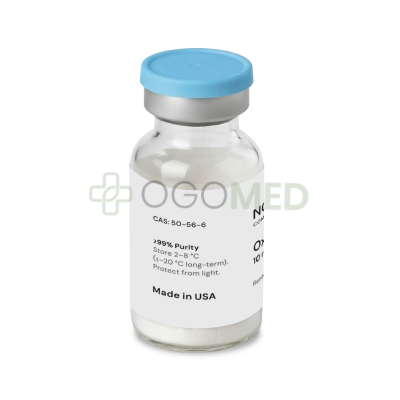
Novera Oxytocin
| Category: | Peptides |
| Brand | Novera |
| Strength | 10mg |
| Form | Lyophilized powder |
| Purity (%) | ≥99 |
| CAS number | 50-56-6 |
| Chemical Formula | C₄₃H₆₆N₁₂O₁₂S₂ |
| Molecular weight | 1007.2 |
| Synonyms | OXT-peptide, Neuropeptide-hormone |
| Peptide sequence | Cys-Tyr-Ile-Gln-Asn-Cys-Pro-Leu-Gly-NH₂ |
| Storage | Store at 2-8 °C. Protect from light and moisture |
| Shelf Life (lyophilized) | 18-24 months |
| Shelf Life (after reconstitution) | 24-72 hours |
Learn more...
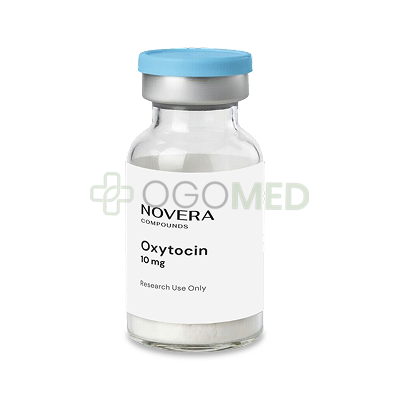
Novera Oxytocin is a research-grade synthetic peptide supplied as 10 mg of lyophilized powder with a stated purity of at least 99%. Novera lists oxytocin acetate, representing the nine-residue signaling peptide made naturally in the human hypothalamus. Oxytocin is often called the love hormone or cuddle hormone, but those nicknames reduce a complex system to a catchy promise. The peptide has a vital role in reproductive physiology and is also examined in neuroscience, metabolism, pain, and interpersonal research.
The main product details are:
- Brand: Novera Compounds;
- Strength: 10 mg per vial;
- Form: lyophilized peptide powder;
- Sequence length: nine amino acids;
- Listed purity: ≥99%;
- Status: laboratory research material.
This vial is not an oxytocin nasal spray, ready-to-use injection, or finished medicine. It differs from a patient-specific compounded medication dispensed after a valid prescription. Any preparation, concentration, or treatment dose must come from an approved protocol, not consumer instructions for an oxytocin spray.
Why the Experimental Form Matters
Lyophilization protects the peptide during storage, but the dry material is only the starting point for laboratory preparation. Solvent choice, pH, concentration, container material, and time after reconstitution can all influence stability or receptor activity. A nasal study, cell-culture assay, and isolated-tissue experiment expose their targets in very different ways. Results from one route therefore cannot be transferred automatically to another.
Variables that deserve separate documentation include:
- peptide identity and batch-specific purity;
- solvent composition and final pH;
- preparation time and exposure duration;
- delivery device or culture system;
- temperature history and number of freeze–thaw cycles.
These details often explain why two apparently similar studies reach different results. A metered nasal device may vary in droplet size and deposition pattern, while a cell assay depends on medium composition and receptor density. Freshly prepared material may also behave differently from a solution held near the end of its documented stability period.
Delivery in Oxytocin Nasal Spray Research
Oxytocin is available not only in powder, but also in nasal spray, vaginal gel and sublingual tablet forms. Much of the interest in intranasal Oxytocin comes from studies exploring emotional recognition, trust, stress processing, and other aspects of social cognition. An oxytocin nasal spray offers researchers a noninvasive delivery route, although absorption can vary with the device, formulation, nasal anatomy, and administration technique. These variables help explain why apparently similar trials do not always produce the same results.
A research oxytocin nasal spray is prepared for a specific protocol with a controlled concentration and metered delivery system. Lyophilized Novera Oxytocin represents the starting laboratory material, so findings from nasal studies provide scientific context rather than a universal model for every experiment. Researchers must consider the route, target tissue, exposure period, and properties of the spray when comparing published evidence.
Composition and Natural Oxytocin Signaling
Oxytocin is a cyclic nonapeptide containing nine amino acids and a disulfide bridge that holds its active shape. In the body, specialized neurons transport it to the posterior pituitary gland, which releases it into the blood. Receptors occur in the uterus and mammary gland, while pathways in the brain are studied for effects on emotion, attention, and behavior.
Receptor activation triggers intracellular signaling and a tissue-specific response. In the uterus, it promotes smooth-muscle contractions during labor and supports uterine activity after birth. Шn mammary tissue, it causes milk ejection during breastfeeding. Oxytocin does not directly create milk supply, so its let-down function should not be confused with milk production in nursing mothers.
The oxytocin receptor is a G-protein-coupled receptor that commonly signals through phospholipase C and intracellular calcium. Its location, abundance, and sensitivity differ across tissues and can change with hormonal state. At sufficiently high concentrations, oxytocin may also interact with related vasopressin receptors, which is one reason concentration selection matters when researchers interpret off-target effects.
Why Researchers Study Oxytocin Use
The same receptor system touches reproduction, stress processing, reward, feeding, and interpersonal cues. Research suggests that effects depend on timing, context, biology, and the measured task. Oxytocin levels do not reliably reveal whether someone will trust more, feel closer to another person, or form healthier relationships.
Current research areas include:
- recognition of facial emotion and other aspects of social cognition;
- trust, attachment, social bonding, and changing social interactions;
- experimental models involving autism, social anxiety, and depression;
- affective instability in borderline personality disorder;
- appetite, food reward, metabolism, and obesity;
- sensory processing and exploratory pain management research.
Social and Emotional Health Research Is Context-Dependent
Studies of intranasal oxytocin have produced intriguing but inconsistent findings. Some report shifts in attention to social cues. Others find no meaningful improvement in symptoms or daily functioning. Work in journals such as Molecular Psychiatry shows why small samples, different devices, differences between male and female participants, and weak replication make claims about emotional health premature.
Oxytocin is not a shortcut to trust, empathy, or intimacy. Expectations, environment, experience, and underlying conditions may change the effect. A prosocial shift in one setting can become defensive vigilance in another. For people who struggle with psychiatric or developmental difficulties, experiments do not establish a general therapeutic benefit.
Reproductive and Sexual Dysfunction Research
The best-established medical actions concern childbirth, not relationship enhancement. Approved injections may be prescribed in selected obstetric situations to reinforce uterine activity or manage postpartum bleeding. This monitored practice should not be confused with experimental oxytocin use involving Novera powder.
Oxytocin release can occur with touch, nursing, sexual intercourse, and orgasm, which has encouraged studies of off-label purposes such as social anxiety or sexual dysfunction. Results remain mixed, and oxytocin alone does not determine desire or sexual satisfaction in women. Researchers must also account for hormones, medications, mood, relationship context, cardiovascular status, and other variables before interpreting a change.
Reproductive Exposure Requires a Real Risk Lens
The Oxytocin treatment can stimulate the uterus, creating a real risk if experimental material is administered during pregnancy outside specialist obstetric care. Pregnant women should not interpret intranasal or laboratory research as evidence of safety as Oxytocin can help speed up labor during childbirth.. Excessive stimulation may produce abnormally strong uterine activity and reduce fetal oxygen delivery, so reproductive research demands strict ethical review.
What Human Studies Actually Establish
Short trials investigate nasal delivery because it is noninvasive, although the amount reaching relevant neural tissue remains uncertain. A safety review found no consistent increase in adverse events during controlled exposure, but later analyses note limited samples and inadequate long-term observation. The results do not prove that every spray, concentration, or repeated schedule is safe.
Trials in neurodevelopmental conditions, schizophrenia, mood disorders, and anxiety have not produced dependable clinical benefit. Evidence for treating psychiatric illness, improving a partnership, or correcting low natural production remains insufficient. Differences in devices, participants, and outcomes make a normal result in one experiment difficult to compare with another.
Replication is especially difficult when investigators use different timing windows or social tasks. Placebo-controlled designs help separate pharmacological effects from expectations, but even statistically significant findings may be small or limited to one laboratory measure. A useful paper should report the formulation, administration method, participant characteristics, adverse-event collection, and preregistered outcomes clearly enough for another team to repeat the work.
Side Effects and Important Experimental Risks
Short studies often describe oxytocin as reasonably tolerated, yet that should not be read as risk-free. Reported mild effects include nasal irritation, headache, dizziness, nausea, fatigue, dry throat, runny nose, watery eyes, and temporary changes in mood or alertness. Long-term exposure, repeated high concentrations, and use in medically complex populations remain less clearly characterized.
Important hazards and uncertainties include:
- allergic hypersensitivity to oxytocin or formulation components;
- excessive uterine activity and fetal distress;
- fluid retention, low sodium, and water intoxication with excessive exposure;
- possible cardiovascular changes or medication interactions;
- contamination, endotoxin, identity, or sterility problems in poorly controlled material;
- unpredictable psychological effects in vulnerable participants.
The water-balance concern is rare but serious: a case linked excessive nasal use with hyponatremic encephalopathy and seizures. Kidney or heart disease, seizure history, other drugs, and fluid intake may change risk. Investigators should define stopping rules, monitoring, and emergency procedures before exposure.
“Love Hormone” Storage and Laboratory Handling
Novera Oxytocin should remain sealed at 2–8°C and protected from light and moisture, following its label and batch documents. Suppliers list 18–24 months for lyophilized material and 7–14 days after reconstitution, but the batch certificate and protocol take priority. Temperature excursions, humidity, and unsuitable solvents can alter integrity without a visible warning.
After reconstitution, record the solvent, concentration, date, lot, and operator. Use small aliquots when permitted, avoid repeated freeze–thaw cycles, and never assume a clear solution remains stable. Cloudiness, particles, a damaged seal, missing traceability, or an unexplained temperature excursion should trigger quarantine under the laboratory’s quality procedure. Novera Oxytocin is for controlled research, not self-administration, clinical prescribing, or unsupervised experimentation.
Where to Buy Oxytocin Pain Management
For researchers looking for a reliable source of Novera Oxytocin, OGOMed offers a convenient ordering process supported by detailed product specifications. The listing clearly identifies the 10 mg strength, lyophilized form, stated purity, storage temperature, and expected shelf life, making it easier to assess the material before purchase. Transparent delivery information and access to professional customer support also help laboratories plan orders and maintain appropriate handling conditions.
| Category: | Peptides |
| Brand | Novera |
| Strength | 10mg |
| Form | Lyophilized powder |
| Purity (%) | ≥99 |
| CAS number | 50-56-6 |
| Chemical Formula | C₄₃H₆₆N₁₂O₁₂S₂ |
| Molecular weight | 1007.2 |
| Synonyms | OXT-peptide, Neuropeptide-hormone |
| Peptide sequence | Cys-Tyr-Ile-Gln-Asn-Cys-Pro-Leu-Gly-NH₂ |
| Storage | Store at 2-8 °C. Protect from light and moisture |
| Shelf Life (lyophilized) | 18-24 months |
| Shelf Life (after reconstitution) | 24-72 hours |
Learn more...