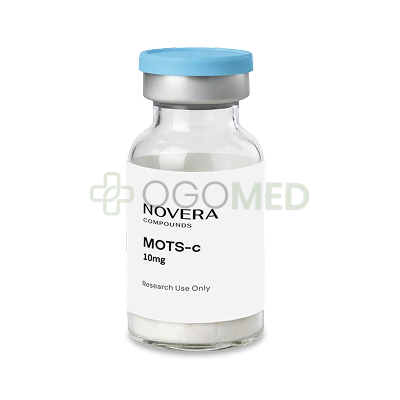




















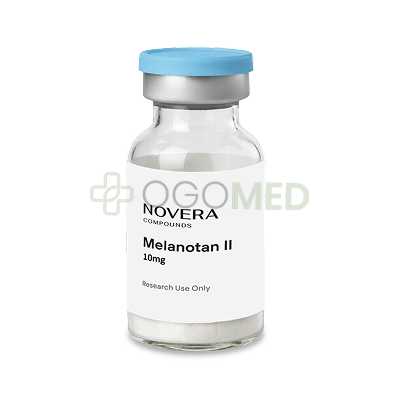
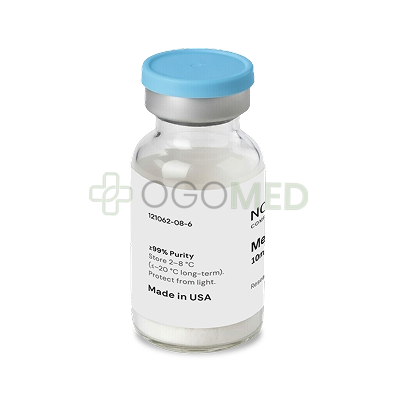
Novera Melanotan II
In Stock
| Category: | Peptides |
| Brand | Novera |
| Strength | 10mg |
| Form | Lyophilized powder |
| Purity (%) | ≥99 |
| CAS number | 121062-08-6 |
| Chemical Formula | C₅₀H₆₉N₁₅O₉ |
| Molecular weight | 1024.2 |
| Synonyms | MT-2, Melanocyte-stimulating-peptide |
| Peptide sequence | Cyclized melanocortin analog (Proprietary modified peptide) |
| Storage | Store at 2-8 °C. Protect from light and moisture |
| Shelf Life (lyophilized) | 18-24 months |
| Shelf Life (after reconstitution) | 7-14 days |
Learn more...
Melanotan II (Novera) is a synthetic peptide that has attracted considerable interest in modern peptide research due to its broad activity within the melanocortin system. Scientists have investigated this compound in connection with several physiological processes, including skin pigmentation, neuroendocrine signaling, appetite regulation, energy balance, and sexual function. Its diverse biological profile has made Melanotan II (MT II) a valuable subject in numerous laboratory studies. The following overview explains the peptide’s composition, mechanism of action, research applications, expected outcomes, potential side effects, and recommended handling practices.
Note:
Melanotan II (Novera) is required to be supplied exclusively for research and investigational purposes. It is intended for professional use in appropriate laboratory settings.
What Is Melanotan II (MT II)?
Melanotan II is a synthetic analogue of alpha-melanocyte-stimulating hormone, a naturally occurring peptide involved in numerous physiological processes. Scientists developed Melanotan II to create a longer-lasting compound capable of interacting with melanocortin receptors while exhibiting greater stability than the endogenous hormone. Melanotan II has a molecular weight of 1024.2 g/mol. Because these receptors participate in several biological functions, Melanotan II has become an important research tool for investigating receptor-mediated signaling and physiological regulation. Studies have explored its influence on pigmentation pathways, central nervous system signaling, appetite regulation, energy homeostasis, and sexual behavior, making it one of the most extensively investigated melanocortin peptides. The Novera formulation is manufactured with a focus on quality and consistency, allowing researchers to work with a peptide designed to support reproducible laboratory investigations.
Composition of Melanotan II (Novera)
Melanotan II (Novera) contains a synthetic peptide produced under carefully controlled manufacturing conditions to support high standards of purity and batch consistency. Typical product characteristics include:
- Synthetic Melanotan II peptide as the active component;
- High-purity formulation suitable for research applications;
- Lyophilized presentation for laboratory reconstitution where applicable;
- Protective packaging designed to help maintain peptide stability;
- Quality control procedures that verify product identity and consistency.
Consistent composition is essential in peptide research, helping investigators minimize unnecessary variability between experiments.
Note:
Melanotan II contains the biologically significant Phe-Arg-Trp (phenylalanine–arginine–tryptophan) sequence, a structural motif associated with the activity of melanocortin peptides. This region contributes to the peptide’s ability to interact with melanocortin receptor pathways and plays a role in receptor recognition and signaling. By incorporating key elements of the a-MSH peptide structure, Melanotan II provides researchers with a valuable model for studying melanocortin-mediated physiological processes.
Mechanism of Action
Melanotan II has been widely investigated for its ability to bind to and activate multiple melanocortin receptor subtypes. They participate in numerous physiological signaling pathways throughout the body, making them valuable targets in peptide research. Rather than affecting only one biological process, Melanotan II influences several interconnected melanocortin-mediated pathways. Researchers continue to investigate how receptor engagement contributes to downstream cellular signaling and broader physiological responses. Areas of scientific interest include:
- Melanocortin receptor-mediated signaling;
- Neuroendocrine communication;
- Regulation of pigmentation pathways;
- Central nervous system activity;
- Energy balance and metabolic regulation (it is reported that Melanotan II reduces food intake and body weight in studies);
- Behavioral physiology.
Its broad receptor activity explains why Melanotan II remains relevant across multiple research disciplines.
Note:
Melanotan II is a synthetic melanocortin receptor agonist that has been investigated for its ability to activate melanocortin-mediated signaling pathways. Research has explored its relationship with mechanisms involved in sexual physiology, including responses associated with cavernous nerve stimulation and neural regulation of erectile function. At the cellular level, melanocortin receptor activation may promote signaling events such as intracellular cAMP accumulation, which plays a role in various physiological processes. Experimental research has also examined the potential involvement of melanocortin pathways in neuronal activity and peripheral nerve regeneration, although these findings remain part of ongoing scientific investigation.
Research Applications and Scientific Interest
Melanotan II has become a versatile peptide within biomedical research because it can be investigated in several different physiological contexts. Common areas of investigation include:
- Pigmentation biology (in this regard, it is worth mentioning that Melanotan II can mask the visual signs of melanoma);
- Dermatological research;
- Melanocortin pharmacology;
- Neurobiology;
- Endocrine signaling;
- Metabolic regulation, together with an impact on the food intake behaviour and thermogenic responses;
- Appetite and feeding behavior;
- Sexual function research, including penile erection, reduced time until the first erectile event, and erectile responses (Melanotan II enhances erectile function in men with erectile dysfunction. More precisely, a dosage of 1 mg/kg intravenously facilitates penile erection).
This diversity of applications continues to drive scientific interest in Melanotan II as researchers seek a deeper understanding of melanocortin biology.
Expected Research Outcomes
The effects observed during Melanotan II studies depend on numerous experimental variables, including the research model, dosage protocol, duration of the investigation, and laboratory methodology. Rather than producing identical findings across studies, the peptide provides researchers with opportunities to investigate several physiological systems influenced by melanocortin signaling.
Research on Pigmentation
Melanotan II is perhaps best known for its relationship with pigmentation research. Because it is an analogue of a-MSH, researchers have investigated its ability to activate pathways involved in melanin production within melanocytes. Scientific investigations have examined:
- Melanin synthesis;
- Pigment cell activity;
- Regulation of melanogenesis;
- Melanocortin signaling in skin cells;
- Cellular responses involved in pigmentation.
These studies have contributed to a broader understanding of how melanocortin signaling influences skin pigmentation and the biological processes responsible for melanin production.
When discussing the involvement of Melanotan II research on pigmentation, it is important to mention that Melanotan II does not provide protection against UV damage.
Central Nervous System Research
Melanocortin receptors are also expressed within the central nervous system, making Melanotan II valuable for studying neurological and neuroendocrine signaling. Researchers continue to investigate its influence on:
- Central melanocortin pathways;
- Neurobiological signaling mechanisms;
- Behavioral physiology;
- Neuroendocrine regulation;
- Receptor-mediated communication within the brain.
These investigations expand scientific knowledge of the complex relationship between peptide signaling and central physiological regulation.
Appetite and Energy Regulation
Another important area of investigation involves appetite regulation and energy homeostasis. Certain melanocortin signaling targets play established roles in controlling feeding behavior and metabolic balance, prompting researchers to study Melanotan II within these physiological systems. Research has explored:
- Appetite-regulating pathways;
- Energy homeostasis;
- Feeding behavior;
- Metabolic signaling;
- Central regulation of energy balance.
Although these findings continue to develop, they illustrate the broad biological relevance of melanocortin signaling.
Research Related to Sexual Function
Melanotan II has also been investigated for its influence on central pathways associated with sexual function, sexual desire, and sexual behavior. Because melanocortin signaling participates in several neurobiological processes, researchers have examined how receptor activation may contribute to these complex physiological responses. Areas of investigation include:
- Central regulation of sexual function;
- Sexual desire pathways;
- Sexual motivation;
- Neurobiological mechanisms involved in arousal;
- Communication between central signaling systems and reproductive physiology.
Observed outcomes differ between studies, emphasizing the importance of carefully designed experimental protocols and appropriate interpretation of research findings.
Potential Side Effects
Like many bioactive peptides, Melanotan II has been associated with some side effects reported during scientific investigations (especially if larger doses have been involved). The nature and frequency of these observations depend on experimental conditions and biological variability. Reported effects have included:
- Nausea;
- Inflammation;
- Facial flushing;
- Appetite inhibition;
- Headache;
- Fatigue;
- Increased skin pigmentation over time;
- Injection-site reactions when administered by injection.
Researchers should evaluate available scientific literature carefully and monitor study parameters appropriately when designing investigations involving Melanotan II.
Why Choose Melanotan II (Novera)?
Researchers selecting peptide products often prioritize quality, consistency, and reliable sourcing. Melanotan II (Novera) is intended to meet these expectations through carefully controlled manufacturing practices and dependable product availability. Professionals may appreciate:
- High and stable research-grade purity;
- Consistent batch-to-batch quality;
- Reliable formulation;
- Professional packaging;
- Support for reproducible laboratory research;
- Distribution through a trusted supplier.
These characteristics make Melanotan II (Novera) an attractive option for laboratories conducting melanocortin-related investigations.
Note:
Melanotan II is stable for 36 months in lyophilized form. It is also worth mentioning that Melanotan II requires strict refrigeration to maintain stability.
Order the Melanotan II Peptide Through OGOMED
To sum up, Melanotan II (Novera) continues to hold an important place in peptide research because of its broad activity within the melanocortin signaling system and its relevance to studies involving pigmentation biology, neurobiology, appetite regulation, metabolism, and sexual function. Its well-characterized pharmacological profile and extensive scientific background make it a valuable compound for laboratories seeking to investigate mediated physiological processes.
By relying on OGOMED, medical professionals gain access to high-quality peptide products available for sale with an emphasis on purity, consistency, and dependable sourcing. Certified healthcare providers may advantageously order Melanotan II (Novera) and a broad range of other research-based peptides through the website!
| Category: | Peptides |
| Brand | Novera |
| Strength | 10mg |
| Form | Lyophilized powder |
| Purity (%) | ≥99 |
| CAS number | 121062-08-6 |
| Chemical Formula | C₅₀H₆₉N₁₅O₉ |
| Molecular weight | 1024.2 |
| Synonyms | MT-2, Melanocyte-stimulating-peptide |
| Peptide sequence | Cyclized melanocortin analog (Proprietary modified peptide) |
| Storage | Store at 2-8 °C. Protect from light and moisture |
| Shelf Life (lyophilized) | 18-24 months |
| Shelf Life (after reconstitution) | 7-14 days |
Learn more...