









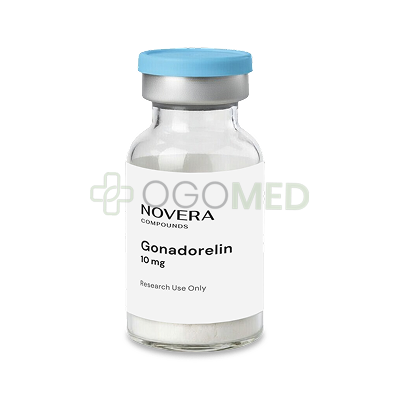
Novera Gonadorelin
| Category: | Peptides |
| Brand | Novera |
| Strength | 10mg |
| Form | Lyophilized powder |
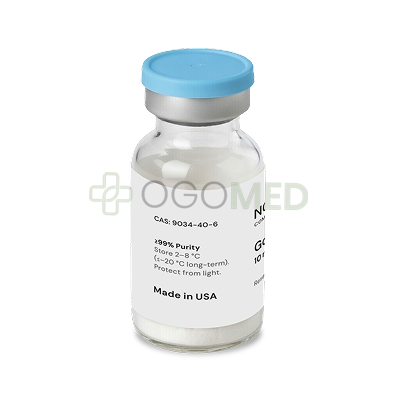
| Purity (%) | ≥99 |
| CAS number | 9034-40-6 |
| Chemical Formula | C₅₅H₇₅N₁₇O₁₃ |
| Molecular weight | 1182.3 |
| Synonyms | GnRH, LHRH, Gonadotropin-releasing-hormone |
| Peptide sequence | Glu-His-Trp-Ser-Tyr-Gly-Leu-Arg-Pro-Gly-NH₂ |
| Storage | Store at 2-8 °C. Protect from light and moisture |
| Shelf Life (lyophilized) | 18-24 months |
| Shelf Life (after reconstitution) | 7-14 days |
Learn more...
Gonadorelin is a synthetic decapeptide composed of ten amino acids, structurally identical to endogenous GnRH (gonadotropin releasing hormone) produced by the hypothalamus. When researchers buy gonadorelin, they obtain a reference agonist for studying the gonadotropin releasing hormone receptor on pituitary cells, the downstream release of luteinizing hormone and follicle stimulating hormone, and the broader hypothalamic pituitary gonadal axis. Its molecular identity with native GnRH makes it the standard ligand for receptor-binding assays, calcium-signaling experiments, and in vivo models comparing pulsatile versus continuous GnRH exposure.
Novera Gonadorelin is supplied for laboratory research use only. It is not an approved therapy, not intended for human or animal consumption, and not a substitute for any diagnostic, fertility, or oncologic treatment. Licensed professionals purchasing this gonadorelin peptide should use it exclusively as a research reagent under appropriate institutional oversight.
What Novera Gonadorelin Is
Novera Gonadorelin is a synthetic version of mammalian GnRH-I, the peptide hormone that the hypothalamus secretes in pulses to govern reproductive endocrine function. The compound reproduces the complete native gnrh sequence, including the N-terminal pyroglutamyl residue and the C-terminal amidated glycine, preserving the post-translational modifications that define receptor affinity and signaling behavior of endogenous gnrh.
Unlike long-acting gnrh agonists such as leuprolide, which incorporate D-amino acid substitutions or lipidation to resist enzymatic degradation, this molecule lacks those bulky modifications. That absence keeps its receptor interaction kinetics, G-protein coupling, internalization rate, and plasma clearance closer to what pituitary cells encounter during physiological GnRH pulses. Researchers who need to model native receptor activation rather than sustained pharmacological suppression therefore treat gonadorelin as the gold-standard ligand when comparing newer agonists or antagonists in binding and signaling studies.
Why Researchers Study Gonadorelin
The peptide activates gonadotropin releasing hormone gnrh receptors on pituitary gonadotrophs, coupling through Gq/11 to phospholipase C, generating IP3 and DAG, raising cytosolic calcium, activating PKC, and triggering MAPK cascades. That signaling cascade drives gonadotropin secretion, specifically LH and FSH release, and also regulates the transcription of gonadotropin subunit genes. Studies spanning pituitary cells in culture, rodent models, and limited controlled human experiments show that pulsatile versus continuous exposure to the compound produces opposite outcomes: intermittent exposure sustains or upregulates gonadotropin output, while continuous gnrh agonist infusion suppresses it through receptor internalization and desensitization.
The subsections below organize the major research areas where gonadorelin has generated quantitative data, with named studies, species, and reported values.
HPG Axis Physiology And Pituitary Signaling Models
GnRHR activation on pituitary cells has been characterized extensively using this peptide as a benchmark agonist. In a rat pituitary perifusion study, Weiss, Duca and Crowley exposed dispersed anterior pituitary cells to 10 nM GnRH pulses at intervals of 15, 30 or 120 minutes for 9 hours and found the response very stable, with no priming, summation or loss of response, and significantly higher pulse amplitude at the longer interpulse intervals (Weiss et al., Endocrinology, 1990). Sensitivities were close across the three products (ED50 11.5 nM for free alpha-subunit, 12.9 nM for LH, 17.3 nM for FSH). Continuous infusion desensitised all three in parallel, significant after 2 hours at concentrations as low as 0.1 to 0.5 nM.
Haisenleder et al. at the University of Michigan demonstrated in 1991 that pulsatile GnRH (25 ng every 30 minutes) in castrate, testosterone-replaced male rats increased LHbeta, FSHbeta, and alpha-subunit transcription rates 3- to 5-fold within 1 hour. By 24 hours of continued pulsatile exposure, LHbeta and FSHbeta transcription had fallen to basal levels despite the ongoing pulses, while the alpha-subunit transcription rate was still 66% above control. A continuous 200 ng/h infusion failed to increase the transcription rate of any subunit (Haisenleder et al., Endocrinology, 1991).
In ovariectomized, estradiol-implanted female rats given 25 ng GnRH pulses every 30 minutes, FSHbeta mRNA rose 92% after only 6 hours and stayed elevated through 48 hours, while LHbeta mRNA rose transiently by 67% at 12 hours and was back to control levels by 24 and 48 hours (Haisenleder et al., Endocrinology, 1990). Pulse amplitude decided which subunit responded: pulses of 0.5 to 25 ng gave maximal LHbeta and FSHbeta responses, whereas alpha-subunit mRNA rose only above 5 ng and peaked at 250 ng.
“The continuous GnRH infusion (200 ng/h) did not increase the transcription rate of any of the three subunit mRNAs.” Haisenleder et al., 1991, Endocrinology.
These data established that gonadotropin secretion and gene expression are highly dependent on the temporal pattern of gnrhr activation, a principle now central to reproductive endocrinology research.
Reproductive Function And Spermatogenesis Research
Gonadorelin has been used in controlled studies of testicular function and spermatogenesis, particularly in congenital hypogonadotropic hypogonadism men. Mao et al. (2017, Asian Journal of Andrology) is not a meta-analysis but a retrospective cohort of 202 CHH patients, 20 of them treated with pulsatile GnRH and 182 with combined HCG/HMG for at least 12 months. Median time to first sperm appearance was 6 months (95% CI 1.6-10.4) in the GnRH group against 18 months (95% CI 16.4-20.0) with HCG/HMG (P < 0.001), and the HCG/HMG group needed longer to reach every testicular-size threshold measured. Sperm motility did not differ between the groups (43.7% against 43.2%, P = 0.921).
Spermatogenesis in this setting depends on endogenous testosterone driven by restored LH pulsatility, and the concentrations restored are modest. In Mao et al. the pulsatile GnRH group averaged 8.3 ± 4.6 nmol/L of serum testosterone, significantly lower than the 16.2 ± 8.2 nmol/L reached on HCG/HMG (P < 0.001), even though sperm appeared a year earlier. Faster spermatogenesis and higher androgen levels came apart in this cohort.
All of this work used pulsatile infusion devices and close endocrine monitoring in patients with diagnosed congenital hypogonadotropic hypogonadism. None of it is evidence about men recovering from exogenous androgen exposure, a population that no study in this literature enrolled.
Diagnostic Stimulation Tests Of The Pituitary
Gonadorelin is studied for assessing pituitary function, serving as a pharmacologic probe to distinguish hypothalamic from pituitary-level defects. Vesper et al. (1986, Zentralblatt fur Gynakologie 108(23):1442-1452) gave 80 micrograms of intravenous gonadorelin to 11 women with normal menstrual cycles and to 10 patients with secondary amenorrhoea. Both groups reached peak gonadotropin levels, LH in particular, 30 to 60 minutes after the first injection. A second 80 microgram dose given two hours later produced no significantly larger rise than the first, and the authors concluded that the response reflects the severity of the hypothalamic-pituitary disturbance rather than the basal gonadotropin level.
Taymor, Thompson, Berger and Patton (1974, American Journal of Obstetrics and Gynecology 120(6):721-732) established LH-RH as a diagnostic and research tool in gynecologic endocrinology, separating pituitary-level from hypothalamic-level defects by the size and timing of the LH response. The patient counts and microgram doses often repeated for that paper in secondary summaries could not be confirmed against it and are not reproduced here.
Gonadorelin is primarily used in diagnostics to test the hypothalamic-pituitary-gonadal axis function, and gonadorelin can induce ovulation in women with primary hypothalamic amenorrhea under controlled conditions. Interpretation thresholds and clinical decisions regarding these tests fall outside the scope of this product description.
Oncologic And Cell-Proliferation Models
GnRH receptors are expressed not only on the pituitary gland but also on certain cancer cells, including breast cancer, ovarian cancer, and advanced prostate cancer lines.
Chen et al. (2002, Cancer Research 62(4):1036-1044) treated MCF-7 cells with GnRH-I or GnRH-II at 0.1-10 nM and found suppressed expression of the 60S acidic ribosomal phosphoproteins P1 and P2, confirmed by quantitative RT-PCR, Western blot and immunofluorescence. Because P1 and P2 set the rate of protein elongation, the authors offer this as a putative mechanism for the direct antiproliferative effect of GnRH. They report no percentage change in proliferation. Miles et al. (2004, Endocrinology 145(1):194-205) showed that continuous GnRH or agonist treatment of HEK293 cells stably expressing the rat or human GnRH receptor produced time- and dose-dependent growth suppression: LbetaT2 gonadotrope-derived cells arrested in G0/G1, HEK/GnRHR cells accumulated in G2/M, and a GnRH antagonist blocked the effect. The authors note that neither cell system was derived from an extrapituitary reproductive tumour.
“mRNA encoding the GnRH-I and GnRH-II peptides are overexpressed in cancerous versus normal tissues obtained from the same patients.” Chen et al., 2002, Cancer Research.
All of these findings are preclinical: no approved oncologic indication exists for pure gonadorelin, and results from cancer cells in culture or xenograft models cannot be extrapolated to clinical cancer therapy.
Neuroendocrine And Cognitive Research
GnRH and LH signaling have been linked to hippocampal function and neurodegeneration in animal research models. Observational human studies associate higher LH with Alzheimer’s disease risk, which led to the hypothesis that modulating the GnRH/LH axis could alter amyloid pathology. The rodent work in that line used LH-lowering agents, which is the opposite of what a short-acting native-sequence agonist does on a pulsatile schedule: gonadorelin given in pulses sustains gonadotropin output rather than suppressing it. No identified study reports a neuroprotective result for gonadorelin itself.
Mechanistic reviews note associations between elevated LH, as a readout of GnRH axis activity in elderly women and aging men, and amyloid burden, but no clinical trial of gonadorelin has established cognition improvement in humans. Most published neuroendocrine data in this area use long-acting GnRH analogs rather than the natural-sequence compound. Extrapolation to human cognition remains speculative pending larger trials, and no well-powered study in healthy adults has used gonadorelin to measure cognitive or metabolic endpoints related to men’s health or aging.
How Gonadorelin Compares With Related Compounds
Novera Gonadorelin occupies a distinct niche as a short-acting, native-sequence GnRH agonist. Not all research compounds in this class are created equal: the choice between gonadorelin, a depot agonist like leuprolide, or a competitive antagonist like cetrorelix depends on the experimental question, the exposure pattern required, and the species and model under study.
| Compound | Receptor Action | Primary Research Use | Evidence Level |
|---|---|---|---|
| Novera Gonadorelin | Native-sequence GnRH agonist; short-acting; supports physiological pulsatile receptor activation models. | HPG axis physiology, pituitary stimulation testing, spermatogenesis studies, cancer-cell signaling. | Extensive cell, rodent, and controlled human endocrine test data since the 1970s. |
| Leuprolide Acetate | Long-acting GnRH agonist producing sustained receptor activation followed by desensitization and downregulation. | Androgen/estrogen suppression models, endometriosis simulations, advanced prostate cancer research. | Multiple large human trials in oncology and reproductive disorders. |
| Cetrorelix | Competitive GnRH receptor antagonist; rapidly blocks endogenous GnRH binding without initial stimulation. | Acute suppression of LH surges, IVF protocol modeling, experimental LH/FSH withdrawal. | Well-documented human data in assisted reproduction; fewer basic signaling studies. |
A researcher studying physiological pulsatility or native receptor-activation kinetics would choose gonadorelin because its clearance and binding profile match endogenous GnRH. Leuprolide serves experiments requiring sustained suppression of sex steroids or gonadotropin output, since its modified amino acids resist degradation for hours to weeks. Cetrorelix is the tool when instantaneous, reversible blockade of endogenous GnRH is the experimental variable, as in preventing premature LH surges during ovarian stimulation protocols.
What Research On Gonadorelin Does Not Establish
Despite decades of published data, important gaps persist, and many claims circulating on peptide forums and vendor sites extend well beyond what the evidence supports.
No validated evidence shows that gonadorelin administered in any over-the-counter or self-directed format restores fertility after exogenous androgen exposure in otherwise healthy adults. Clinical spermatogenesis data come from defined hypogonadal populations (CHH, hypothalamic amenorrhea) treated with specialized pulsatile pumps under endocrine monitoring (Mao et al., 2016). No study in this literature has enrolled men recovering from exogenous androgen exposure or men on testosterone replacement, so the HPG-recovery claim rests on mechanism alone, with no measurement behind it in that population.
Claims of long-term “anti-aging” benefits and broad cognitive enhancement in healthy adults derive from animal correlation studies linking elevated LH with amyloid pathology. No large randomized human trial has tested native-sequence gonadorelin for dementia prevention or cognitive improvement. The connection between GnRH axis modulation and developing Alzheimer’s disease remains a hypothesis, not an established finding.
In oncology, cell-culture data showing that gonadorelin suppresses cancer cell proliferation in breast, ovarian, and prostate lines are real but entirely preclinical. Miles et al. (2004) obtained their growth suppression in LbetaT2 and HEK293 lines, neither of them derived from a reproductive tumour, and under continuous rather than pulsatile exposure, which is the opposite of the schedule this compound is normally used to model. Results from cell culture cannot substitute for clinical evidence, and no trial of native-sequence gonadorelin as an antitumour agent exists.
Some older diagnostic studies (1970s-1980s) report overlapping datasets, small sample sizes, and inconsistent baseline reporting, limiting their utility in modern meta-analysis. No formal retractions or expressions of concern have been identified in the core GnRH physiology or spermatogenesis literature, but methodological standards differ from current requirements.
Gonadorelin’s effect depends entirely on the temporal pattern of exposure, and results cannot be generalised across populations, pulse frequencies or indications. The same molecule sustains gonadotropin output when delivered in pulses and suppresses it under continuous infusion, so a result obtained under one schedule says nothing about the other. That is the single largest source of misreading in the secondary literature on this compound.
“pulsatile GnRH therapy was associated with earlier spermatogenesis and larger testicular size compared to combined gonadotropin therapy.” Mao et al., 2017, Asian Journal of Andrology.
Novera Gonadorelin is supplied strictly for laboratory research; it is not offered as a fertility, hormone-replacement or antitumour product.
Where to Buy Novera Gonadorelin
Licensed laboratories searching to buy gonadorelin online, whether using queries like “gonadorelin peptide buy,” “gonadorelin where to buy,” or “buy gonadorelin peptide,” can source Novera Gonadorelin through this store as a synthetic decapeptide for experimental work on the gonadotropin releasing hormone receptor and related pathways. The compound ships as a research-grade reagent to qualified buyers only.
-
Estimated delivery time 3 to 7 days.
-
Free shipping on orders over $750.
-
All US import fees and tariffs are covered by Ogomed, so the buyer pays nothing extra; customs checks under the new US import rules can add a little time to delivery.
-
Price match: if the same product is listed for less elsewhere, Ogomed will try to match it.
-
Support by phone +1-650-457-5621 and email, 10am to 6pm EST.
-
Sold to licensed professionals, for laboratory research use only.
All sales are restricted to professional laboratories and licensed researchers. This product is not offered for therapeutic, veterinary, or diagnostic administration and is not intended for human or animal consumption.
References
- Weiss, J., Duca, K. A., & Crowley, W. F. (1990). Gonadotropin-releasing hormone-induced stimulation and desensitization of free alpha-subunit secretion mirrors luteinizing hormone and follicle-stimulating hormone in perifused rat pituitary cells. Endocrinology, 127(5), 2364-2371. DOI: 10.1210/endo-127-5-2364
- Haisenleder, D. J., Dalkin, A. C., Ortolano, G. A., Marshall, J. C., & Shupnik, M. A. (1991). A pulsatile gonadotropin-releasing hormone stimulus is required to increase transcription of the gonadotropin subunit genes: evidence for differential regulation of transcription by pulse frequency in vivo. Endocrinology, 128(1), 509-517. DOI: 10.1210/endo-128-1-509
- Haisenleder, D. J., Ortolano, G. A., Dalkin, A. C., Ellis, T. R., Paul, S. J., & Marshall, J. C. (1990). Differential regulation of gonadotropin subunit gene expression by gonadotropin-releasing hormone pulse amplitude in female rats. Endocrinology, 127(6), 2869-2875. DOI: 10.1210/endo-127-6-2869
- Mao, J.-F., Liu, Z.-X., Nie, M., et al. (2017). Pulsatile gonadotropin-releasing hormone therapy is associated with earlier spermatogenesis compared to combined gonadotropin therapy in patients with congenital hypogonadotropic hypogonadism. Asian Journal of Andrology, 19(6), 680-685. DOI: 10.4103/1008-682X.193568
- Chen, A., Kaganovsky, E., Rahimipour, S., et al. (2002). Two forms of gonadotropin-releasing hormone (GnRH) are expressed in human breast tissue and overexpressed in breast cancer: a putative mechanism for the antiproliferative effect of GnRH by down-regulation of acidic ribosomal phosphoproteins P1 and P2. Cancer Research, 62(4), 1036-1044. PMID: 11861379
- Miles, L. E., Hanyaloglu, A. C., Dromey, J. R., Pfleger, K. D. G., & Eidne, K. A. (2004). Gonadotropin-releasing hormone receptor-mediated growth suppression of immortalized LbetaT2 gonadotrope and stable HEK293 cell lines. Endocrinology, 145(1), 194-205. DOI: 10.1210/en.2003-0551
Novera Gonadorelin is a synthetic decapeptide matching endogenous human GnRH-I, supplied as a research reagent for studying pituitary and HPG axis physiology. It features a pyroglutamyl N-terminus and an amidated C-terminus, reproducing the complete native sequence. It is for laboratory research use only and holds no clinical approval as a therapeutic agent.
The peptide binds gonadotropin releasing hormone receptors on pituitary gonadotrophs, activating Gq/11-coupled phospholipase C, which generates IP3 and DAG, mobilizes intracellular calcium, and triggers PKC and MAPK cascades. Observed LH and FSH release patterns are highly dependent on pulse frequency and exposure duration in experimental systems: intervals of 30-120 minutes in rodent models produce stronger gonadotropin subunit transcription than continuous exposure or very high-frequency pulses.
Controlled studies demonstrate reliable stimulation or suppression of gonadotropin secretion depending on exposure pattern, earlier spermatogenesis in diagnosed CHH patients (median 6 months to first sperm against 18 months on combined gonadotropins, Mao et al., 2017), and in vitro antiproliferative effects in certain tumor lines at nanomolar concentrations. Evidence for long-term disease modification in cancer or neurodegeneration remains limited and largely preclinical, with no large randomized human trials confirming routine clinical benefits in those domains.
Native-sequence gonadorelin has a short plasma half-life and does not resist enzymatic degradation, making it suitable for pulsatile exposure experiments that model physiological GnRH signaling. Longer-acting gnrh agonists like leuprolide incorporate modified amino acids that extend receptor activation for hours to weeks, producing initial stimulation followed by desensitization and hormonal suppression. The choice between compounds reflects the research question: pulsatile receptor-activation studies versus sustained androgen or estrogen suppression models.
The compound features in dispersed pituitary cell cultures, perifusion systems, rodent HPG axis studies (including ovariectomized and castrate models), and controlled human diagnostic-stimulation protocols for amenorrhea and pubertal assessment. Testicular cells and testicular structures have also been studied in gonadorelin-treated animal models. Any in vivo work requires appropriate institutional oversight and ethics approval.
Key uncertainties include long-term neurocognitive impact in humans, broad metabolic effects of chronic pulsatile versus intermittent exposure in otherwise healthy subjects, and whether in vitro anticancer findings in cancer cells translate to tumor suppression in living organisms. Ongoing mechanistic studies aim to clarify these areas, but no current dataset supports broad clinical conclusions about the peptide hormone’s effects beyond defined endocrine models.
Yes. The 2026 WADA Prohibited List names “gonadotrophin-releasing hormone (GnRH, gonadorelin) and its agonist analogues” in section S2.2.1, Testosterone-stimulating peptides in males, prohibited at all times. The prohibition in that subsection applies to males. S2 substances are non-Specified Substances. Anti-doping status does not affect laboratory acquisition of the compound by licensed research institutions.
Licensed buyers searching “buy gonadorelin online,” or “where to buy gonadorelin” as a research reagent can order Novera Gonadorelin through this store. The gonadorelin buy process is restricted to professional laboratories. All sales are for laboratory research use only, and the product is not offered for therapeutic or veterinary administration to humans or animals.
| Category: | Peptides |
| Brand | Novera |
| Strength | 10mg |
| Form | Lyophilized powder |
| Purity (%) | ≥99 |
| CAS number | 9034-40-6 |
| Chemical Formula | C₅₅H₇₅N₁₇O₁₃ |
| Molecular weight | 1182.3 |
| Synonyms | GnRH, LHRH, Gonadotropin-releasing-hormone |
| Peptide sequence | Glu-His-Trp-Ser-Tyr-Gly-Leu-Arg-Pro-Gly-NH₂ |
| Storage | Store at 2-8 °C. Protect from light and moisture |
| Shelf Life (lyophilized) | 18-24 months |
| Shelf Life (after reconstitution) | 7-14 days |
Learn more...