








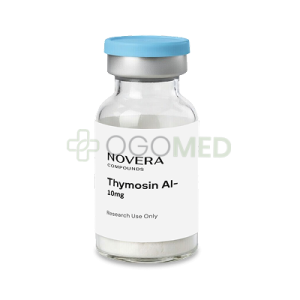






Novera Epithalon
| Category: | Peptides |
| Brand | Novera |
| Strength | 10mg, 50mg |
| Form | Lyophilized powder |
| Purity (%) | ≥99 |
| CAS number | 64082-79-7 |
| Chemical Formula | C₁₄H₂₂N₄O₉ |
| Molecular weight | 390.35 |
| Synonyms | Epitali, Epithalamin, Pineal-peptide, Telomerase-peptide |
| Peptide sequence | Ala-Glu-Asp-Gly |
| Storage | Store at 2-8 °C. Protect from light and moisture |
| Shelf Life (lyophilized) | 18-24 months |
| Shelf Life (after reconstitution) | 7-14 days |
Learn more...
Epithalon is a synthetic tetrapeptide composed of four amino acids in the sequence Ala-Glu-Asp-Gly. Researchers investigating telomere biology, cellular senescence, and circadian rhythm regulation use it as a defined reagent in cell culture and animal models. When laboratory buyers search for an epithalon peptide to buy, they are typically sourcing a tool compound for preclinical studies on telomerase activity, telomere dynamics, and pineal gland signaling.
Novera Epithalon is supplied exclusively for laboratory research. It is not approved by the FDA or any other regulatory body for human or veterinary use, and nothing on this page constitutes administration advice, dosing guidance, or a therapeutic recommendation.
What Novera Epithalon Is
Epithalon (also written Epitalon) is a synthetic peptide derived from the amino acid composition of epithalamin, a heterogeneous polypeptide extract obtained from bovine pineal tissue. The parent extract contains many peptide fragments; the AEDG peptide reproduces only one defined tetrapeptide sequence isolated from that mixture. That distinction matters experimentally: epithalamin is a complex, batch-variable mixture whose biological effects cannot be attributed to any single component, whereas synthetic Epithalon provides a single molecular entity suitable for mechanistic work and reproducible assay conditions.
Because the molecule consists of only four amino acids, it lacks a stable tertiary structure. Molecular-dynamics modelling suggests the compound can still form intramolecular salt bridges and hydrogen bonds between its glutamic acid and aspartate side chains, giving a partially folded conformation in solution. Production relies on solid phase peptide synthesis.
Why Researchers Study Epithalon
Three broad research themes drive interest in this synthetic tetrapeptide: its capacity to activate telomerase and influence telomere length in human somatic cells, its effects on melatonin secretion and circadian rhythms via pineal signaling, and its reported modulation of immune function in aged animal models. Each theme draws on a distinct set of experimental studies and preclinical studies, summarized below with their evidence levels.
Telomerase Activation and Telomere Elongation
Telomeres serve as protective caps at chromosome ends, shielding nucleotide sequences from degradation during DNA replication. Their progressive shortening is linked to cellular aging and replicative senescence. In 2003, Khavinson, Bondarev, and Butyugov reported in Bulletin of Experimental Biology and Medicine that treating telomerase-negative human fetal fibroblasts in vitro with epithalon induced expression of the hTERT catalytic subunit, restored measurable telomerase activity, and produced telomere elongation. That study provided the first direct evidence that the AEDG peptide stimulates gene expression of the telomerase reverse transcriptase in human somatic cells.
Independent confirmation arrived more than two decades later. In 2025, Al-Dulaimi and colleagues published in Biogerontology a study treating multiple human cell lines, including normal epithelial and fibroblast cells alongside breast cancer lines, with the compound. Normal cells showed dose-dependent telomere length extension through upregulation of hTERT mRNA and telomerase expression. Cancer cell lines, by contrast, lengthened telomeres through activation of the ALT (alternative lengthening of telomeres) pathway, a mechanistically distinct route that bypasses conventional telomerase. Both findings are strictly in vitro.
Epithalon activates telomerase in human somatic cells, extending telomeres in culture. Al-Dulaimi et al. (2025) measured dose-dependent telomere elongation in normal human fibroblasts and epithelial cells treated with AEDG, reporting upregulation of hTERT mRNA as the primary driver. This result, published in Biogerontology, represents independent replication of the original 2003 Khavinson finding but remains limited to cell culture. The cancer lines used were the breast lines 21NT and BT474.
“Only a minor increase in ALT activity was observed in Normal cells, thereby showing that it was specific to cancer cells.” Al-Dulaimi et al., 2025, Biogerontology.
Lifespan Findings in Rodent Models
The rodent lifespan literature is narrower than the figures that circulate online. Anisimov et al. (2003, Biogerontology) injected 54 female outbred Swiss-derived SHR mice subcutaneously on five consecutive days every month from three months of age with about 30 to 40 micrograms per kilogram of Epitalon. Mean life span did not change. What did change was the tail of the distribution: the life span of the last 10 percent of survivors rose 13.3 percent and maximum life span 12.3 percent, chromosome aberrations in bone marrow fell 17.1 percent, and total spontaneous tumour incidence was unaffected, although development of leukaemia was inhibited six-fold. In HER-2/neu transgenic mice the same group reported a 13.5 percent gain in average life span and a lower incidence of breast adenocarcinomas (Anisimov et al., 2002, Bulletin of Experimental Biology and Medicine). Nearly all of this work comes from a single research group.
“Addition of Epithalon peptide in telomerase-negative human fetal fibroblast culture induced expression of the catalytical subunit, enzymatic activity of telomerase, and telomere elongation.” Khavinson, Bondarev and Butyugov, 2003, Bulletin of Experimental Biology and Medicine.
Melatonin Secretion and Circadian Signaling
The compound’s origin from pineal gland extracts prompted investigation of its effects on melatonin production. In a 2007 study in Advances in Gerontology, Korkushko and colleagues examined pineal peptide preparations in old monkeys and elderly people. Both species showed decreased night-time and average daily plasma melatonin and a reduced circadian amplitude with age. Epithalamin and Epitalon recovered night-time release of endogenous melatonin and normalised the circadian rhythm of the hormone in plasma, with the increase concentrated in elderly subjects who had pineal functional insufficiency to begin with. The study is small, open and reports a biomarker, not a clinical outcome.
Chromosome Damage in Aged Rodents
Claims that the peptide raises CD4/CD8 ratios, normalises cytokine profiles or increases thymic output in aged organisms are repeated widely but are not traceable to a paper that can be read and checked, so this page does not make them. What is documented in the Khavinson group’s own animal work is genomic rather than immunological. Rosenfeld et al. (2002, Bulletin of Experimental Biology and Medicine) found that senescence-accelerated SAMP-1 mice carry 1.8 times the bone-marrow chromosome aberration rate of wild-type SAMR-1 mice at 12 months, and that Epithalon given from two months of age reduced aberrations by 20 percent in SAMP-1, 30.1 percent in SAMR-1 and 17.9 percent in SHR mice against age-matched controls. Melatonin in drinking water produced no such effect.
Gene Expression and the Missing Receptor
No receptor for the AEDG peptide has been identified, and the proposed mechanisms sit at the level of gene expression rather than binding. Anisimov et al. (2002, Bulletin of Experimental Biology and Medicine) profiled 15,247 cDNA clones in mouse heart and found that Epithalon modulated expression of 98 of them by more than two-fold, against 36 for the comparator peptide Vilon, with 194 clones activated and 48 inhibited by Epithalon alone or in combination. Whether the molecule acts through a classical receptor, through direct interaction with DNA-associated proteins or through indirect signalling cascades remains an open question.
How Epithalon Compares With Related Compounds
| Compound | Key Pathways | Evidence Level | Typical Research Use |
|---|---|---|---|
| Epithalon (synthetic AEDG) | hTERT induction, telomerase activation, ALT pathway in cancer lines, AANAT/pCREB for melatonin | In vitro human cell culture (Khavinson 2003, Al-Dulaimi 2025); rodent studies showing no mean lifespan effect but about 13% gain in maximum lifespan (Anisimov 2003); small human biomarker studies on melatonin | Defined-molecule mechanistic work, telomere assays, circadian and pineal biology, support genomic stability investigations |
| Epithalamin (bovine pineal extract) | Broad pineal peptide mixture, overlapping with AEDG and other short peptides, unknown receptor specificity | Human cohort data showing 1.6 to 1.8-fold lower mortality over 6-15 years (Khavinson group), animal data, less precise mechanistic linkage | Historical and comparative studies of geroprotective peptide mixtures, not suitable for precise mechanistic or pathway-specific research |
| Thymalin (thymus-derived peptide bioregulator) | Immune modulation, thymic output, co-administered with epithalamin in some mortality studies | Russian human cohort studies on age-associated disease incidence, limited telomere-specific work | Research into immune aging, inflammation, and combined peptide interventions in experimental studies |
A researcher would choose synthetic Epithalon when the experimental goal requires a defined molecular entity, batch consistency, and compatibility with quantitative telomerase or telomere length assays. Epithalamin might be selected for historical comparison with earlier Russian gerontology literature, though its mixture nature complicates mechanistic interpretation. Thymalin serves a different purpose entirely: labs investigating immune aging and thymic involution rather than telomere dynamics or protein synthesis pathways related to pineal function.
What Research on Epithalon Does Not Establish
No human clinical trial testing synthetic epithalon for endpoints such as telomere length, lifespan, disease incidence, or cognitive outcomes has been registered on ClinicalTrials.gov, ISRCTN, EU CTIS, or EudraCT as of 2026. Epithalon is not approved by the FDA for human consumption or therapeutic use. The compound lacks clinical efficacy data in humans, and any framing of it as a treatment for medical conditions is unsupported.
Mortality and lifespan data in human cohorts derive entirely from studies using epithalamin, not synthetic Epithalon. Those results cannot be transferred to the AEDG peptide because epithalamin is a complex mixture containing components beyond this single tetrapeptide. Conflating the two is a recurring error in non-peer-reviewed sources.
No clinical trial has tested Epithalon’s long-term safety in humans. Potential long-term risks associated with the compound remain uncharacterized in humans. The 2025 Al-Dulaimi study showed that cancer cell lines treated with the peptide activated the ALT pathway for telomere lengthening, a finding that raises questions about behavior in cells with pre-existing genomic instability. No published study has examined chronic exposure, organ toxicity, or tumor promotion risk in a controlled human setting.
The gap between what the literature supports and what is claimed for this peptide is the widest in this catalogue. Telomere elongation in a dish, no change in mean mouse lifespan with a roughly 13 percent gain confined to the tail of the survival curve, a reduction in bone-marrow chromosome aberrations, and a night-time melatonin shift in a small elderly cohort: those are the results. Lifespan extension in humans, immune restoration and reversal of biological age are not among them.
Pharmacokinetic parameters, including absorption, distribution, metabolism, and excretion, are very poorly characterized. The specific receptor or receptors through which the peptide acts have not been identified. Research on Epithalon has largely been conducted in animal models or older Russian studies, and independent replication outside the original Khavinson group began only in 2025. Researchers handling epithalon in any experimental use context should interpret results within these constraints.
Where to Buy Novera Epithalon
Novera Epithalon is available for researchers ready to buy epithalon online from a source configured for professional laboratory buyers. The product page provides the information needed to buy epithalon peptide for scientific research purposes, including telomere biology, circadian investigation, and aging-related experimental studies.
-
Estimated delivery time 3 to 7 days.
-
Free shipping on orders over $750.
-
All US import fees and tariffs are covered by Ogomed, so the buyer pays nothing extra; customs checks under the new US import rules can add a little time to delivery.
-
Price match: if the same product is listed for less elsewhere, Ogomed will try to match it.
-
Support by phone +1-650-457-5621 and email, 10am to 6pm EST.
-
Sold to licensed professionals, for laboratory research use only.
Novera Epithalon is sold exclusively to licensed professionals for laboratory research use. It is not intended for human or animal consumption.
References
- Khavinson, V. Kh., Bondarev, I. E., Butyugov, A. A. (2003). Epithalon peptide induces telomerase activity and telomere elongation in human somatic cells. Bulletin of Experimental Biology and Medicine, 135(6), 590-592. DOI: 10.1023/A:1025493705728
- Al-Dulaimi, S., Thomas, R., Matta, S., Roberts, T. (2025). Epitalon increases telomere length in human cell lines through telomerase upregulation or ALT activity. Biogerontology, 26(5), 178. DOI: 10.1007/s10522-025-10315-x
- Anisimov, V. N., Khavinson, V. Kh., Popovich, I. G., et al. (2003). Effect of Epitalon on biomarkers of aging, life span and spontaneous tumor incidence in female Swiss-derived SHR mice. Biogerontology, 4(4), 193-202. DOI: 10.1023/A:1025114230714
- Anisimov, V. N., Khavinson, V. Kh., Alimova, I. N., Semchenko, A. V., Yashin, A. I. (2002). Epithalon decelerates aging and suppresses development of breast adenocarcinomas in transgenic her-2/neu mice. Bulletin of Experimental Biology and Medicine, 134(2), 187-190. DOI: 10.1023/A:1021104819170
- Rosenfeld, S. V., Togo, E. F., Mikheev, V. S., Popovich, I. G., Khavinson, V. Kh., Anisimov, V. N. (2002). Effect of epithalon on the incidence of chromosome aberrations in senescence-accelerated mice. Bulletin of Experimental Biology and Medicine, 133(3), 274-276. DOI: 10.1023/A:1015899003974
- Korkushko, O. V., Lapin, B. A., Goncharova, N. D., et al. (2007). Normalizing effect of the pineal gland peptides on the daily melatonin rhythm in old monkeys and elderly people. Advances in Gerontology, 20(1), 74-85. PMID: 17851971
Epithalon is a synthetic tetrapeptide with the sequence Ala-Glu-Asp-Gly, modeled on peptides found in the epitalon highly bioactive pineal extract epithalamin. Researchers use this defined AEDG peptide to study telomere dynamics, cellular senescence, melatonin-related signaling, and reactive oxygen species in preclinical research models.
The peptide’s primary studied mechanism is activation of telomerase through upregulation of hTERT gene expression, preserving telomere length in dividing cells. Additional research themes include pineal-mediated circadian rhythm regulation via AANAT and pCREB signaling, oxidative stress modulation involving reactive oxygen species, and a possible epigenetic mechanism affecting chromatin organization. Immune function modulation in aged organisms is another active area of investigation.
Most data come from in vitro studies in human cell lines and animal studies in rodents. In vitro studies show Epithalon increases telomere length and telomerase expression in human somatic cells. In outbred SHR mice, Anisimov et al. (2003) found no effect on mean life span, with gains of about 13 percent confined to maximum life span and to the last 10 percent of survivors. No registered human clinical trial has tested the compound for any therapeutic endpoint.
Epithalon is a single defined synthetic peptide, while epithalamin is a heterogeneous bovine pineal extract containing many peptide components. Human mortality data (1.6 to 1.8-fold lower death rates over years of follow-up) were generated with epithalamin, not synthetic Epithalon. Researchers choose the synthetic form when they need reproducibility, batch consistency, and clean pathway attribution in molecular sciences investigations.
Published work has employed human fetal fibroblast cultures, normal epithelial cell lines, breast cancer cell lines, rat pinealocyte cultures, and aged mouse models. Research settings also include immune cell assays examining T-lymphocyte function and natural killer cell activity in elderly rodents, as well as neuroendocrine preparations studying melatonin output.
The specific receptor or receptors for the AEDG peptide have not been identified. Pharmacokinetic parameters in any species remain poorly defined. Potential long-term risks associated with Epithalon remain uncharacterized in humans, and the compound’s behavior in cells with pre-existing genomic instability, where the ALT pathway was activated in cancer lines, warrants further study before any translational claims.
Epithalon is not on the 2026 WADA Prohibited List, by name or as a class. Because it has no current approval as a human therapeutic it falls under S0, the catch-all class for non-approved substances, which is prohibited at all times.
Licensed professionals looking to buy epithalon for experimental use can order Novera Epithalon from this product page. The compound is sold strictly for laboratory research and is not approved for human use, veterinary use, or any form of human or animal consumption. Buyers should confirm institutional approval before placing an order.
| Category: | Peptides |
| Brand | Novera |
| Strength | 10mg, 50mg |
| Form | Lyophilized powder |
| Purity (%) | ≥99 |
| CAS number | 64082-79-7 |
| Chemical Formula | C₁₄H₂₂N₄O₉ |
| Molecular weight | 390.35 |
| Synonyms | Epitali, Epithalamin, Pineal-peptide, Telomerase-peptide |
| Peptide sequence | Ala-Glu-Asp-Gly |
| Storage | Store at 2-8 °C. Protect from light and moisture |
| Shelf Life (lyophilized) | 18-24 months |
| Shelf Life (after reconstitution) | 7-14 days |
Learn more...