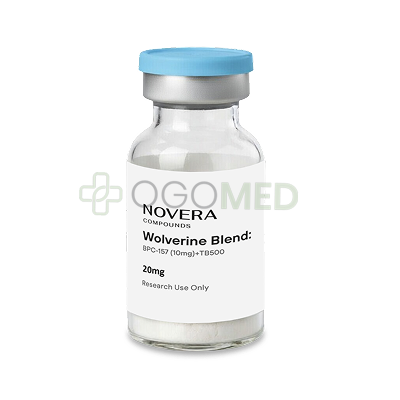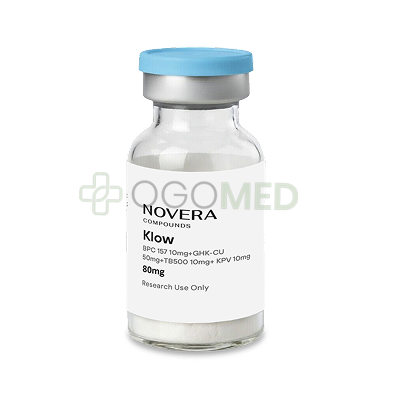








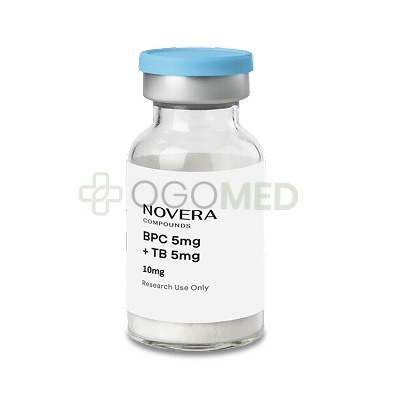

Novera BPC 5mg + TB 5mg
In Stock
| Category: | Peptides |
| Brand | Novera |
| Strength | 10mg |
| Form | Lyophilized powder |
| Purity (%) | ≥99 |
| CAS number | BPC-157: 137525-51-0 TB500: 77591-33-4 |
| Chemical Formula | BPC-157: C₆₂H₉₈N₁₆O₂₂ TB500: C₂₁₂H₃₅₀N₅₆O₇₈S |
| Molecular weight | BPC-157: 1419.5 g/mol TB-500: 4963 g/mol |
| Synonyms | BPC157-TB500-blend, Healing-combo-peptide, Regeneration-peptide-blend |
| Peptide sequence | Mixed peptides |
| Storage | Store at 2-8 °C or -20 °C. Protect from light |
| Shelf Life (lyophilized) | 12-24 months |
| Shelf Life (after reconstitution) | 7-21 days |
Learn more...
Novera BPC 5 mg TB 5 mg is a research peptide blend that combines two widely studied compounds: BPC-157 and TB-500. BPC-157 (Body Protection Compound-157) is a 15-amino acid synthetic peptide derived from a naturally occurring protein found in the stomach, while TB-500 (Thymosin Beta-4) is a synthetic peptide of 43 amino acids known for its role in tissue regeneration and wound healing. The formula is designed for laboratory settings focused on tissue regeneration, recovery processes, and cellular response. Rather than being marketed as a consumer supplement, it is intended for scientific work where peptide behavior can be observed under controlled conditions.
Many researchers focus on this peptide because of its reported mechanisms at the cellular level. Experimental work has explored how it may influence communication between cells, tissue responses, and biological pathways connected with regeneration. Although published data continue to grow, every study should be interpreted carefully, since laboratory observations do not automatically translate into clinical outcomes for human use.
The product attracts attention because it has been evaluated across different experimental models involving tissue response and biological adaptation. Interest remains particularly high in projects examining wound healing, damaged tissues repair, and the biological events that accompany recovery after physical stress.
Composition and Product Characteristics
The formulation contains 5 mg of peptide in each vial. As a synthetic version of the naturally identified sequence, it is manufactured with attention to purity and consistency. One characteristic frequently discussed in peptide documentation is its molecular weight, which serves as part of the quality verification process during manufacturing and laboratory analysis. Researchers often examine several important characteristics before selecting a peptide:
- Peptide identity and purity;
- Batch consistency;
- Chemical stability;
- Storage recommendations.
Reliable manufacturing standards help ensure that each batch remains comparable during experimental work. This consistency becomes especially valuable when projects continue over several weeks, allowing investigators to compare observations without unnecessary variation caused by product quality.
How the Peptide Works in Experimental Models
Current scientific literature suggests that this peptide may participate in biological pathways associated with tissue maintenance and repair. Several publications describe how it enhances cell migration, encourages angiogenesis, and may influence local circulation around affected tissues. These processes are considered important during the natural response to an injury. Experimental investigations have explored its possible influence on:
- Muscles;
- Tendons;
- Ligaments;
- Connective tissues.
Scientists remain interested because these structures often require coordinated biological activity during recovery. Instead of acting through a single pathway, the peptide appears to interact with multiple signaling systems, making it an attractive subject for continued research. Beyond structural tissues, several investigations have examined its possible role in the stomach and digestive system. Experimental models involving chronic inflammation have also generated discussion regarding protective biological responses, although these observations continue to require additional confirmation.
Areas of Ongoing Research
The peptide has appeared in numerous publications examining different biological systems. Some projects focus on tissue regeneration, while others investigate vascular responses, inflammation, or cellular communication. Researchers are especially interested in how various biological interactions may contribute to faster recovery under experimental conditions. Research topics frequently explored include:
- Recovery following surgery;
- Tissue remodeling;
- Cellular signaling;
- Experimental inflammatory models.
The available findings suggest several promising directions, but they should always be interpreted within the limitations of each individual experiment. Different methodologies, sample sizes, and protocols can produce different results, making direct comparisons difficult. Scientific interest also continues to expand because many projects investigate biological activity in considerable depth, examining how multiple pathways work together rather than focusing on a single response.
Possible Effects and Research Considerations
Published papers describe a variety of biological effects. Some experimental observations indicate that the peptide may protect tissues exposed to stress while supporting biological environments associated with recovering structures. Other work explores whether it can improve mobility or maintain flexibility in laboratory models after tissue damage.
Despite encouraging observations, expectations should remain realistic. No researcher should expect identical outcomes across different experimental designs because numerous variables influence biological responses. Every project should include careful documentation, standardized methodology, and objective interpretation of collected data. The peptide blend has not been universally approved for therapeutic applications, and scientific interest continues primarily within controlled research environments.
Safety and Storage
As with many experimental peptides, information regarding side effects remains limited outside controlled investigations. Injection site reactions are common side effects of these peptides. Users may report mild symptoms such as headaches or dizziness. Existing literature continues to examine safety profiles, while additional research is needed before broader conclusions can be made regarding long-term exposure in individuals. Responsible laboratory practice includes:
- Proper cold storage according to supplier guidance;
- Protection from excessive heat and direct light;
- Careful handling to preserve peptide quality;
- Accurate labeling throughout the research process.
Proper storage conditions help maintain peptide integrity throughout the planned experimental timeline. Many laboratories also monitor temperature records to reduce unnecessary degradation during extended storage periods.
BPC 157 TB 500 Responsible Handling
This product is strictly prohibited for recreational or unsupervised use. It should not be used to inject into people or animals outside authorized research environments. Anyone considering questions related to medical applications should seek professional consultation rather than relying solely on published experimental literature.
The product is often selected because it is convenient to store and handle during organized laboratory workflows, but convenience should never replace rigorous scientific standards. Every institution conducting peptide research is committed to following ethical guidelines and local regulations, whether operating in the USA or elsewhere. Likewise, peptides may be combined with other experimental compounds only within properly designed research protocols that prioritize scientific accuracy and safe laboratory practice.
Where to Buy BPC 157 and TB 500
Choosing a reliable supplier matters just as much as selecting the right peptide for your research. At OGOmed, every BPC 157 TB 500 product is sourced with a focus on quality, consistency, and transparency, giving laboratories dependable materials for every study. Researchers value products that provide dependable support for ongoing projects exploring tissue healing, recovery after injury, and biological flexibility at the cellular level. Obtaining this peptide through legitimate channels ensures safety monitoring.
OGOmed is committed to careful quality control, secure packaging, and responsive customer service, making it easier to access research peptides with confidence. Whether your work investigates regenerative biology or the power of peptide-based research models, you can expect professional service and products prepared for scientific use only.
| Category: | Peptides |
| Brand | Novera |
| Strength | 10mg |
| Form | Lyophilized powder |
| Purity (%) | ≥99 |
| CAS number | BPC-157: 137525-51-0 TB500: 77591-33-4 |
| Chemical Formula | BPC-157: C₆₂H₉₈N₁₆O₂₂ TB500: C₂₁₂H₃₅₀N₅₆O₇₈S |
| Molecular weight | BPC-157: 1419.5 g/mol TB-500: 4963 g/mol |
| Synonyms | BPC157-TB500-blend, Healing-combo-peptide, Regeneration-peptide-blend |
| Peptide sequence | Mixed peptides |
| Storage | Store at 2-8 °C or -20 °C. Protect from light |
| Shelf Life (lyophilized) | 12-24 months |
| Shelf Life (after reconstitution) | 7-21 days |
Learn more...