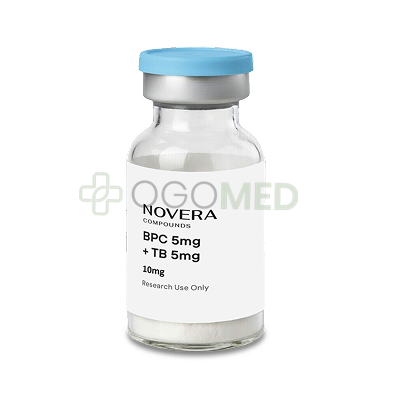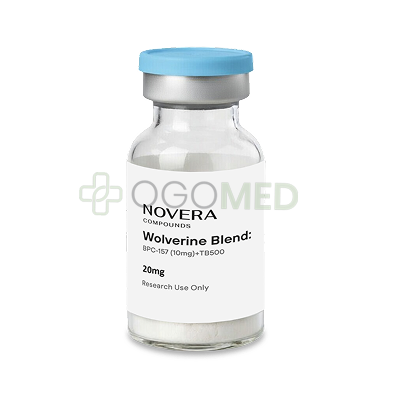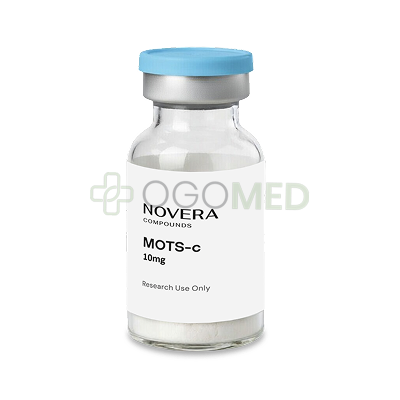







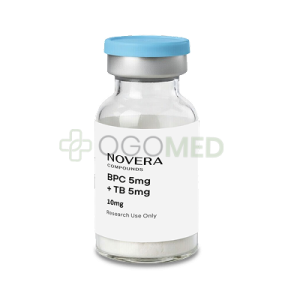






Novera BPC-157
| Category: | Peptides |
| Brand | Novera |
| Strength | 10mg, 20mg |
| Form | Lyophilized powder |
| Purity (%) | ≥99 |
| CAS number | 137525-51-0 |
| Chemical Formula | C₆₂H₉₈N₁₆O₂₂ |
| Molecular weight | 1419.5 |
| Synonyms | Bepecin, BPC-157-Arginate, PL-14736 |
| Peptide sequence | Gly-Glu-Pro-Pro-Pro-Gly-Lys-Pro-Ala-Asp-Asp-Ala-Gly-Leu-Val |
| Storage | Store at 2-8 °C or -20 °C. Protect from light |
| Shelf Life (lyophilized) | 18-24 months |
| Shelf Life (after reconstitution) | 7-28 days |
Learn more...
BPC-157 is a synthetic pentadecapeptide, a 15-amino-acid fragment derived from a protective protein found in human gastric juice, studied across preclinical models for its effects on tissue repair, angiogenesis, and gastrointestinal protection. Researchers investigating tendon healing, gut barrier function, or blood vessel formation in rodent and cell-based systems can buy BPC 157 as Novera BPC-157 through this catalog page.
Novera BPC-157 is supplied strictly for laboratory research use only. It is not FDA approved, has never completed large-scale human clinical trials, and cannot be marketed as a pharmaceutical drug or medication. Every claim on this page references preclinical data, and no statement should be read as therapeutic guidance.
What Novera BPC-157 Is
The body protection compound 157 is a synthetic pentadecapeptide whose sequence corresponds to a fragment of BPC, a protein isolated from human gastric juice. No confirmed endogenous circulating form of this exact 15-amino-acid molecule exists in the body; the synthetic version was engineered to replicate a partial sequence of the parent protein for experimental purposes. That distinction matters because the compound’s stability, receptor interactions, and pharmacokinetics may differ from whatever role the native protein fragment plays in gastric mucosal defense.
Solid-phase synthesis rather than extraction is what made systematic study possible. He et al. (2022, Frontiers in Pharmacology) used a synthetic preparation for the first pharmacokinetic characterisation of the peptide, reporting linear kinetics and an elimination half-life under 30 minutes in both rats and beagle dogs, with urine and bile as the main excretory routes.
Why Researchers Study BPC-157
Preclinical interest in this molecule centers on several interconnected pathways. The most consistently reported mechanism involves VEGFR2, the vascular endothelial growth factor receptor 2, and its downstream signaling through the Akt-eNOS cascade. Nitric oxide signaling, the transcription factor Early Growth Response gene-1 (Egr-1), and FAK-paxillin pathways related to cell migration and cytoskeletal reorganization have also been implicated in animal studies and cultured cells. Below, each major research area is described with the specific evidence behind it.
Angiogenesis and Vascular Recovery
In a rat hind limb ischemia study, Hsieh et al. reported in the Journal of Molecular Medicine (2017) that BPC 157 accelerated blood flow recovery as measured by laser Doppler scanning, increased vessel number in ischemic muscle, and raised vascular VEGFR2 expression. The same paper showed enhanced endothelial tube formation in vitro in human vascular endothelial cells, with BPC 157 promoting VEGFR2 internalization and time-dependent activation of the VEGFR2-Akt-eNOS pathway; blocking endocytosis with dynasore abolished both.
“BPC 157 accelerates the blood flow recovery and vessel number in rats with hind limb ischemia.” Hsieh et al., 2017, Journal of Molecular Medicine.
The same VEGFR2-Akt-eNOS axis drives tumour vascularisation, and no published study has separated reparative from tumour-associated angiogenesis for this peptide, so the pro-angiogenic profile is an open experimental question rather than a quantified property. These findings remain rodent and cell-culture only; no human vascular study has been published.
Tendon and Ligament Repair
A 2026 study by Bicer et al. in Joint Diseases and Related Surgery directly compared BPC-157 and TB-500 in a rat Achilles tendon transection and repair model. Thirty-two male Sprague-Dawley rats, eight per group, received intraperitoneal BPC-157 at 10 micrograms/kg/day, TB-500 at 60 micrograms/kg/day, or both, for four weeks after transection and repair. Maximum load to failure rose above control in both single-peptide groups but reached statistical significance only for TB-500 (adjusted p = 0.0406); BPC-157 alone did not (p = 0.389). Bonar and Movin scoring improved with both peptides, and the combination arm outperformed neither single peptide.
Chang et al. (2011, Journal of Applied Physiology) separated the cellular steps in vitro: BPC 157 did not increase tendon fibroblast proliferation in an MTT assay, but it raised cell survival under hydrogen peroxide stress, dose-dependently increased migration in a transwell assay, induced F-actin formation, and dose-dependently increased phosphorylation of FAK and paxillin without changing total protein. No human tendon or ligament trial has been conducted.
Gastrointestinal Injury and Healing
Klicek et al. published a 2008 study in the Journal of Pharmacological Sciences using a rat model of colocutaneous fistula, in which a 5 mm defect was created in both the colon and the skin. BPC-157 treatment improved closure of both defects compared to control animals. L-NAME alone aggravated fistula healing, but every BPC 157 benefit remained unchanged under blocked NO generation, under L-arginine, and under the two combined, so in this model the peptide acts alongside the NO substrate pathway rather than through it. BPC 157 was effective both intraperitoneally and perorally in drinking water, and sulphasalazine was only moderately effective while a corticosteroid made healing worse.
“All of the BPC 157 beneficial effects remained unchanged with blunted NO-generation.” Klicek et al., 2008, Journal of Pharmacological Sciences.
Muscle Injury Recovery
BPC-157 is studied for faster healing of muscle injuries in rodent crush and laceration models. Published reports describe improved histological organization and mechanical strength in injured muscle tissue after peptide administration, with proposed mechanisms involving growth factor receptor signaling and antioxidant enzymes such as heme oxygenase-1 (HO-1). These muscle recovery findings are limited to small studies in rats; no controlled human muscle injury trial exists.
377, issue 1, pp. 153-159). This finding applies only to rodent ischemia models and has not been replicated in human subjects.
How BPC-157 Compares With Related Compounds
BPC-157 is often paired with TB-500 for enhanced recovery protocols in preclinical research, and researchers frequently ask how these peptides differ. The table below summarizes the key distinctions relevant to study design.
| Feature | BPC-157 | TB-500 (Thymosin β-4 fragment) |
|---|---|---|
| Origin | Fragment of a protein found in human gastric juice | Supplied in this catalogue as thymosin beta-4 acetate, the full 43-residue protein; the Ac-LKKTETQ heptapeptide sold under the same trade name is a different material |
| Primary Pathways | VEGFR2-Akt-eNOS, nitric oxide signaling, Egr-1, FAK-paxillin | Actin sequestration, cell migration, anti-inflammatory signaling |
| Evidence Level | Multiple rodent injury models; in vitro endothelial assays; no large human RCTs | Rodent angiogenesis, cardiac and dermal wound data for full-length thymosin beta-4; Bicer 2026 is the main direct rat tendon comparison |
| Typical Research Use | Tendon, gut, and vascular injury models in rats | Cardiac injury, wound healing, and dermal repair models |
| Direct Comparison | Bicer 2026: load to failure above control but not significant (adjusted p = 0.389) | Bicer 2026: load to failure significantly above control (adjusted p = 0.0406) |
A researcher planning a tendon transection protocol might select TB-500 if the primary endpoint is biomechanical strength, given the 2026 Bicer et al. findings. BPC-157 may be preferable when the study’s focus is gut barrier function or nitric oxide-dependent pathways, areas where TB-500 has little direct published data. The combination of peptides did not outperform either compound used singly in the Bicer study, a result that should inform protocol design.
What Research on BPC-157 Does Not Establish
Three decades of preclinical work have produced no approved formulation, no validated dosing regimen and no completed Phase II trial. The gaps below are why.
Human evidence is effectively absent. No randomised controlled trial of BPC-157 has been published in any indication, and the 2026 review by Mateescu et al. in Pharmaceutics, which searched PubMed, Embase and the Cochrane Library to April 2026 together with patent and regulatory databases, found no completed Phase II study. What pharmacokinetic data exist come from rats and beagle dogs, not from people.
“No approved formulation, no validated dosing regimen, and no completed Phase II clinical trial.” Mateescu et al., 2026, Pharmaceutics.
Dose-response has never been characterised outside rodents, and inside them it is strange: published rat studies report broadly similar outcomes across roughly 10 pg/kg to 10 micrograms/kg, a span of six orders of magnitude. A flat dose-response that wide is hard to reconcile with a defined receptor interaction, and the 2026 Pharmaceutics review names this pharmacokinetic-pharmacodynamic disconnect as the main barrier to clinical development.
The precise molecular target, meaning a specific receptor, for BPC-157 has not been identified. Many downstream effects are observed or inferred, but causal pathway mapping is incomplete. The receptor question is a fundamental gap: without it, the mechanism cannot be fully validated.
Long-term effects of BPC-157 use are unknown due to insufficient human clinical trials. Unknown immunogenicity and chronic toxicity profiles mean that safety in any extended protocol cannot be assumed from short-term rodent data.
Claims circulating online about human gut repair, joint pain reduction, anti-aging effects and skin rejuvenation rest on uncontrolled reports. There is no systematic adverse-event dataset for this compound in humans, so the phrase ‘no safety signal’ describes an absence of surveillance, not the presence of safety.
Independent replication is the other gap. Most of the rodent record comes from a small number of collaborating groups, negative results in this field are rarely published, and no laboratory outside those groups has reproduced the full range of reported effects across organ systems.
Clinical development stalled rather than succeeded. The peptide entered trials as PL 14736 for inflammatory bowel disease more than twenty years ago, and no sponsor has published a completed Phase II result since. That is the shape of the evidence: not a promising finding awaiting confirmation, but a programme that has not produced one.
Where to Buy Novera BPC-157
Licensed professionals and laboratories looking for where to buy BPC 157 for preclinical work can order Novera BPC-157 directly from this store’s catalog. It is supplied for laboratory research use only.
-
Estimated delivery time 3 to 7 days.
-
Free shipping on orders over $750.
-
All US import fees and tariffs are covered by Ogomed, so the buyer pays nothing extra; customs checks under the new US import rules can add a little time to delivery.
-
Price match: if the same product is listed for less elsewhere, Ogomed will try to match it.
-
Support by phone +1-650-457-5621 and email, 10am to 6pm EST.
-
Sold to licensed professionals, for laboratory research use only.
References
- Hsieh, M. J., et al. (2017). Therapeutic potential of pro-angiogenic BPC157 is associated with VEGFR2 activation and up-regulation. Journal of Molecular Medicine, 95(3), 323-333. DOI: 10.1007/s00109-016-1488-y
- Klicek, R., et al. (2008). Pentadecapeptide BPC 157, in clinical trials as a therapy for inflammatory bowel disease (PL14736), is effective in the healing of colocutaneous fistulas in rats: role of the nitric oxide-system. Journal of Pharmacological Sciences, 108(1), 7-17. DOI: 10.1254/jphs.FP0072161
- Chang, C. H., et al. (2011). The promoting effect of pentadecapeptide BPC 157 on tendon healing involves tendon outgrowth, cell survival, and cell migration. Journal of Applied Physiology, 110(3), 774-780. DOI: 10.1152/japplphysiol.00945.2010
- He, L., et al. (2022). Pharmacokinetics, distribution, metabolism, and excretion of body-protective compound 157, a potential drug for treating various wounds, in rats and dogs. Frontiers in Pharmacology, 13, 1026182. DOI: 10.3389/fphar.2022.1026182
- Bicer, O., et al. (2026). Effects of BPC-157 and TB-500 on Achilles tendon healing in rats: A histopathological and biomechanical study. Joint Diseases and Related Surgery, 37(3), 822-837. DOI: 10.52312/jdrs.2026.2951
- Mateescu, D. M., et al. (2026). BPC-157 as an Investigational Peptide Therapeutic: Biopharmaceutical Challenges, Formulation Strategies, and Translational Development Barriers. Pharmaceutics, 18(5), 625. DOI: 10.3390/pharmaceutics18050625
Novera BPC-157 is a synthetic pentadecapeptide corresponding to a fragment of a protective protein found in human gastric juice, supplied as a lyophilized powder for laboratory experiments. It is not FDA approved, cannot be used for human dosing or as a medication, and is sold exclusively to licensed professionals for research purposes.
In animal and cell studies, the peptide modulates nitric oxide signaling, activates the VEGFR2-Akt-eNOS angiogenesis cascade, and engages transcription factors such as Egr-1. FAK-paxillin pathways involved in cell migration have also been implicated. The precise molecular receptor remains unidentified, and all described mechanisms derive from preclinical, not human, data.
Rodent studies have reported improved tendon healing, muscle repair, and gastrointestinal lesion closure with measured histological and biomechanical outcomes. No randomised controlled human trial of BPC-157 has been published in any indication, so none of the rodent findings has been confirmed in people.
BPC-157 is often studied alongside TB-500, which acts through actin-dependent cell migration pathways rather than the VEGFR2-eNOS cascade. In the 2026 Bicer et al. rat tendon study, TB-500 reached statistical significance for load to failure (adjusted p = 0.0406) while BPC-157 did not (p = 0.389), and the combination arm beat neither. Choice depends on the primary research question, tissue type, and endpoints measured.
Rat Achilles tendon transection, experimentally induced colitis, colocutaneous fistula models, peripheral nerve crush injury protocols, hind limb ischemia, and in vitro endothelial tube formation assays are among the most cited. All uses are preclinical and should follow institutional animal care (IACUC) and laboratory safety protocols.
No specific receptor has been identified for the compound, long-term toxicity and immunogenicity data in humans do not exist, and dose-response scaling from rats to humans has not been established. Many claims about recovery, inflammation reduction, and joint healing circulate online without support from controlled published evidence.
Yes. The 2026 WADA Prohibited List names BPC-157 in section S0, Non-Approved Substances, prohibited at all times, in and out of competition. The list text reads that this class “covers many different substances including but not limited to BPC-157”.
Licensed professionals wondering where to buy BPC-157 can order Novera BPC-157 directly from this store’s catalog. The peptide is sold for laboratory research use only, not for administration to humans or animals outside controlled, ethics-approved studies.
| Category: | Peptides |
| Brand | Novera |
| Strength | 10mg, 20mg |
| Form | Lyophilized powder |
| Purity (%) | ≥99 |
| CAS number | 137525-51-0 |
| Chemical Formula | C₆₂H₉₈N₁₆O₂₂ |
| Molecular weight | 1419.5 |
| Synonyms | Bepecin, BPC-157-Arginate, PL-14736 |
| Peptide sequence | Gly-Glu-Pro-Pro-Pro-Gly-Lys-Pro-Ala-Asp-Asp-Ala-Gly-Leu-Val |
| Storage | Store at 2-8 °C or -20 °C. Protect from light |
| Shelf Life (lyophilized) | 18-24 months |
| Shelf Life (after reconstitution) | 7-28 days |
Learn more...