








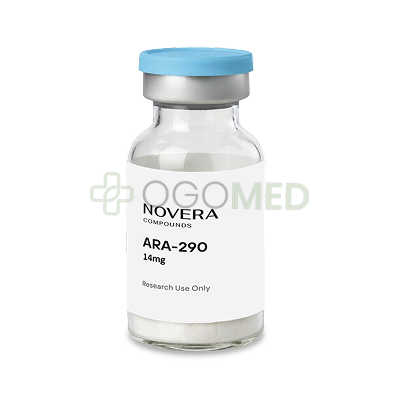
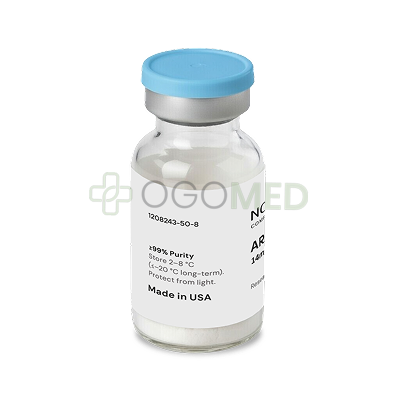
Novera ARA-290
| Category: | Peptides |
| Brand | Novera |
| Strength | 14mg |
| Form | Lyophilized powder |
| Purity (%) | ≥99 |
| CAS number | 1208243-50-8 |
| Chemical Formula | C₅₁H₈₄N₁₆O₂₁ |
| Molecular weight | 1257.3 |
| Synonyms | Cibinetide, Erythropoietin-derived-peptide |
| Peptide sequence | Proprietary modified peptide |
| Storage | Store at 2-8 °C. Protect from light and moisture |
| Shelf Life (lyophilized) | 12-24 months |
| Shelf Life (after reconstitution) | 7-14 days |
Learn more...
ARA-290, also known as cibinetide, is a peptide derived from the helix B surface of erythropoietin. Engineered as a non hematopoietic erythropoietin mimetic, it selectively activates the innate repair receptor (EPOR/CD131 heterocomplex) to trigger pro survival signaling, tissue protection, and anti-inflammatory responses without stimulating red blood cell production. Researchers across molecular medicine, neuroscience, and vascular biology use it to isolate repair pathways from erythropoietic activity in laboratory models.
Novera ARA-290 is supplied as a research-grade peptide for in vitro and preclinical in vivo experiments. It is not an approved drug or therapeutic product. ARA-290 has no marketing approval anywhere and its clinical record stops at small phase 2 studies. All use of this material is restricted to laboratory research only.
What Novera ARA-290 Is
ARA-290 (cibinetide) is an 11 amino acid peptide modeled on a specific surface region of human erythropoietin, the helix B face that mediates tissue protection rather than red blood cell formation. It was designed to replicate erythropoietin’s cytoprotective interface while lacking the structural domains required to engage the classical EPO receptor homodimer responsible for erythropoiesis.
This structural separation is the compound’s defining experimental advantage. Erythropoietin itself activates both the classical homodimer (driving hematocrit increases, potential thrombotic risk) and the innate repair receptor (driving repair and anti-inflammatory signaling). Because ARA-290 engages only the EPOR/CD131 heterocomplex, researchers can study tissue protection, nerve regeneration, and cytokine modulation without the confounding variable of erythropoietic activity. Human trial data confirm the absence of meaningful changes in hemoglobin or hematocrit during treatment periods of up to 56 days. ARA-290 does not induce increases in hematocrit or blood viscosity.
In the published literature, the compound appears under several names: cibinetide, pyroglutamate helix B surface peptide (pHBSP), and ara 290. All refer to the same nonhematopoietic erythropoietin analogue, and laboratory buyers should treat these terms as interchangeable when searching databases or ordering reagents.
Why Researchers Study ARA-290
The central reason investigators choose this peptide is its selective activation of the innate repair receptor. By engaging the EPOR/CD131 heterocomplex without triggering the classical EPO receptor homodimer, ARA-290 allows precise study of anti-inflammatory, cytoprotective, and neuroimmune pathways. This selectivity makes the compound a cleaner pharmacological tool than recombinant erythropoietin for experiments where hematologic changes would complicate interpretation.
At the receptor and pathway level, the EPOR/CD131 complex triggers JAK2/STAT5 and PI3K/Akt cascades in preclinical data. Downstream effects include modulation of NF-κB and suppression of pro-inflammatory cytokines such as TNF-α and IL-6, observed in rodent tissue and cell-culture systems. ARA-290 may inhibit pro-inflammatory cytokines like IL-6 and TNF-α, contributing to the anti-inflammatory properties documented in murine models. Published work spans rodent injury paradigms, in vitro immune cell assays, and early human trials, with outcomes that vary by indication, endpoint, and duration.
The following subsections cover the main research themes with concrete studies and measured outcomes.
Neuropathic Pain And Small Fiber Neuropathy Research
ARA-290 has been evaluated in both animal models and human clinical trials focused on neuropathic pain and small fiber neuropathy (SFN). The compound’s interaction with the innate repair receptor makes it a candidate for studying pathophysiological pain driven by nerve fiber loss and inflammation rather than by acute injury. Clinical studies have shown that ARA-290 can significantly reduce neuropathic symptoms, though effect sizes and endpoint sensitivity vary across trials.
In a 2012 double-blind, placebo-controlled exploratory trial published in Molecular Medicine, Heij et al. enrolled 22 sarcoidosis patients with symptoms of small fiber neuropathy; twelve received ARA-290 intravenously three times weekly for four weeks and ten received placebo. At week 4 the ARA-290 group showed a change in Small Fiber Neuropathy Screening List score of −11.5 ± 3.04 against −2.9 ± 3.34 for placebo (p < 0.05), and a significant change from baseline in the pain and physical functioning dimensions of the SF-36. Mean Brief Pain Inventory and Fatigue Assessment Scale scores improved significantly but equivalently in both arms, and no safety concerns were raised by clinical or laboratory assessment.
In a 2013 blinded, placebo-controlled trial published in Molecular Medicine, Dahan et al. reported that 28 days of daily subcutaneous ARA-290 in patients with documented sarcoidosis-associated small nerve fiber loss significantly improved neuropathic symptoms, and was associated with a significant increase in corneal small nerve fiber density, changes in cutaneous temperature sensitivity and increased exercise capacity measured by the 6-minute walk test.
ARA-290 may promote nerve fiber regeneration by increasing corneal nerve fiber density, as these trials demonstrate. Still, sample sizes were small (22 to 38 subjects), follow-up was short (four to eight weeks), and many endpoints relied on patient-reported symptoms or surrogate markers such as corneal fiber area rather than long-term functional restoration. Pain intensity measured by the Brief Pain Inventory did not separate significantly from placebo in the Heij et al. sarcoidosis trial: both groups showed similar reductions. These findings do not establish approved therapeutic use or dosing guidance.
“After sciatic nerve injury, ARA290 produced a rapid and long-term relief of mechanical and cold allodynia in normal mice.” Dahan et al., 2016, Pain Reports.
Diabetic Neuropathy And Metabolic Complications
ARA-290 is being studied for its effects on diabetic neuropathy, where nerve fiber loss and dysregulated inflammatory signaling drive progressive sensory deficits. Both rodent models and early human trials have evaluated the peptide’s capacity to preserve or restore nerve structure while modulating the immune system response underlying metabolic nerve damage.
The best-characterised rodent experiment is Swartjes et al. (2014, Molecular Pain). After spared nerve injury in rats, ARA-290 at 3, 10, 30 and 60 micrograms per kilogram on days 1, 3, 6, 8 and 10 significantly reduced mechanical allodynia against vehicle for up to 20 weeks, and cold allodynia was significantly reduced at all four doses over the same period. At 10 and 30 micrograms per kilogram the compound also suppressed the spinal microglia response measured as iba-1 immunoreactivity, while astrocyte reactivity did not differ. In mice, the analgesic effect after sciatic nerve injury is absent in animals with a beta-common receptor knockout phenotype, which is the evidence that it runs through the innate repair receptor.
A 2015 phase 2 trial by Brines et al., published in Molecular Medicine, gave 4 mg ARA-290 or placebo subcutaneously once daily for 28 days with a further month of follow-up in subjects with type 2 diabetes and painful neuropathy. Subjects receiving ARA-290 showed improvement in HbA1c and lipid profiles across the 56-day observation period and significant improvement in neuropathic symptoms on the PainDetect questionnaire. Subjects whose baseline corneal nerve fiber density was more than one standard deviation below normal showed a significant increase in density, against no change in the placebo arm. No potential safety issues were identified.
Activation of the EPOR/CD131 heterocomplex is described in the trial literature as antagonising inflammatory processes while stimulating tissue repair (Dahan et al., 2013). No cytokine measurements are reported in the published human diabetes trial, so the anti-inflammatory account of the mechanism rests entirely on animal and cell-culture work.
The compound’s limitations in this area are notable. Quantitative sensory testing for thermal perception did not change significantly in the human diabetic trial. Many participants already had well-controlled metabolic parameters at baseline, leaving limited room for HbA1c improvement. The treatment duration was only 28 days with 28 days of follow-up, insufficient to determine long-term nerve repair or disease modification. ARA-290 has completed Phase II trials but needs Phase III studies to establish efficacy in this population.
Immunomodulation And Autoimmune Disease Models
Preclinical research has evaluated ARA-290 in animal models of autoimmune and inflammatory disease, including experimental colitis, kidney injury, and transplantation settings. These laboratory models allow researchers to dissect how the innate repair receptor modulates inflammatory cell behavior and organ damage.
In murine autoimmune and inflammatory paradigms, ARA-290 reduced histologic inflammation and lowered levels of IL-1β, IL-6, and TNF-α. One sciatic injury model in mice demonstrated greater than 50% reduction in mechanical allodynia in treated animals versus controls, an effect absent in CD131-knockout mice. ARA-290 has anti-inflammatory properties in murine models and prevents damage to tissues exposed to ischemic or metabolic stress, including kidney and colon.
In vitro, the peptide modulated immune cell function directly. Exposure of macrophages or dendritic cells to ARA-290 reduced activation markers such as CD86 and MHC II expression, and diminished secretion of pro-inflammatory cytokines upon LPS stimulation. This evidence that ARA-290 inhibits macrophage activation supports its characterization as an immunomodulatory agent. Work on transplanted islets in rodent models has also suggested the compound may enhance graft viability by suppressing local inflammation.
Organ-protective data extend to retina, kidney, and heart under ischemia. In rodent kidney injury models, treated animals showed improved renal histology and reduced inflammatory cell infiltration. All such immunology data, however, come from animal or cell-culture experiments and have not been confirmed in large controlled human trials. No human trial has focused on autoimmune disease other than sarcoidosis.
“ARA290 effectively reprograms a proinflammatory, tissue-damaging milieu into one of healing and tissue repair.” Dahan et al., 2016, Pain Reports.
Microvascular And Retinal Protection Studies
Investigators interested in the ischemic retina and microvascular disease have used ARA-290 to examine endothelial and retinal protection in diabetic and ischemic rodent models. The compound’s vasoreparative potential arises from its activation of the innate repair receptor on vascular cells.
Published work in this area is sparse, and the percentage reductions in retinal vascular permeability that circulate in vendor copy have no identifiable source, so none is repeated here. ‘Research published in journals focused on experimental eye research’ is not a citation and no specific retinal paper on ARA-290 could be located.
Better-documented transplantation work exists in place of the retinal claims: Yao et al. (2020, Transplantation) gave cibinetide at 120 micrograms per kilogram daily for 14 days to mice receiving allogeneic intraportal islet grafts and found reduced proinflammatory gene expression in the graft-bearing liver, improved glycaemic control immediately after transplantation and a significantly delayed onset of allograft loss, with long-term graft survival improved further by low-dose tacrolimus. In vitro the same study found cibinetide lowered maturation of bone-marrow-derived immature dendritic cells and reduced the allogeneic T-cell response.
Despite these findings, human ocular data remain preliminary or absent. The sarcoidosis trial measuring corneal nerve fiber density is the closest available human evidence, and no published trial has examined ARA-290 for human retinal endpoints. Calcium imaging and other advanced techniques used in preclinical retinal studies have not been extended to clinical settings for this compound.
Human Clinical Trial Outcomes And Limitations
Three completed human trials form the core of the clinical evidence base for ARA-290. The 2012 Heij et al. pilot in sarcoidosis-associated SFN (n=22, intravenous, four weeks) showed significant SFNSL improvement and enhanced SF-36 physical functioning scores, with no adverse hematologic findings. The 2013 Brines et al. sarcoidosis trial (n=38, subcutaneous daily, 28 days) demonstrated increased corneal nerve fiber area and improved 6-minute walk distance. The 2015 Brines et al. type 2 diabetes neuropathy trial (n=48 analyzed, subcutaneous daily, 28 days plus follow-up to day 56) reported improved metabolic control and increased corneal nerve fiber density in a subgroup with reduced baseline values.
Across these studies, at least one endpoint failed to separate from placebo. In the Heij et al. sarcoidosis trial, Brief Pain Inventory mean pain reduction was similar in both ARA-290 and placebo arms, illustrating the strength of placebo response in pain research. Quantitative sensory testing for thermal thresholds did not change significantly in the diabetic trial.
Safety across all human data showed no meaningful erythropoietic changes: hemoglobin and hematocrit remained stable. Injection-site reactions are possible with ARA-290 use, and one patient in the diabetic trial discontinued due to worsening renal insufficiency. ARA-290 has not been established as a routine treatment with well-characterized long-term safety. The current evidence base is restricted to phase I/II exploratory studies with sample sizes of 20 to 60 subjects and durations of 28 to 56 days, insufficient to define clinical use, long-term safety, or comparative effectiveness.
How ARA-290 Compares With Related Compounds
Researchers planning experiments on repair signaling and inflammation often compare cibinetide with recombinant human erythropoietin (rhEPO) when selecting a pharmacological tool. The table below contrasts these two compounds on receptor target, evidence level, and typical research use.
| Compound | Primary Receptor Target | Evidence Level | Typical Research Use |
|---|---|---|---|
| Novera ARA-290 (cibinetide) | Innate repair receptor (EPOR/CD131 heterocomplex), minimal activation of classical EPO receptor homodimer | In vitro, rodent models, early-phase human trials in neuropathy and inflammatory indications | Studying tissue-protective, anti-inflammatory, and neuroimmune signaling without erythropoiesis |
| Recombinant human erythropoietin (rhEPO) | Classical EPO receptor homodimer with secondary interaction at tissue-protective complexes | Extensive human therapeutic use plus animal models across anemia, ischemia, and organ protection | Modeling erythropoiesis, anemia correction, and broader systemic responses including hematologic changes |
A researcher would choose ARA-290 when the goal is to isolate tissue-protective and anti-inflammatory signaling without the confounding response of increased red blood cell production. Experiments studying nerve repair, vascular protection, or immune modulation benefit from this selectivity because changes in hemoglobin or hematocrit can obscure interpretation. Conventional rhEPO remains the appropriate tool when a study requires induction of erythropoiesis, comparison with established anemia therapy, or examination of the full spectrum of EPO receptor signaling.
What Research On ARA-290 Does Not Establish
No regulatory authority has granted marketing approval for ARA-290 for any therapeutic use, and the clinical literature stops at three small phase 2 studies.
Claims circulating online that ARA-290 is a guaranteed “cure” for neuropathy, a broad anti-aging peptide, or a universal neuroprotectant have no published support in controlled data. Some vendors present it as a treatment for retinal disease, chronic pain of all types, or metabolic syndrome, but none of these indications has been validated beyond early-phase exploratory studies with small sample sizes.
Most mechanistic and organ-protective data come from in vitro work and rodent models. Species differences in receptor expression, immune response, and pharmacokinetics mean that results in mice may not predict outcomes in human subjects. The Heij et al. 2012 sarcoidosis trial found no significant separation from placebo on its Brief Pain Inventory pain intensity endpoint, a sobering result given that symptom-based measures are among the most clinically meaningful. Thermal perception thresholds in the 2015 diabetic neuropathy trial also did not improve significantly.
Long-term safety beyond approximately eight weeks is not established. Unknown risks include impact on immunity, possible effects on tumor growth via proliferative signaling (though no cancer signals have appeared in trials), and off-target consequences of chronic EPOR/CD131 activation. No standardized dosing regimen for route, frequency, or duration has been defined; dose-response appears non-monotonic in some endpoints, with corneal nerve fiber area increasing at one dose level but not at higher or lower doses.
Basic pharmacokinetics are an open question rather than a settled number. The subcutaneous bioavailability, peak plasma concentration and roughly two-minute half-life figures that circulate for ARA-290 all trace back to Patel et al. 2012 in Molecular Medicine, which was retracted in February 2026. Nothing on this page rests on them, and no replacement human pharmacokinetic study has been published. What the clinical data do show is that the structural response is partial.
“ARA290 treatment for 28 days initiated a regrowth of small nerve fibers in the cornea, but not in the epidermis.” Dahan et al., 2016, Pain Reports.
Where to Buy Novera ARA-290
Licensed professionals looking to buy ARA 290 peptide for laboratory work can order Novera ARA-290 through this store. The product listing serves buyers searching terms such as “buy ara-290 peptide” or “ara 290 buy,” and all sales are restricted to research use only.
-
Estimated delivery time 3 to 7 days.
-
Free shipping on orders over $750.
-
All US import fees and tariffs are covered by Ogomed, so the buyer pays nothing extra; customs checks under the new US import rules can add a little time to delivery.
-
Price match: if the same product is listed for less elsewhere, Ogomed will try to match it.
-
Support by phone +1-650-457-5621 and email, 10am to 6pm EST.
-
Sold to licensed professionals, for laboratory research use only.
Researchers who need a reliable source and are asking where to buy ara-290 peptide can obtain Novera ARA-290 under these conditions, exclusively for non-clinical laboratory work.
References
- Heij, L., Niesters, M., Swartjes, M., et al. (2012). Safety and efficacy of ARA 290 in sarcoidosis patients with symptoms of small fiber neuropathy: a randomized, double-blind pilot study. Molecular Medicine, 18(1), 1430-1436. DOI: 10.2119/molmed.2012.00332
- Dahan, A., Dunne, A., Swartjes, M., et al. (2013). ARA 290 improves symptoms in patients with sarcoidosis-associated small nerve fiber loss and increases corneal nerve fiber density. Molecular Medicine, 19(1), 334-345. DOI: 10.2119/molmed.2013.00122
- Swartjes, M., van Velzen, M., Niesters, M., et al. (2014). ARA 290, a peptide derived from the tertiary structure of erythropoietin, produces long-term relief of neuropathic pain coupled with suppression of the spinal microglia response. Molecular Pain, 10, 13. DOI: 10.1186/1744-8069-10-13
- Brines, M., Dunne, A. N., van Velzen, M., et al. (2015). ARA 290, a nonerythropoietic peptide engineered from erythropoietin, improves metabolic control and neuropathic symptoms in patients with type 2 diabetes. Molecular Medicine, 20(1), 658-666. DOI: 10.2119/molmed.2014.00215
- Dahan, A., Brines, M., Niesters, M., Cerami, A., van Velzen, M. (2016). Targeting the innate repair receptor to treat neuropathy. Pain Reports, 1(1), e566. DOI: 10.1097/pr9.0000000000000566
- Yao, M., Watanabe, M., Sun, S., et al. (2020). Improvement of islet allograft function using cibinetide, an innate repair receptor ligand. Transplantation, 104(10), 2048-2058. DOI: 10.1097/TP.0000000000003284
ARA-290 is a synthetic 11 amino acid peptide derived from erythropoietin, engineered to target the innate repair receptor (EPOR/CD131) and studied for tissue protection, anti-inflammatory signaling, and nerve regeneration in preclinical and early human research. It is a research reagent, not an approved drug, and is classified as an investigational compound.
The peptide selectively activates the EPOR/CD131 heterocomplex, triggering JAK2/STAT5 and PI3K/Akt downstream cascades while leaving the classical EPO receptor homodimer largely unengaged. In vitro and animal data indicate modulation of NF-κB and suppression of pro-inflammatory cytokines including TNF-α and IL-6. ARA-290 selectively activates the innate repair receptor to promote tissue protection. Confirmation of these molecular pathways in human tissue remains limited.
Human trials in sarcoidosis-associated small fiber neuropathy and type 2 diabetes have reported improvements in symptom questionnaires, corneal nerve fiber density in specific subgroups, and walk-test distances, all with preserved hematologic stability. At least one controlled study in sarcoidosis-related pain, the 2012 Heij et al. trial, did not meet its primary pain intensity endpoint: placebo and treatment arms showed similar reductions. ARA-290 has shown potential in reducing neuropathic pain, but research results are preliminary and not equivalent to established clinical efficacy.
Erythropoietin activates both the hematopoietic receptor homodimer and tissue-protective complexes, producing red blood cell growth alongside cytoprotective effects. ARA-290 was designed to avoid stimulating erythropoietic activity entirely. Researchers choose ARA-290 when they want to focus on repair and anti-inflammatory signaling without confounding changes in hemoglobin or hematocrit, making it a more precise pharmacological tool for neuropathy and inflammation models.
Investigators have evaluated the compound in rodent models of diabetic neuropathy, sciatic nerve injury, autoimmune colitis, ischemic kidney and retinal injury, and transplantation of islets. In vitro studies on immune cells, endothelial colony forming cells, and neurons complement the animal work. Early human trials have explored neuropathic symptoms and small fiber structure in sarcoidosis and type 2 diabetes, using endpoints such as corneal nerve fiber density, SFNSL questionnaires, and 6-minute walk tests.
Long-term safety beyond eight weeks, optimal dosing regimens (route, frequency, duration), durability of observed effects, and performance in large phase III trials all remain unclear. Off-target effects and rare adverse events cannot be fully assessed from existing small, short-duration studies. Whether the compound is effective in neuropathies beyond sarcoidosis and type 2 diabetes, or whether it enhances functional outcomes like sustained mobility, has not been established. In the sarcoidosis trial, corneal nerve fibres regrew over 28 days of treatment while epidermal nerve fibres did not, so even the structural signal is partial.
ARA-290 (cibinetide) is not on the 2026 WADA Prohibited List, by name or as a class. Because it has no current approval as a human therapeutic it falls under S0, the catch-all class for non-approved substances, which is prohibited at all times.
Licensed laboratories and professionals can buy ara-290 or place an ara 290 buy order for Novera ARA-290 directly through this store’s product page. The compound is sold strictly for laboratory research use only and is not intended for administration to humans or animals outside of approved research protocols.
| Category: | Peptides |
| Brand | Novera |
| Strength | 14mg |
| Form | Lyophilized powder |
| Purity (%) | ≥99 |
| CAS number | 1208243-50-8 |
| Chemical Formula | C₅₁H₈₄N₁₆O₂₁ |
| Molecular weight | 1257.3 |
| Synonyms | Cibinetide, Erythropoietin-derived-peptide |
| Peptide sequence | Proprietary modified peptide |
| Storage | Store at 2-8 °C. Protect from light and moisture |
| Shelf Life (lyophilized) | 12-24 months |
| Shelf Life (after reconstitution) | 7-14 days |
Learn more...