







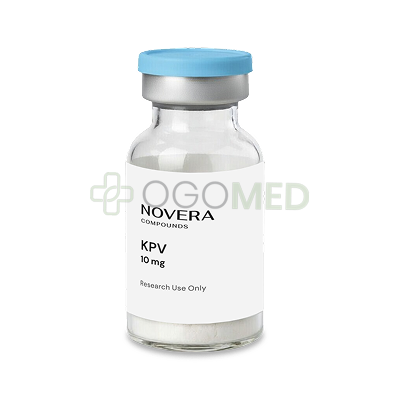
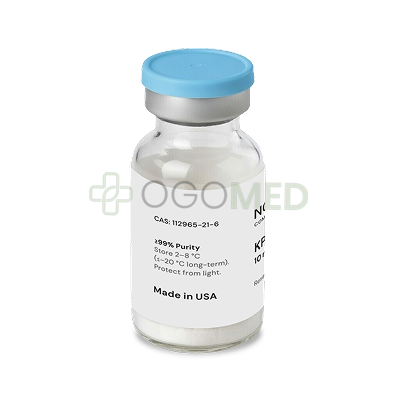
Novera KPV
| Category: | Peptides |
| Brand | Novera |
| Strength | 10mg |
| Form | Lyophilized powder |
| Purity (%) | ≥99 |
| CAS number | 67727-97-3 |
| Chemical Formula | C₁₆H₃₀N₄O₄ |
| Molecular weight | 340.4 |
| Synonyms | Lys-Pro-Val-peptide, Alpha-MSH-fragment-KPV |
| Peptide sequence | Lys-Pro-Val |
| Storage | Store at 2-8 °C. Protect from light and moisture |
| Shelf Life (lyophilized) | 18-24 months |
| Shelf Life (after reconstitution) | 7-14 days |
Learn more...
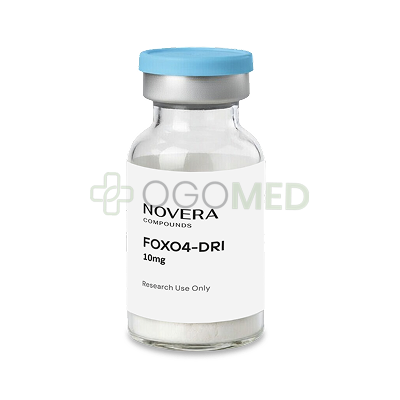
Novera KPV is a research-grade preparation of tripeptide KPV, supplied as 10 mg of lyophilized powder with a stated purity of at least 99%. The initials describe its sequence: lysine, proline, valine. It contains three amino acids, corresponding to residues 11–13 at the C-terminal end of alpha melanocyte stimulating hormone. Papers also use the names melanocyte stimulating hormone α MSH and alpha MSH.
The practical product details are straightforward:
- Brand: Novera Compounds;
- Strength: 10 mg per vial;
- Form: freeze-dried peptide powder;
- Active sequence: KPV, one short amino acid chain;
- Listed purity: ≥99%;
- Status: for research use only.
This is not a finished medicine, injectable therapy, skin treatment, or dietary product. Novera states that KPV is not FDA-approved for widespread human use but can be prescribed by healthcare providers. That separates a controlled research tool from supplements. Personal wellness journey claims or benefits from consistent use fall outside the evidence for this vial.
Where the Sequence Comes From and Why It Matters
KPV is the smallest bioactive tail fragment of α melanocyte stimulating hormone (α MSH), a 13-residue peptide derived from pro-opiomelanocortin. The full sequence participates in pigmentation and immune signaling, but KPV is investigated mainly for its anti inflammatory properties and antimicrobial behavior. It belongs to the wider family of melanocortin peptides, although its effects do not map neatly onto melanocortin receptors.
That nuance matters when reading mechanism claims. Some melanocortin signals raise intracellular cyclic AMP through the cAMP pathway, but published KPV work also points to receptor-independent entry through the PepT1 transporter. It would therefore be too simple to describe KPV’s mechanism as one receptor switch: the stronger evidence follows cellular uptake and downstream changes in inflammatory pathways.
Research Use of Lysine, Proline, Valine
The best-developed work concerns epithelial barriers and mucosal inflammation, not whole-person outcomes. KPV peptide has been tested in cells, tissues, and mouse models reproducing selected features of inflammatory bowel disease. These experiments examine immune responses, barrier damage, and inflammatory gene expression under controlled conditions.
Why the Form of KPV Matters in Research
KPV peptide is studied in oral capsules, topical applications, and injectable models, but these formats should not be treated as interchangeable. The route, carrier, concentration, and target tissue can substantially affect how the peptide behaves within an experiment. Novera KPV is supplied as a 10 mg lyophilized powder rather than a ready-to-use capsule, topical formula, or injectable solution.
Researchers must therefore select preparation and delivery conditions according to a validated laboratory protocol. Findings obtained with an oral delivery system cannot automatically be transferred to topical or injectable experiments. This distinction is essential when comparing results across different KPV studies.
Common Experimental Areas
- intestinal inflammation and transport across intestinal epithelial cells;
- models of ulcerative colitis and chemically induced colitis;
- signaling changes in epithelial tissue and immune cells;
- keratinocyte, dermatitis, and wound healing models;
- antimicrobial assays where inflammation and infection overlap.
Gut Health and Barrier Models
The digestive system is central to KPV research because PepT1 transports small dietary peptides and becomes more prominent in the inflamed colon. In the 2008 study, nanomolar exposure through PepT1 reduced NF-κB and MAPK signaling and lowered pro inflammatory cytokines. Mouse experiments also showed reduced colitis markers, strengthened tight junctions in the gut wall, but they do not establish human efficacy or prove better gut health.
Later research paired KPV-loaded nanoparticles with hyaluronic acid and a colon-targeted hydrogel. The system targeted CD44-rich inflamed tissue and produced stronger local effects in mice. It is not an ingredient identified in Novera KPV; the work shows why delivery design matters.
Anti-Inflammatory Effect and Immune Modulation
Inside responsive cells, KPV appears to interfere with nuclear movement of NF-κB components and reduce NF κB activation. Because this factor turns on inflammatory mediators, its suppression can reduce cytokine production and alter inflammatory responses. Lower output of TNF-α, IL-6, IL-8, IL-12, IL-1β, and interferon-γ in preclinical systems is described as anti inflammatory activity, not proof of treatment.
The language of immune modulation requires care. A targeted signaling change is not broad immune regulation, and neither predicts better immune function in a person. Antimicrobial findings suggest a profile different from generalized immunosuppression, but the human balance between useful control and harm remains unmapped.
Researchers compare KPV with unrelated compounds to separate mechanisms. BPC-157 literature often discusses the nitric oxide system, whereas KPV experiments focus on PepT1 and NF-κB. Such comparisons guide assay design but do not justify combining peptides or using them with other medications.
What the Evidence Really Shows
The most cited evidence remains preclinical. Researchers connected PepT1 uptake with reduced cell signaling and improvement in two mouse colitis models. They found that related KdPT reduced experimental colitis, adding context without making KPV an approved treatment for inflammatory conditions.
The nanoparticle study combined local delivery with mucosal repair in experimental colitis. Even so, animal work and in vitro laboratory research cannot predict the same benefit or risk in people. No robust controlled human trials establish dosing, long-term safety, or therapeutic value for Novera KPV.
Side Effects, Unknowns, and Experimental Risk
A credible side-effect section begins with what is missing: there is no dependable human adverse-event dataset for this product. Reports of headache, nausea, digestive discomfort, redness, itching, swelling, or injection-site irritation come mostly from anecdotal use. A lack of recorded toxicity in early models is not proof that the peptide is harmless to the body.
For laboratory risk assessment, the practical uncertainties include:
- unknown short- and long-term systemic toxicity;
- possible allergy or unexpected changes in immune behavior;
- contamination, endotoxin, sterility, or identity errors;
- degradation after incorrect reconstitution or storage;
- uncertain interactions with drugs, biologics, or other experimental compounds.
Reading Safety Claims Carefully
No validated human dose, exposure limit, or monitoring protocol exists. Work in laboratory settings should follow an approved protocol, the batch certificate of analysis, and appropriate personal protective equipment. Lot numbers and handling conditions must be documented. Any claimed support for disease management exceeds the data, especially when findings replace standard medical care.
Storage and Handling Conditions
Keep the unopened vial sealed, dry, protected from light, and stored at the temperature on its label or batch documents. Without supplier-specific instructions, laboratories commonly hold lyophilized peptide powder near −20°C for longer storage and avoid temperature cycling. Humidity, heat, light, and repeated opening can reduce stability even when the powder looks unchanged.
After reconstitution, stability depends on solvent, pH, sterility, temperature, and assay needs. Prepare only what the protocol requires, use small aliquots when appropriate, and avoid repeated freeze–thaw cycles. Never improvise a solvent or storage period from an online dosing guide. Label each container with compound, concentrations, solvent, date, lot, and operator, then discard material under laboratory waste procedures.
Where to Buy KPV Peptide
KPV must be manufactured in cGMP-certified facilities and should be free from harmful contaminants like endotoxins. A Certificate of Analysis (COA) confirms KPV’s purity. If you are looking for a licensed medical channels for laboratory research, OGOMed is a practical option to consider. The store offers Novera KPV in a 10 mg lyophilized format with a stated purity of at least 99%. Clear specifications allow researchers to review the sequence, strength, and other essential details before ordering.
OGOMed also provides transparent information about storage conditions, shelf life, and delivery. This is particularly important when quality matters in studies involving a peptide fragment derived from alpha melanocyte stimulating hormone. A detailed product listing and straightforward ordering process make purchasing research materials more convenient.
| Category: | Peptides |
| Brand | Novera |
| Strength | 10mg |
| Form | Lyophilized powder |
| Purity (%) | ≥99 |
| CAS number | 67727-97-3 |
| Chemical Formula | C₁₆H₃₀N₄O₄ |
| Molecular weight | 340.4 |
| Synonyms | Lys-Pro-Val-peptide, Alpha-MSH-fragment-KPV |
| Peptide sequence | Lys-Pro-Val |
| Storage | Store at 2-8 °C. Protect from light and moisture |
| Shelf Life (lyophilized) | 18-24 months |
| Shelf Life (after reconstitution) | 7-14 days |
Learn more...