
Content
No, Euflexxa is not a steroid. Euflexxa is 1% sodium hyaluronate (hyaluronic acid), a purified form of a substance that is already present in healthy joint fluid, and it contains no corticosteroid of any kind. The FDA regulates it as a medical device under premarket approval P010029, not as a drug, which is a different category from cortisone shots such as triamcinolone (Kenalog-40) or methylprednisolone.
The confusion is understandable. Both Euflexxa and steroid shots are injected into the knee to relieve osteoarthritis (OA) pain, often by the same orthopedist, and both are loosely called “knee shots”. But they are built from different molecules, work in different ways, start working at different speeds and carry different risks. A steroid calms inflammation within days; Euflexxa is a “gel” injection given as three weekly shots that restores some of the lubricating properties of joint fluid, with relief that builds more slowly.
This article explains what Euflexxa is, why hyaluronic acid is not a steroid, how the two compare, whether they can be combined or sequenced (including in people with diabetes) and who Euflexxa suits. It is written for licensed practitioners and clinic buyers, with plain-language notes for patients. For full product details, see our overview of what Euflexxa injection is.

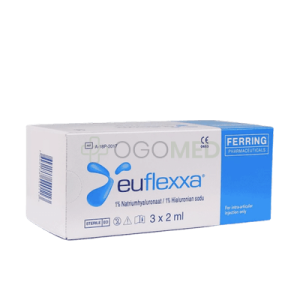
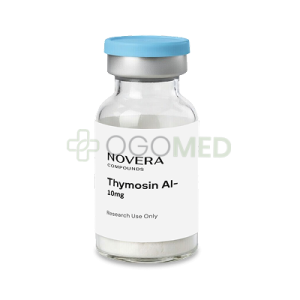
Euflexxa is a viscosupplement. According to its prescribing information, it is a viscoelastic, sterile solution of highly purified, high molecular weight hyaluronan (2.4 to 3.6 million daltons) in phosphate-buffered saline. The hyaluronan is extracted from bacterial cells, so, unlike some other hyaluronan products, Euflexxa does not come from bird-derived sources. Each prefilled syringe holds 2 mL, and a standard course is one intra-articular injection into the knee every week for three weeks.
Hyaluronan is not foreign to the joint. The label’s patient section puts it simply:
“The body’s own hyaluronan acts like a lubricant and a shock absorber in the joint.” Ferring, Euflexxa Prescribing Information (rev. 07/2016)
In osteoarthritis, the concentration and quality of this natural hyaluronan fall, and joint fluid becomes thinner. Euflexxa is injected to supplement it, which is why the treatment is called viscosupplementation. It does not regrow cartilage, and it does not suppress the immune system the way a corticosteroid does.
Regulation confirms the difference. The FDA premarket approval record P010029 lists the generic name as “acid, hyaluronic, intraarticular” and the approved indication as pain in OA of the knee in patients who have not responded adequately to conservative non-pharmacologic therapy and simple analgesics such as acetaminophen. Steroid injections are approved through the drug pathway instead; Kenalog-40, for example, holds NDA 014901. The Euflexxa patient information even lists “corticosteroids that are injected directly into the joint” as a separate, alternative non-surgical treatment for knee OA.
Licensed practices can order Euflexxa 2 mL prefilled syringes through a verified OGOmed account, alongside other hyaluronic acid products for the knee.
Hyaluronic acid is not a steroid. Chemically, it is a long-chain sugar (a polysaccharide built from repeating units of N-acetylglucosamine and glucuronate), while corticosteroids are synthetic versions of adrenal hormones built on a four-ring steroid skeleton. The Kenalog-40 label describes triamcinolone acetonide as “a synthetic glucocorticoid corticosteroid with anti-inflammatory action”. The table compares Euflexxa with a standard steroid knee shot on the points that matter in practice.
| Feature | Euflexxa (hyaluronic acid) | Steroid shot (e.g. triamcinolone 40 mg) |
|---|---|---|
| Active substance | 1% sodium hyaluronate, 20 mg per 2 mL | Corticosteroid suspension (triamcinolone acetonide, methylprednisolone acetate) |
| Chemical class | Polysaccharide (glycosaminoglycan) | Synthetic glucocorticoid hormone |
| FDA category | Class III device, PMA P010029 | Prescription drug (Kenalog-40: NDA 014901) |
| How it works | Supplements the viscosity and elasticity of joint fluid | Suppresses inflammation in the joint lining |
| Injections per course | 3, one week apart | Usually 1 |
| Onset | Gradual over several weeks | Within days |
| Duration studied | 26 weeks in the US pivotal trial | Up to about 3 months (AAOS 2021) |
| Blood glucose | No known effect | Can rise for several days, especially in diabetes |
| Main local risks | Transient pain or swelling in the knee | Post-injection flare, skin atrophy, possible joint tissue damage with repeated use |
| Repeat use | Repeat course shown safe up to 1 year (label) | Limited by cumulative steroid exposure; interval is a clinical decision |
This is the short version of the comparison. Evidence on speed and duration, Zilretta (an extended-release steroid) and guideline positions is covered in detail in our article on Euflexxa vs cortisone. In brief, a meta-analysis by Bannuru and colleagues, published in Arthritis & Rheumatism (2009), found that steroids win in the first two weeks and hyaluronic acid wins from about week 8, with a statistically significant advantage at weeks 12 and 26.
 Orthopedics products
17 products available
Explore our Orthopedics products collection and browse available products.
View category
Several things make the two treatments look alike from a patient’s chair:
The practical difference shows up in timing. A steroid shot often helps within a few days and then wears off. Euflexxa takes several weeks to build up, and in the 26-week US trial of 588 patients, published in Seminars in Arthritis and Rheumatism (2009), pain on a 50-foot walk improved by 25.7 mm with Euflexxa versus 18.5 mm with saline on a 100 mm scale (difference 6.6 mm, P = 0.002). The benefit is real but modest on average, and it is not the quick “steroid effect” patients may expect. For the full timeline, see how long Euflexxa lasts.
Sequencing is the usual pattern. In the US, many payers expect a steroid injection to be tried before hyaluronic acid. Palmetto GBA’s Medicare policy, LCD L39260, covers a hyaluronan series only with radiographic knee OA, at least 3 months of failed conservative therapy, and “failure of or contraindication to intra-articular glucocorticoid injections”. A repeat series is covered only if the previous one helped and at least 6 months have passed. Neither the Euflexxa nor the Kenalog-40 label sets a minimum gap between a steroid shot and starting Euflexxa, so timing is a clinical decision.
Combining in one session is off-label for Euflexxa. Its label states that safety and effectiveness with other intra-articular injectables have not been established. Studies with other hyaluronic acid products suggest that adding a steroid mainly helps in the first week: in a randomized trial of 104 patients, published in Clinical Orthopaedics and Related Research (2013), adding triamcinolone hexacetonide to hylan G-F 20 improved pain at week 1 with no difference at weeks 4, 12 or 24.
Diabetes is where the difference matters most. Part of an injected steroid reaches the bloodstream, and the drug label is explicit:
“Because corticosteroids may increase blood glucose concentrations, dosage adjustments of antidiabetic agents may be required.” FDA, Kenalog-40 Prescribing Information (2024)
In a randomized study of 33 patients with knee OA and type 2 diabetes, published in Rheumatology (2018) and funded by Flexion Therapeutics, the maker of extended-release triamcinolone, a standard 40 mg triamcinolone injection raised average continuous-monitor glucose by 33.9 mg/dL over days 1 to 3, compared with 14.7 mg/dL for extended-release triamcinolone; only about half of the time over those days was spent in the 70 to 180 mg/dL target range after the standard shot. In a Mayo Clinic cohort of 1,169 patients, published in Clinical Diabetes (2024), 15.7% had a greater-than-expected rise in A1C after a large-joint steroid injection, and the risk was highest when baseline A1C was above 8%. Hyaluronic acid is not a hormone, and no glucose-related adverse events are listed in the Euflexxa labeling. For a patient with poorly controlled diabetes who needs repeated knee injections, that is often the deciding factor.
Euflexxa. The most common device-related events in the clinical studies were arthralgia (joint pain), back pain, pain in the limb, musculoskeletal pain and joint swelling. In the 26-week US trial, adverse events considered related to the injection occurred in 9.9% of Euflexxa patients and 10.8% of saline patients, so most were procedure-related rather than drug-related. In the 12-week German trial, knee effusion was reported in 1 Euflexxa patient versus 13 patients on another hyaluronic acid product. Transient pain or swelling after the injection is expected; extensive, painful swelling, fever or redness should be reported. The label advises avoiding strenuous activity or more than an hour of weight-bearing activity for 48 hours after each injection.
Euflexxa is contraindicated with a known hypersensitivity to hyaluronan preparations and with knee joint infection, infection or skin disease at the injection site. It must not be drawn through a needle used with benzalkonium chloride. Because it is not bird-derived, the label does not list avian protein allergy among its contraindications.
Steroid injection. Besides the glucose effect above, the Kenalog-40 label lists post-injection flare after intra-articular use, cutaneous and subcutaneous atrophy, and Charcot-like arthropathy, and warns that intra-articular injection may damage joint tissues. Septic arthritis is a labeled warning. Over the long term, the main concern is cartilage: in a two-year trial of 140 patients by McAlindon and colleagues, published in JAMA (2017), triamcinolone 40 mg every 12 weeks caused more cartilage thickness loss than saline (0.21 mm vs 0.10 mm) with no difference in pain.
Euflexxa is indicated only for knee OA pain after conservative therapy and simple analgesics have not worked well enough. Use in the hip, shoulder or other joints is off-label. It tends to suit:
A steroid shot usually makes more sense for an acutely swollen, inflamed knee that needs relief within days. US guidelines also lean toward steroids. The American College of Rheumatology wrote:
“Intraarticular glucocorticoid injections are strongly recommended for patients with knee and/or hip OA.” ACR/Arthritis Foundation, 2019 Osteoarthritis Guideline
The same guideline conditionally recommends against hyaluronic acid in knee OA and strongly against it in the hip, while accepting it as an option through shared decision-making when other treatments have failed. The American Academy of Orthopaedic Surgeons likewise does not recommend routine hyaluronic acid use but notes some patients may benefit. For a balanced look at the trade-offs, see our article on the pros and cons of Euflexxa.
Euflexxa is sodium hyaluronate, a polysaccharide device that supplements joint fluid; it is not a steroid, not a cortisone shot and not a drug in FDA terms. That difference explains its slower onset, its longer studied duration, its lack of effect on blood sugar and its mild, mostly local side effects. Steroid shots remain the faster, more guideline-backed option for an inflamed knee, and in practice the two are usually sequenced rather than mixed.
For practitioners, the useful question is not “steroid or not” but which patient needs speed and which needs to avoid repeated steroid exposure. Either injection should be part of a wider OA plan with exercise and weight management and be given by a trained healthcare professional.
Last updated: November 2026.
No. Euflexxa is 1% sodium hyaluronate, a purified form of hyaluronic acid, the lubricating substance naturally found in joint fluid. It contains no corticosteroid. The FDA regulates it as a medical device under premarket approval P010029, not as a drug. It is given as three weekly knee injections and works more slowly than a steroid shot, but it does not raise blood sugar.
No. Hyaluronic acid is a polysaccharide, a long chain of sugar units (N-acetylglucosamine and glucuronate) that the body makes in joints, skin and eyes. Steroids are hormone molecules built on a four-ring structure. Hyaluronic acid injections such as Euflexxa, Durolane or Monovisc therefore have none of the hormonal effects of cortisone, such as raised blood glucose.
No. A cortisone shot is a corticosteroid drug, usually triamcinolone or methylprednisolone, that reduces inflammation and often helps within days for up to about three months. Euflexxa is a hyaluronic acid device given as three weekly injections; relief builds over several weeks and was studied for 26 weeks. Both are injected into the knee, which is why they are often confused.
Yes, and this order is common. Medicare policies such as LCD L39260 expect a failed or contraindicated intra-articular steroid injection before covering hyaluronic acid. The labels set no fixed waiting period, so the timing is a clinical decision. Mixing a steroid with Euflexxa in the same session is off-label, because its label says safety with other intra-articular injectables has not been established.
Euflexxa has no known effect on blood glucose, because hyaluronic acid is not a hormone. Steroid shots are different: in patients with type 2 diabetes, a standard 40 mg triamcinolone knee injection raised average glucose by 33.9 mg/dL over the first three days. For this reason Euflexxa is often considered when repeated steroid injections would complicate diabetes control.
Usually yes, when coverage criteria are met. Under Medicare policies such as Palmetto GBA’s LCD L39260, hyaluronic acid is covered for radiographically confirmed knee OA after at least 3 months of failed conservative therapy and failure of, or a contraindication to, a steroid injection. A repeat series requires a documented benefit and at least 6 months since the last series. Euflexxa is billed under HCPCS J7323.