
Content
Trapezius Botox is an injection of botulinum toxin into the upper trapezius, the muscle that slopes from the base of the skull to the shoulders. It is used for two very different goals: a slimmer, longer-looking neck and shoulder line, sold on social media as “Barbie Botox” or “trap tox,” and relief of muscle-driven neck and shoulder symptoms. Only part of the second goal is FDA approved. The cosmetic use is off-label.
That split matters for patients and for the clinics that stock toxin. Therapeutic BOTOX is approved for cervical dystonia and for chronic migraine, and the chronic migraine protocol includes injections into the trapezius. Generic neck tension, “tech neck” stiffness and myofascial shoulder pain are not labeled indications, and the evidence for them is mixed.
Below: the evidence for slimming and for neck pain, published unit ranges, duration, side effects and candidates. It is written for licensed practitioners and patients, and it is not a dosing guide.
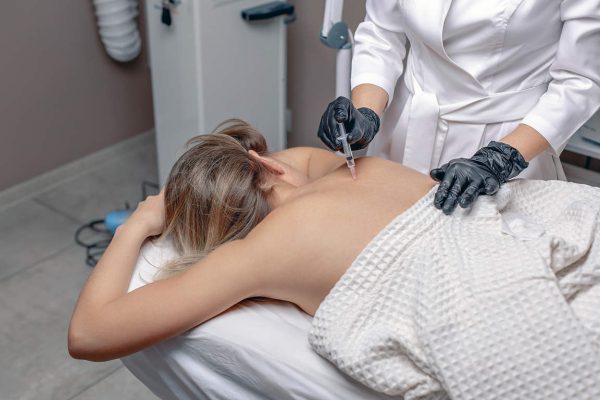
The trapezius is a broad, flat muscle running from the base of the skull and the upper spine to the collarbone and shoulder blade. Its upper fibers elevate the shoulders. When they are thick, the neck looks shorter and the ear-to-shoulder line looks steep rather than sloped.
Botulinum toxin type A blocks acetylcholine release at the nerve endings. Over the following weeks the muscle contracts less, the logic behind therapeutic use, and loses bulk from disuse, the logic behind cosmetic slimming.
The names overlap. Barbie Botox, Barbie tox or “Barbie neck” refers to cosmetic slimming for a longer neck and sloping shoulders. Trap tox, traptox and shoulder Botox are informal names that cover both cosmetic and pain-related injections. In medical protocols, trapezius injections are part of labeled BOTOX treatment for chronic migraine and cervical dystonia.
The neck itself is a separate treatment area. Botox Cosmetic is FDA approved for vertical platysma bands at the front of the neck, which is covered in our guide to Botox for the neck. Trapezius injections are given at the back of the neck and shoulders and are not part of that approval.
No botulinum toxin is approved for cosmetic shoulder or trapezius reduction. Therapeutic BOTOX (onabotulinumtoxinA) has two labeled indications that involve the trapezius. According to the FDA BOTOX Prescribing Information, it is indicated for adults with cervical dystonia “to reduce the severity of abnormal head position and neck pain associated with cervical dystonia,” and for the prophylaxis of headaches in adults with chronic migraine (15 or more headache days a month). Dysport and Xeomin also carry cervical dystonia indications on their own labels.
| Use | Indication | FDA status | Typical evidence |
|---|---|---|---|
| Barbie Botox, shoulder slimming | Trapezius hypertrophy treated for appearance | Off-label | Small case series and a few small randomized trials, mostly in Asian women, with follow-up of up to one year |
| Chronic migraine | Prevention of headaches in adults with chronic migraine; trapezius is 1 of 7 muscle areas | Approved (BOTOX) | Two phase 3 PREEMPT trials, 1,384 adults |
| Cervical dystonia | Abnormal head position and neck pain from cervical dystonia; trapezius treated when involved | Approved (BOTOX, Dysport, Xeomin) | Placebo-controlled trials and Cochrane reviews |
| Chronic neck pain, myofascial shoulder pain, “tight traps” | Non-specific or myofascial neck and upper back pain | Off-label | Mixed randomized trials; a 2026 Cochrane review found low-certainty, short-term benefit only |
| Tension-type headache, posture, “tech neck” stiffness | Muscle tension without dystonia or chronic migraine | Off-label | Limited; episodic migraine is listed as not established on the label |
Off-label use is legal and common, but it moves the burden of evidence and informed consent to the injector. The BOTOX label is direct about it.
“The safety and effectiveness of BOTOX for unapproved uses have not been established.”
FDA, BOTOX Prescribing Information
The same section notes serious adverse reactions after unapproved uses, including excessive weakness, dysphagia and aspiration pneumonia, some fatal.
 Botulinum products
20 products available
Explore our Botulinum products collection and browse available products.
View category
The cosmetic evidence is real but thin. Most studies were small, were done in women in East Asia or with Asian patients, used different products and measured different outcomes. Key examples:
Together, these studies show that trapezius toxin can thin the muscle and change the shoulder line in selected patients. They do not show long-term safety with repeated sessions and rarely include men or athletes. A 2024 letter in The Surgeon titled “‘Barbie Tox’ – A cosmetic trend with potential functional implications” reflects the concern among surgeons that a muscle used for shoulder movement is being weakened for appearance.
For neck pain, the answer depends on the diagnosis. In cervical dystonia, BOTOX is approved to reduce abnormal head position and the neck pain that comes with it, and in the pivotal BOTOX study the trapezius was injected in 49 of 88 patients. In chronic migraine, trapezius injections are part of the labeled protocol, and in the pooled PREEMPT analysis, published in Headache, headache days fell by 8.4 per month with onabotulinumtoxinA compared with 6.6 with placebo at week 24.
Ordinary neck pain and “tight traps” are a different matter. The 2026 update of the Cochrane review on botulinum toxin for subacute and chronic neck pain included 16 trials and 855 participants. It estimated a pain improvement of about 6 points on a 100-point scale in the short term, no clear long-term benefit and no clear improvement in function. Non-serious side effects such as injection soreness, muscle fatigue and headache were more common with toxin.
“Since 2011, evidence has shifted from no benefit to a potentially slight-to-small short-term benefit for BoNT-A compared with placebo.”
Gross et al., Cochrane Database of Systematic Reviews, 2026
A 2025 meta-analysis of seven randomized trials focused on myofascial pain in the neck and shoulder found a statistically significant but not clinically meaningful difference from saline injections.
“So far, BTX-A cannot be recommended for clinical use when dealing with MFP in the neck and shoulder.”
Saltychev et al., International Journal of Rehabilitation Research, 2025
MFP means myofascial pain. In practice, trapezius Botox for pain is considered after physical therapy and other treatments have failed, as a window for rehabilitation rather than a stand-alone fix.
There is no labeled cosmetic dose for the trapezius, so the figures below are what published studies and labels report, not a recommendation. The right dose depends on muscle size, symmetry, the product and the goal, and it is set by the treating clinician.
Units are product specific. The BOTOX label states that its units cannot be compared to or converted into units of any other botulinum toxin product, so a Dysport, Xeomin or letibotulinumtoxinA dose from a study cannot be transferred unit for unit. In the Supornpun trial, Xeomin and Botox at the same 30 Units gave similar thinning at day 60, but the Xeomin side regained less size by one year. Practices that order Botox for trapezius work should dose from the product-specific literature and record the product and lot for each patient.
Muscle relaxation starts within days, as with other Botox treatments, but visible slimming takes longer because the muscle has to lose bulk. In Chen et al., thickness was already reduced at 4 weeks and the appearance change was clear at 12 weeks.
Cosmetic results tend to outlast the 3 to 4 months typical for facial lines. Trapezius thickness stayed significantly below baseline for up to 44 weeks in Chen et al., differences were still measurable at 6 months in the Wang trial, and in the Supornpun trial the Xeomin-treated side remained thinner than baseline at one year. These are small studies, so many clinics plan a review at 3 to 4 months and repeat treatment only when the shoulder line returns. For pain and migraine, the labeled BOTOX retreatment schedule is every 12 weeks. For comparison with other areas, see how long Botox lasts.
Every botulinum toxin label carries a boxed warning on distant spread of toxin effect. It states that swallowing and breathing difficulties can be life threatening, that deaths have been reported, and that symptoms can appear hours to weeks after injection. The trapezius sits at the back of the neck, away from the swallowing muscles, but large doses spread across the neck and shoulders still call for the same counseling.
Effects to discuss before trapezius injections include:
Patients should seek urgent care for any trouble swallowing, speaking or breathing after treatment. For a wider overview of Botox risks, see our article on Botox pros and cons.
A reasonable cosmetic candidate has a bulky upper trapezius that hardens on shrugging, realistic expectations and no heavy reliance on overhead strength. Extra caution or a different plan is warranted for:
For pain patients, toxin should sit alongside physical therapy, ergonomic changes and strengthening of the shoulder stabilizers, so the old pattern does not return when the effect wears off.
For chronic migraine and cervical dystonia, trapezius injections are part of FDA-approved BOTOX treatment with solid trial data. For Barbie Botox, small studies show that 30 to 50 Units of onabotulinumtoxinA per side can thin the upper trapezius for several months to about a year, but the use is off-label, the evidence base is small and the main cost is shoulder strength. For everyday neck and shoulder tension, the best current evidence shows at most a small, short-term benefit.
The most useful step is a clear diagnosis and an honest talk about the goal, the label status and the weakness the patient will accept.
Last updated: November 2026.
Barbie Botox is the social media name for injecting botulinum toxin into the upper trapezius to slim the shoulders and make the neck look longer. It weakens the muscle so it loses bulk over several weeks. The use is off-label: no botulinum toxin is FDA approved for shoulder contouring, and the supporting studies are small, mostly in women, with follow-up of up to about a year.
There is no labeled cosmetic dose. Published cosmetic studies used 30 to 50 Units of onabotulinumtoxinA per side, so 60 to 100 Units per session. The BOTOX chronic migraine protocol uses 30 Units across 6 trapezius sites within a 155 Unit total. Units differ between brands, and the dose for each patient is set by the treating clinician.
It depends on the cause. BOTOX is FDA approved for neck pain caused by cervical dystonia and for chronic migraine, which includes trapezius injections. For ordinary chronic neck pain or myofascial shoulder pain, a 2026 Cochrane review found only a slight-to-small short-term benefit with low-certainty evidence, and a 2025 meta-analysis did not recommend it for myofascial neck and shoulder pain.
Visible slimming usually appears between 4 and 12 weeks and often lasts longer than facial Botox. In small studies, trapezius thickness stayed below baseline for 6 months to about a year. For chronic migraine, the labeled BOTOX retreatment interval is every 12 weeks. Results vary with dose, product and how much the patient uses the shoulders.
The most predictable side effect is shoulder weakness, such as fatigue when lifting the arms or carrying bags. Neck stiffness or weakness, asymmetry, injection pain and bruising can also occur. All botulinum toxins carry a boxed warning about spread of toxin effect, including swallowing and breathing difficulties, so any trouble swallowing or breathing needs urgent care.