
Content
The jawline can start looking softer long before someone feels ready to consider surgery. Sometimes the change comes from sagging skin, but muscle activity also matters. The thin platysma muscle running across the front and sides of the neck can create a subtle downward pull on the lower face, making the border of the jaw look less crisp over time.
The Nefertiti lift uses carefully placed Botox injections to reduce that pulling action. It is a non surgical approach designed for relatively subtle refinement rather than dramatic lifting. There is little downtime, the appointment is short, and the aim is usually a natural looking improvement rather than an obviously altered lower face.
The name comes from Queen Nefertiti, whose profile is associated with a long elegant neckline and clearly shaped jaw. In modern facial aesthetics, the technique focuses mainly on the neck and jawline, especially where active muscles are contributing to loss of definition. Unlike treatments aimed primarily at wrinkles in the forehead or around the eyes, this injectable treatment addresses selected neck muscles. It may help with:
The platysma is a broad, thin sheet of muscle extending from the upper chest toward the jaw and lower face. When it contracts strongly, some fibers pull downward, working against the muscles responsible for elevation. Carefully placed botulinum toxin injections temporarily reduce selected areas of this muscle activity.
This can soften tension along the mandibular border and reduce prominent bands in the neck area. The effect is not comparable to physically lifting tissue. Instead, weakening the appropriate targeted muscles can allow the jawline to appear cleaner and create a somewhat more youthful contour. Treatment of the lower face requires detailed knowledge of facial anatomy, because nearby facial muscles influence the mouth, smile, swallowing, and neck movement.
There is no single injection map that suits every face. Muscle position, muscle strength, jaw shape, existing laxity, and individual treatment goals all affect where injections are placed. The strategy is also different from treating upper facial muscles, where familiar forehead or crow’s-feet patterns may be more standardized.
Good injectors assess the face both at rest and during movement. That helps determine whether the platysma is actually responsible for the visible change rather than assuming every soft jawline requires the same treatment.
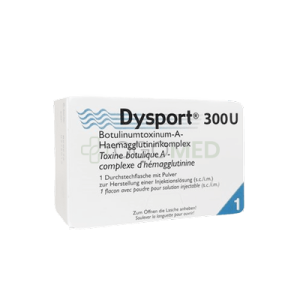
Before the treatment session, the clinician normally examines the lower face while the patient moves and tightens the neck. A relevant medical history should also be reviewed, including previous aesthetic procedures, medications, neuromuscular conditions, and earlier reactions to Botox treatments. For physicians, product quality and supplier reliability are important considerations when they order Botox for professional use. OGOmed is one of the suppliers that healthcare professionals may consider when sourcing authentic products through appropriate clinical purchasing channels.
The actual appointment commonly involves:
The injections themselves are generally quick, and most patients return to normal daily activities shortly afterward. Mild tenderness or tiny injection marks may be visible temporarily. This relatively minimal recovery is one reason the treatment appeals to people who are not interested in a surgical intervention.
The best results tend to occur when muscular pull is an important part of the problem. Nefertiti neck lift patients with good skin elasticity, mild changes around the jaw, and clearly active platysmal bands are generally better suited to the technique than someone with substantial tissue descent. Research has similarly found better responses in people with less severe pre-treatment aging changes.
Ideal candidates often have several of these characteristics:
A good candidate should understand that improving muscular tension does not automatically produce skin tightening. Someone mainly concerned about poor skin texture may need a different approach, while significant skin laxity usually cannot be corrected adequately with toxin alone.
 Botulinum products
20 products available
Explore our Botulinum products collection and browse available products.
View category
Botulinum products
20 products available
Explore our Botulinum products collection and browse available products.
View category
A surgical neck lift works on structures that Botox cannot physically change. Depending on the operation, a surgeon may reposition tissue, address deeper structures, tighten muscles, or remove redundant skin. That makes a surgical procedure much more suitable when pronounced excess skin or substantial jowling is the main concern. The practical differences are significant:
People with substantial sagging skin should not expect injections to produce the same change as a surgical neck rejuvenation approach. Experienced dermatologists and plastic surgeons may also combine different methods when aging involves several layers at once.
Lower-face and neck injections require precision. The area contains muscles with important functions, so treating the wrong point or allowing toxin to affect neighboring structures can produce unwanted weakness. This is one reason expertise with lower-face anatomy matters particularly here.
Temporary effects can include:
Minor injection-site reactions usually typically resolve without intervention, and many patients tolerate treatment well. More concerning symptoms, particularly difficulty swallowing, speaking, breathing, or significant weakness, warrant prompt medical attention.
Good Nefertiti lift results should not make the neck look frozen. The goal is to soften the downward force of specific muscle fibers while preserving normal expression and useful muscle movement. When the anatomy and indication are right, the change may include a smoother neck, less obvious bands, a more defined jawline, and a slightly more sculpted jawline.
The improvement is usually modest rather than transformative. Someone with mild muscular pulling might notice a cleaner transition between the face and neck. A person whose main concern is considerable excess skin, meanwhile, may see little improvement because the underlying cause has not been changed.
Botulinum toxin does not permanently deactivate the muscle. The effect gradually wears off as nerve-to-muscle signaling recovers, so results commonly remain visible for several months rather than years. Studies of platysma treatment have documented continued improvement at around three to four months, although individual duration varies.
How long the effect remains noticeable can depend on:
People who want to maintain the effect may discuss maintenance treatments once normal muscular action gradually returns. Repeating treatment too frequently or treating increasingly large areas simply to chase greater lifting is not necessarily better; the technique works best when injection decisions remain tied to anatomy and realistic goals.
Aging around the neck rarely comes from one factor alone. Muscle contraction, declining skin quality, changes in fat distribution, volume loss, and gradual laxity can all influence the appearance of the neck skin. That is why a Nefertiti approach may be one part of broader facial rejuvenation, rather than the only treatment considered.
For someone with mild muscular bands but also texture changes, a clinician might discuss treatments aimed at collagen or surface quality. Dermal fillers may be useful in selected cases where structural support or volume is part of the problem. Once the concern progresses to substantial hanging tissue or significant skin laxity, however, discussing surgical options is generally more realistic than trying to obtain a surgical-scale result from injections alone.
It can soften neck bands and reduce platysma tension that pulls downward on the lower face. The result is usually subtle rather than a dramatic reshaping of the jaw.
Yes, in selected cases fillers can address volume or structural support while Botox targets muscle movement and certain visible signs of aging. The two treatments work differently, so the combination should be planned according to facial anatomy.
Yes, it is a non surgical injectable approach that does not involve incisions or removal of loose skin. It is generally better suited to mild visible signs around the lower face and neck than to pronounced skin laxity.
There is no universal dose because the amount depends on muscle strength, anatomy, treatment area, and the Botox formulation being used. A clinician should determine the dose after examining how strongly the platysma contracts.
Changes usually develop gradually as the targeted muscles begin to relax, rather than appearing immediately after injection. The effect often becomes easier to judge over the following days and weeks.