
Content
You leave the clinic with the same facial expressions, the wrinkles are still there, and the mirror shows little evidence of what has just happened. Then, usually within several days, familiar frown lines begin to look less pronounced. Dysport works beneath the skin, gradually reducing the activity of targeted facial muscles. Some patients notice early changes within 48 hours, while others need a week or longer to see visible smoothing.
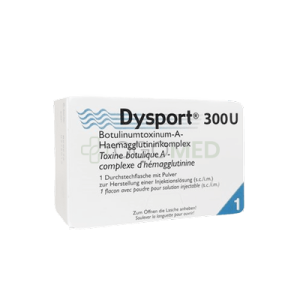
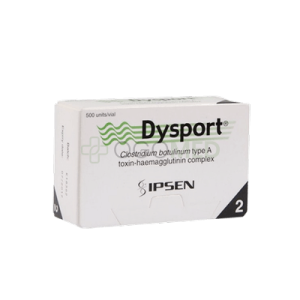
Dysport contains abobotulinumtoxinA, a prescription botulinum toxin type A product. It temporarily blocks communication between nerve endings and selected muscles, reducing the contractions responsible for expression lines.
The treatment is particularly effective for glabellar lines, the vertical creases between the eyebrows. These develop through repeated facial movement, especially frowning and squinting. Dysport relaxes muscles involved in these expressions, allowing the overlying skin to appear less creased. Gradually, muscle activity decreases as the treatment takes effect. Deep lines that remain visible at rest may improve, although they are less likely to disappear completely.
Before treatment, the injector examines facial anatomy, eyebrow position, and individual movement patterns. Patients are asked to frown and relax so the practitioner can identify the active muscles contributing to visible wrinkles. A review of medical history is equally important, particularly when someone has previously received botulinum toxin injections or takes medications that may affect treatment suitability.
Medical professionals who buy Dysport through authorized distributors can maintain a reliable supply of authentic products for their aesthetic practice. Proper sourcing and storage are essential for consistent treatment quality.
A typical Dysport appointment is relatively brief. After cleansing the treatment area, the practitioner administers the product through a fine needle. The experience may involve:
For the FDA-approved cosmetic treatment of moderate to severe lines in adults younger than 65, the standard Dysport dose is 50 units across five injection sites. Precise placement matters more than treating every visible crease. The objective is to weaken the muscles responsible for unwanted folding while preserving natural expression.
The Dysport timeline is not identical for everyone. In clinical studies, the median reported onset was approximately two to three days, but individual responses differ.
During the first few hours, patients may notice small bumps where the needle entered the skin. These usually settle quickly, sometimes leaving mild swelling or a small bruise. The treated muscles generally continue moving normally. Trying to frown and seeing familiar lines on the first day is completely normal, since the medication has not yet reached its complete effect.
This is when many patients notice the first difference. The forehead or brow may feel slightly less responsive during strong expressions, although the skin may not yet look noticeably smoother. Early softening can be uneven as individual muscles respond at different rates. A visible improvement in one region before another does not automatically indicate incorrect placement.
By the middle of the first week, the lines between the eyebrows may look shallower. Repeated facial movement creates less pronounced folds because the targeted muscles cannot contract as forcefully. Patients notice changes most easily when attempting familiar expressions. The area may appear smoother at rest, but deeper creases can remain visible.
After approximately one week, many patients have noticeable improvements in their frown lines. Muscle strength is reduced, and the skin may appear more relaxed without necessarily looking frozen. At this point, common observations include:
The result may still develop further. Patients should avoid judging the final outcome too early, particularly when different muscle groups appear to respond at slightly different speeds.
During the second week, Dysport’s effects usually become more established. The skin appears smoother as the weakened muscles create fewer repetitive folds, and any residual injection-related swelling has generally resolved. By approximately day 14, most patients can assess the overall response. A two week follow up may be useful if the result appears asymmetrical or does not meet the original treatment objectives.
A good outcome allows patients to retain natural expression while reducing unwanted creasing. Someone with strong frowning muscles may notice a greater difference in movement than a person whose lines were relatively faint.
Not all forehead lines or other dynamic wrinkles respond in the same way. The precise muscles treated, individual anatomy, and original wrinkle depth influence the outcome. Dysport works gradually, so the complete effect should be assessed before considering additional injections.
For glabellar lines, visible improvement commonly lasts around three to four months, with some patients experiencing benefits for up to five months. The duration is not fixed, and one Dysport treatment may last longer for one person than another.
As nerve-to-muscle communication recovers, facial movement progressively returns. The change typically happens over several weeks rather than disappearing overnight.
Several characteristics influence how long the results typically remain noticeable:
Results can vary based on muscle activity and individual physiology, but there is no reliable formula for predicting the exact duration. Some patients return for maintenance after three or four months, while others prefer longer intervals. Regular injections should be scheduled according to clinical assessment. Dysport labeling advises against retreatment more frequently than every three months.
 Botulinum products
20 products available
Explore our Botulinum products collection and browse available products.
View category
Most patients return to their usual activities shortly after treatment. Nevertheless, the skin may remain sensitive at the injection sites, and individual practitioners often provide specific instructions for the remainder of the day.
Common aftercare advice includes:
Some practitioners recommend remaining upright for at least four hours, although evidence supporting strict positioning rules is limited. During the hours after treatment, vigorous activity may increase blood flow and temporarily worsen bruising or redness. It has not been established that ordinary movement causes Dysport to spread into unintended muscles. Patients can generally continue normal expressions without deliberately testing the medication throughout the day.
Both Dysport and Botox Cosmetic contain botulinum toxin type A, but they use different formulations. Their units are not interchangeable, and the number administered cannot be compared directly. The differences become clearer when Dysport compares with Botox across several clinical considerations:
| Feature | Dysport | Botox Cosmetic |
|---|---|---|
| Active ingredient | AbobotulinumtoxinA | OnabotulinumtoxinA |
| Standard glabellar dose | 50 units | 20 units |
| Onset | Often 2-3 days | Commonly several days |
| Duration | Usually 3-4 months, sometimes longer | Usually 3-4 months |
| Main purpose | Temporary muscle relaxation | Temporary muscle relaxation |
Dysport may begin working earlier in some patients, but comparative evidence does not establish that it consistently acts faster for everyone.
Claims that Dysport spreads smoothly across larger areas can be misleading. Both products diffuse to some extent, and their distribution depends on dilution, injection technique, dosage, and tissue characteristics. The idea that Dysport spreads smoothly enough to eliminate the need for careful placement is incorrect. Clinical experience and anatomical knowledge remain essential for both products.
Temporary bruising, mild redness, and localized discomfort are among the more familiar reactions. A headache may also occur, particularly during the early recovery period. More significant complications can include unwanted weakness in nearby muscles, eyebrow asymmetry, or eyelid drooping. These effects require assessment, even when they are temporary.
Symptoms that require urgent medical attention include:
Botulinum toxin products carry a warning about the possible spread of toxin effects beyond the injection site. Although serious complications are uncommon during approved cosmetic treatment, any concerning symptoms should be evaluated promptly.
Dysport is most effective when treatment matches the patient’s actual muscle activity and facial structure. Trying to eliminate every trace of movement may produce an unnecessarily rigid appearance.
Patients considering maintenance injections should allow sufficient time to evaluate their previous response. An experienced injector can determine whether the same dose and placement remain appropriate or whether adjustments are necessary.
The goal is visible smoothing without losing the expressions that make a face recognizable. Dysport can provide a softer, more rested appearance for several months, but the best results come from careful treatment planning rather than frequent corrections.
Some patients notice improvements within two to three days as Dysport begins reducing contractions in active facial muscles. The full effect usually becomes clearer within two weeks.
Results generally last three to four months, although individual responses vary. The duration depends partly on muscle activity and the treated areas.
No, some patients experience visible changes within 48 hours, while others need several more days. Individual anatomy, dosage, and muscle strength can influence the response.
One session can soften dynamic lines caused by repeated facial expressions for several months. Maintenance treatments may be scheduled at intervals of at least three months.
Yes, reduced frowning strength or shallower creases can indicate that Dysport is beginning to take effect. These early changes usually become more noticeable over the following days.
Most patients see the full effect within approximately 14 days, with minimal downtime after the injections. Some individuals notice improvements sooner, but additional corrections should generally wait until the response can be properly assessed.
Dysport’s effects typically begin to fade after three to four months as muscle activity gradually returns. Some patients maintain noticeably smoother skin for up to five months.