
Content
If you are comparing Korean Botox with American Botox, the first thing you probably want to know is simple: does one work better than the other? Usually, the answer is not as dramatic as social media makes it sound. Both can soften wrinkles, both can look very natural, and both can give disappointing results when the wrong dose or injection points are used.
The more noticeable differences are price, brand selection, formulation, availability, and how familiar a doctor is with a particular product. Korean options are often cheaper and there are many more brands to choose from. American products tend to have stronger name recognition and, depending on where you live, may be easier to verify through local regulatory systems.
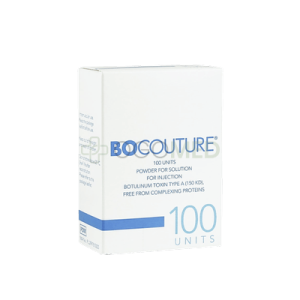
Korean Botox refers to botulinum toxin products developed or manufactured by South Korean companies. Korea has an unusually large aesthetic market, so clinics there rarely have only one botulinum toxin product sitting on the shelf. The Korean Botox market includes established products, newer formulas, budget-friendly options, and brands that are increasingly moving into the global market.
This variety makes sense when you look at the Korean beauty market more broadly. Injectable treatments are commonly offered alongside lasers, skin boosters, dermal fillers, lifting treatments, and other beauty procedures. Competition between Korean manufacturers is intense, and that helps explain both the number of products and their often lower prices.
Not all Korean Botox brands are available in every country, and the name printed on the box may change when a product enters another market. Still, several Korean botulinum toxin brands appear frequently in clinics and online discussions:
The large number of Korean brands does not mean they all perform exactly the same way. It also does not mean inexpensive Korean products are simply weaker versions of Botox. Different products have different manufacturing processes, dosing systems, clinical histories, and regulatory status.
There is a persistent idea that Korean Botox automatically produces a softer, more delicate result. That impression probably comes partly from the treatment style associated with the Korean beauty industry, where preserving movement and natural beauty is often emphasized. Modern Korean culture has also helped popularize smaller, more frequent aesthetic treatments rather than dramatic changes all at once.
But the vial itself does not decide whether your face moves naturally. Korean Botox injections can produce a very soft effect or a very frozen one depending on the dose and placement. When small botulinum toxin doses are carefully placed into the right targeted muscles, it is easier to maintain natural facial expressions while reducing unwanted movement.
This can work well for forehead wrinkles, light forehead lines, bunny lines, or early mimic wrinkles. For deep wrinkles that remain visible even when the face is completely relaxed, Botox alone may not erase the crease because it changes muscle activity rather than filling the skin.
The U.S. market is built around a relatively small group of well-established neurotoxins, with Allergan’s Botox (since the 1990s) still serving as the main reference point. It has been used in aesthetic medicine for decades, so many clinicians know its dosing, behavior, and typical duration extremely well.
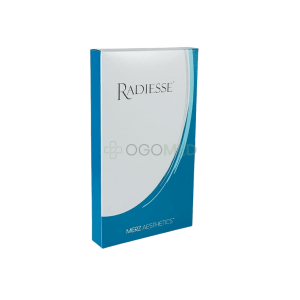
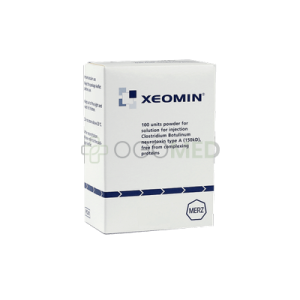
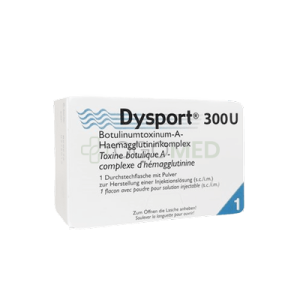
There are now several American Botox brands or U.S.-market alternatives, so Botox Cosmetic is no longer the only familiar option. Clinics may offer Botox, Dysport, Xeomin, Daxxify, Jeuveau, Letybo, or a smaller selection depending on their preferences. Interestingly, some products available in America are actually manufactured in Korea, which already blurs the line between American and Korean Botox.
For a regular patient, there is little reason to memorize long pharmaceutical names. It is more useful to recognize the major brands and understand that their dose units are not necessarily interchangeable:
That last point matters. Korean Botox and American products are not two completely separate worlds anymore. The market has become international, and where a product was manufactured tells you less about its likely result than it did years ago.
Familiarity plays a big role. Botox Cosmetic has been used for decades in both medical and aesthetic settings, so many doctors have extensive experience with it. It is also one of the FDA-approved products that patients recognize immediately, which can make the treatment feel easier to trust.
That does not automatically make it superior to every Korean option. FDA-approval tells you that a specific product has passed the required review for particular uses in the United States. It does not mean every product without U.S. approval is poor quality; it may simply be approved and sold in another country instead.
Most people do not need a pharmacology lesson to understand the difference. A practical comparison looks more like this:
| Point | Korean Botox | American/U.S.-market Botox |
|---|---|---|
| Brand choice | Very large selection | Smaller, more familiar selection |
| Price | Often lower | Usually higher |
| Basic action | Temporarily relaxes muscles | Temporarily relaxes muscles |
| Typical cosmetic goal | Wrinkle reduction with adjustable movement | Wrinkle reduction with adjustable movement |
| Longevity | Often similar to conventional botulinum toxins | Often similar, with some longer-lasting options |
| Formulation | Varies considerably by brand | Varies considerably by brand |
| Approval | Depends on product and country | Several widely recognized FDA-approved options |
| Result | Highly dependent on dose and technique | Highly dependent on dose and technique |
So when discussing Korean and American Botox, deciding which country is better is usually the wrong question. It is more useful to compare the exact products a clinic offers and how experienced the injector is with each one.
Most commonly used cosmetic neurotoxins are based on botulinum toxin type A, a purified protein ultimately derived from the bacterium clostridium botulinum. It works by temporarily reducing the nerve signals that tell certain muscles to contract. Less contraction means less folding of the skin and, over time, softer expression lines.
This is why people sometimes say Korean and American products contain the same active substance. Broadly, they work through the same biological mechanism, but the finished products are not identical. Manufacturers can use different purification methods, stabilizing ingredients, protein complexes, production processes, and potency testing systems.
Sometimes, but usually not in the dramatic way advertisements imply. One formulation might behave slightly differently in a particular injector’s hands, but there is no universal rule that Korean products spread more, American ones are stronger, or one group always gives a more natural finish.
The injection technique often makes a bigger visual difference. Where the product is placed, how much is used, the strength of the facial muscles, and the balance between nearby muscles can completely change the final expression.
For normal cosmetic use, both groups can be very effective at reducing facial wrinkles caused by movement. Good Korean Botox results can be difficult to distinguish from good Botox Cosmetic results simply by looking at someone’s face. You generally cannot tell which country a botulinum toxin came from just because one forehead looks smoother than another.
The important variables are more personal. Strong muscles may require a different plan than weak muscles. A person with subtle lines from repeated facial expressions may need a lighter approach, while someone with severe wrinkles and strong movement may require more treatment.
There are also clinical trials comparing individual products, including Korean-made botulinum toxins with established Western brands. Those studies matter for doctors and regulators, but the useful takeaway for a regular reader is much simpler: reputable Korean toxins can provide results comparable to established products when they are properly selected and administered.
In general, traditional Botox-type treatments often remain noticeable for several months rather than several weeks or an entire year. There is no reliable rule saying all Korean products disappear quickly or that American products always last longer. How long your result lasts can change because of:
The forehead, jaw, eye area, and nose do not necessarily behave identically. Someone receiving conservative treatment for bunny lines may also notice a different timeline from someone treating very active forehead muscles. This is where Botox trends can become misleading. Online claims such as “this brand lasts twice as long” often leave out the dose, treatment area, and individual response. Though, Korean Botox’s longevity has reportedly increased by one-third over the last decade.
Both groups contain medical products capable of producing side effects. A temporary mild headache, bruising, tenderness, heaviness, uneven movement, or unwanted weakness in a nearby muscle can occur after botulinum toxin injections. More serious complications are uncommon, but this is still a prescription treatment that should be administered appropriately.
Botulinum toxin treatment is also used medically for conditions such as muscle spasms, not only for cosmetic procedures. The same ability to reduce muscle activity that makes it useful in medicine is what softens facial expression lines.
Some Korean Botox products have extensive use and regulatory approval in multiple markets, while others may not be authorized where you live. Safety should be judged by the specific product, its source, and the professional using it.
Korean Botox products are gaining popularity for their affordability, particularly in markets where Korean aesthetics are widely available. That difference can come from intense competition between manufacturers, lower production costs, local supply, and the sheer size of the Korean market.
For clinics and medical professionals, the growing availability of Korean Botox for sale through specialized professional suppliers has also made Korean brands easier to compare and incorporate into aesthetic practice. The wider choice gives clinics more flexibility when selecting products by formulation, treatment goals, and budget rather than relying on a single familiar brand.
American Botox products can be up to two times more expensive because of branding, distribution, regulatory costs, and clinic positioning. FDA certification increases the cost of American Botox products. That does not mean the extra cost goes directly into a visibly better result. In aesthetic cosmetology, you are also paying for the clinician, consultation, treatment planning, clinic standards, and follow-up — not just what is inside the vial.
Neither Korean nor American Botox physically fills wrinkles. The botulinum toxin relaxes muscles so the skin is folded less aggressively. That can make expression lines look considerably softer, especially when they are still mostly visible during movement.
When deep wrinkles are already etched into the skin, relaxing the muscle may improve them without making them completely disappear. Depending on the area, doctors or plastic surgeons may discuss resurfacing, skin treatments, or sometimes dermal fillers rather than simply increasing the toxin dose.
This distinction matters because Botox is often expected to improve overall skin health or create instantly radiant skin. It does neither directly. It controls muscle movement, and skin quality is a separate part of the picture.
If both options are authentic, appropriately approved, and used by an experienced professional, the choice is often less dramatic than it appears online. Korean Botox and American products can both provide smooth, balanced results. Neither nationality guarantees a frozen face, and neither guarantees perfect natural movement.
Korean options may make more sense when price and brand variety are important. U.S.-market products may feel more comfortable for someone who wants a familiar brand with a long history in their local healthcare system. In either case, the clinician needs to understand the product they are using rather than treating every toxin as interchangeable.
For someone who wants subtle movement, careful placement may matter far more than whether the box came from Korea or the United States. For someone focused mainly on affordability, reputable Korean products can be attractive. For someone who values brand familiarity above everything else, an established U.S.-market toxin may simply feel like the easier choice.
The most useful shift is to stop treating Korean Botox and American Botox as opposite technologies. They belong to the same general treatment category, but individual brands have their own formulations, approvals, dosing approaches, and clinical track records. In the end, a good product combined with a thoughtful injector is usually more important than the country printed on the packaging.
They work through the same basic mechanism, although Korean Botox products can differ from U.S.-market options in formulation, dosing, and brand-specific characteristics.
Yes. A botulinum toxin treatment can be used for areas such as the forehead, frown lines, crow’s feet, and other expression-related wrinkles, depending on the product and treatment plan.
Yes, because they do different things: Botox reduces muscle movement, while fillers restore or add volume. They may be combined when different facial concerns need to be treated.
Reputable products have been evaluated in clinical trials, and several Korean-made toxins have shown strong wrinkle-reducing results. The final appearance still varies from person to person.
The Korean beauty market offers a wide range of minimally invasive treatments, so neurotoxins are often used as part of broader aesthetic care rather than as a stand-alone procedure.
Not necessarily. Some FDA-approved products are made in Korea too, and the final result depends on the specific product and how it is used.
Yes, reputable and properly approved products can be safe when sourced correctly and administered by a qualified medical professional. The exact brand and local approval status matter more than the country where it was manufactured.