
Content
One syringe of Juvederm in small or thin lips usually produces a subtle but visible before and after: a little more height in the red part of the lips, a sharper border and a smoother surface, rather than a dramatic new shape. In the FDA lip study of Juvederm Ultra XC, 3D imaging measured a mean lip volume increase of 0.61 cc at month 3, even though participants received a median of about 2 mL in total across the lips and surrounding area.
That is why “one syringe of Juvederm before and after” photos tend to look natural on thin lips. The amount is modest, and in clinical trials it was often less than patients ended up receiving in total. Both FDA-approved Juvederm lip fillers, Volbella XC and Ultra XC, were tested with an optional touch-up visit, and the median total volume in those trials was above one syringe.
Product choice, volume and technique are decisions for a licensed injector after an in-person assessment.

Because this page has no photos, here is what a typical one syringe of Juvederm before and after looks like on thin lips, described in words.
Before: the vermilion (the pink part of the lip) shows little height, especially in the upper lip. The border between lip and skin may be faint, the Cupid’s bow can look flat, and fine vertical lines may catch lipstick. In profile, the upper lip often sits behind or level with the lower lip.
After one syringe, once swelling settles:
What one syringe does not usually do on small lips is create a large change in projection. In the Ultra XC trial, 81.8% of patients said their lip fullness goals were achieved at 3 months, but many of them had received a touch-up, according to the FDA Summary of Safety and Effectiveness Data.
The product matters too. Ultra XC (24 mg/mL HA) gives more visible volume per mL, while Volbella XC (15 mg/mL HA) is softer and often chosen for definition and lip lines. Our guide on which Juvederm is best for lips compares them in detail.
One milliliter is about one-fifth of a teaspoon. For most US Juvederm lip treatments, “1 syringe” means 1.0 mL, but the label itself does not fix a size: the Volbella XC labeling says the volume in each syringe is as stated on the syringe label and carton.
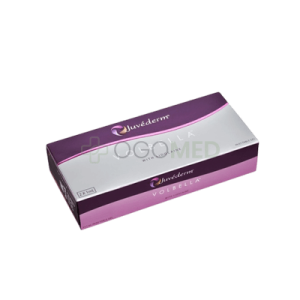
According to Allergan’s entries in the FDA Global Unique Device Identification Database (GUDID), US presentations include:
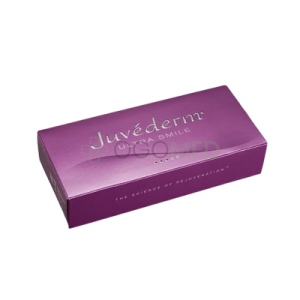
Outside the US, sizes differ again. Juvederm Ultra Smile is supplied in 0.55 mL syringes, and Volbella with Lidocaine and Ultra 3 come in 1 mL syringes. Before comparing “1 syringe” before and after photos, check which product and syringe size was used.
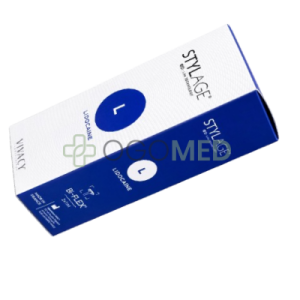
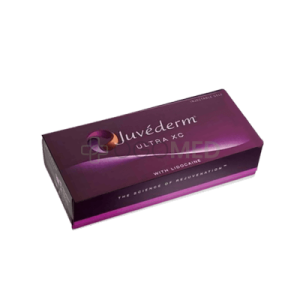
Licensed clinics can review packaging and presentation details on the Juvederm Ultra XC product page.
 Dermal Fillers
152 products available
Explore our Dermal Fillers collection and browse available products.
View category
For many people with thin lips, 1 syringe of lip filler is enough for a first, conservative treatment, but the pivotal trials show that the typical total needed for an “optimal” result was higher. The FDA’s general guidance makes the same point:
“Successful results will depend on the underlying tissue structure and the volume and type of filler used.” FDA, Dermal Fillers (Soft Tissue Fillers)
The table below shows the median volumes injected in the two US lip trials. Volbella XC figures include perioral lines and the corners of the mouth, so they are not directly comparable with lip-only dosing.
| Median volume injected | Juvederm Ultra XC (lip trial, N = 208) | Juvederm Volbella XC (pivotal trial, N = 168) |
|---|---|---|
| Upper lip, first session | 0.8 mL | 1.0 mL |
| Lower lip, first session | 0.7 mL | 0.8 mL |
| Total, first session | 1.7 mL | Not reported separately |
| Touch-up (if done) | 0.7 mL (94 of 208 patients) | Optional, about 1 month later |
| Total to optimal result | 2.1 mL (initial plus touch-up) | 2.6 mL (lips and perioral area) |
| Repeat treatment later | 1.45 mL | About 1.6 mL |
| Source | FDA SSED, P050047/S044 | FDA labeling, P110033/S018 |
Three practical conclusions follow from these numbers:
There is no FDA-labeled “standard dose” for lips, so these amounts are best read against the trial data above.
0.5 mL (half a syringe): less than the median amount used in either lip alone in the Volbella XC trial. It is commonly used for a first trial of filler, border definition, small asymmetries or a top-up. On thin lips, expect a minor change that may be hard to see once swelling fades.
1 mL (one syringe): a conservative full treatment for both lips. On small lips it usually shows clearly in before and after photos, mainly as vermilion height and border definition.
1.5 to 2 mL: close to the median totals in the trials (1.7 mL first session and 2.1 mL with touch-up for Ultra XC). This range is more often split across two visits than injected at once, which gives the tissue time to settle and lets the injector judge symmetry without swelling.
If the main complaint is an upper lip that disappears when smiling, rather than low volume, some patients consider a neurotoxin “lip flip” instead of or alongside filler. That is an off-label use of botulinum toxin in the US; see our article on how a Botox lip flip works.
The “after” photo taken right after one syringe is not the final result. Swelling, bruising and firmness are expected, and the label itself warns injectors about judging correction too early:
“With patients who have localized swelling, the degree of correction is sometimes difficult to judge at the time of treatment.” FDA, Juvederm Volbella XC Labeling
A typical course, based on patient diaries in the US trials:
Ultra XC produced more intense early reactions than many patients expect: swelling was reported by 95.9% and bruising by 93.3% of trial participants after the first session. Fair comparison photos are therefore taken at about 2 to 4 weeks, in the same light and angle as the “before” image. In both trials, a touch-up, if needed, was offered at roughly 2 weeks to 1 month.
Both FDA-approved Juvederm lip fillers showed measurable improvement in most patients at 1 year. “Measurable” here means at least a 1-point improvement on the 5-point Allergan Lip Fullness Scale, which is a stricter test than “some filler is still there”.
These figures come from patients who often received more than one syringe in total, so a single 1 mL treatment may fade sooner in some people.
Most side effects after one syringe of lip filler are short-term: swelling, tenderness, firmness, bruising, lumps, redness and pain. In the Volbella XC trial, 97.4% of patients reported at least one injection site response after the first session; the majority were mild or moderate and lasted 30 days or less.
The rare but serious risk is injection into a blood vessel. The lips are supplied by the superior and inferior labial arteries, so anatomy, slow low-pressure injection and immediate access to hyaluronidase are standard precautions.
“The most concerning risk associated with the use of dermal fillers is unintentional injection into a blood vessel” FDA, Dermal Fillers (Soft Tissue Fillers)
The FDA adds that, while the chances are low, the resulting complications can be serious and may be permanent; reported complications include tissue necrosis, vision abnormalities including blindness, and stroke. Unusual pain or skin color change during or after injection, or any visual symptom, calls for immediate assessment by the treating injector.
HA fillers can be broken down with hyaluronidase, an enzyme injectors use to dissolve misplaced gel or to treat a suspected occlusion. In the US, this use is off-label: Hylenex recombinant (hyaluronidase human injection) is FDA-approved for hydration with subcutaneous fluids, for increasing the dispersion and absorption of other injected drugs, and for subcutaneous urography, according to its prescribing information on DailyMed. Both Juvederm lip labels list hyaluronidase among the treatments used for reported adverse events. For timelines, see how long it takes for lip fillers to dissolve with hyaluronidase.
Labels also list contraindications: a history of anaphylaxis or multiple severe allergies, allergy to Gram-positive bacterial proteins, and lidocaine allergy for XC products. Both lip indications are limited to adults over 21.
For thin or small lips, one syringe of Juvederm is a sensible starting point: it gives a visible but natural before and after, and it leaves room to build gradually. The FDA trial data show that many patients ended up with about 1.7 to 2.6 mL in total, often across two visits, so one syringe should be presented as a first step rather than a guaranteed final result. Volbella XC suits definition and fine lines; Ultra XC suits a fuller lip body.
For licensed practices planning stock for conservative lip work, 1 mL and 0.55 mL presentations both have a role. Verified healthcare professionals can buy Juvederm fillers through Ogomed.
Last updated: November 2026.
One syringe is often enough for a first, conservative treatment of thin lips, giving a subtle increase in height and a sharper border. In the FDA trial of Juvederm Ultra XC, though, the median first-session dose was 1.7 mL and the total with touch-up was 2.1 mL, so many patients need a second visit for a fuller result.
One milliliter is about one-fifth of a teaspoon. For most Juvederm lip products it equals one full syringe, but US Volbella XC also comes in 0.55 mL syringes and Ultra XC in 0.4, 0.55 and 0.8 mL sizes. Always check which syringe size was used when comparing 1 syringe before and after results.
Half a syringe (0.5 mL) is usually used for definition, small asymmetries or a top-up, and the change on thin lips can be hard to see after swelling fades. One full syringe (1 mL) treats both lips and typically shows as more lip height and a clearer border. Neither is a fixed FDA dose; the injector decides.
Expect to judge the result at about 2 to 4 weeks. Swelling peaks in the first days; in the Volbella XC trial most patients with swelling had it resolve within a week, and the Ultra XC label says lip reactions typically last 14 days or less. Some firmness or small lumps can persist up to a month.
In FDA trials, 61.8% of Volbella XC patients and 56.4% of Ultra XC patients still had measurable lip fullness improvement at 1 year. Those patients often received more than one syringe in total, so a single 1 mL treatment may fade sooner in some people. Repeat treatments in the trials needed less volume than the first.