
Content
Botox for hooded eyes can help, but only when the hooding comes mainly from a low or drooping brow. A Botox brow lift relaxes the muscles that pull the tail of the eyebrow down, so the brow rises a few millimeters and a little more of the upper eyelid shows. It does not remove excess eyelid skin, and it does not lift a drooping eyelid margin.
That distinction matters because “hooded eyes” is a description, not a diagnosis. The same tired, heavy look can come from brow descent, from loose upper-lid skin (dermatochalasis), from a weak eyelid-lifting muscle (true ptosis), or from a mix of all three. Each one has a different fix, and in some patients a poorly planned injection makes the hooding worse.
This guide explains how to tell these causes apart, what the published studies show about how much a Botox brow lift actually raises the brow, when blepharoplasty, a surgical brow lift or prescription eye drops are the better answer, and what risks to discuss before treatment. It is written for licensed injectors and for patients preparing for a consultation.

Hooded eyes describe a fold of tissue that sits over the upper eyelid crease and makes the lid look smaller or heavier. Some people are born with this anatomy. In others it develops with age, as the brow drops, the skin loses elasticity and the eyelid structures loosen. Three different mechanisms are usually involved.
Many patients have more than one of these at once. A common combination is mild brow descent plus some extra lid skin, with the forehead muscle working constantly to hold the brows up. That last point is easy to miss, and it is the main reason a forehead treatment can backfire in someone with hooded eyes.
A quick bedside check helps sort things out. With the patient looking straight ahead and the forehead relaxed, note where the brow sits relative to the bony orbital rim, how far the lid margin sits from the pupil, and whether the hood remains after the brow is gently lifted. If the lid margin is low or the hood persists after lifting the brow, Botox is unlikely to be the whole answer.

Botox does not lift anything directly. It weakens the muscles it is injected into, and the brow position changes because the balance of forces around it changes.
The brow has one main elevator, the frontalis muscle in the forehead, and several depressors pulling down: the lateral part of the orbicularis oculi around the eye, plus the corrugator, procerus and depressor supercilii between the brows. A hooded eye Botox eyebrow lift targets the depressors. When the lateral orbicularis oculi is relaxed, the frontalis meets less resistance at the tail of the brow, and the outer brow rises. Treating the glabellar complex between the brows can raise the inner brow slightly in the same way.
“Significant temporal brow elevation occurs as the result of paralysis of brow depressors by using botulinum toxin A injection.”
Ahn, Catten and Maas, Plastic and Reconstructive Surgery, 2000 (PubMed)
The practical consequence for hooded eyes is simple. A few millimeters of lift at the brow tail can uncover a few millimeters of upper lid and make the eye look more open. That is meaningful when the brow is the problem and almost invisible when the problem is a large fold of skin. For a broader look at techniques and brow shaping goals, see our separate guide to the art of Botox brow lifting.
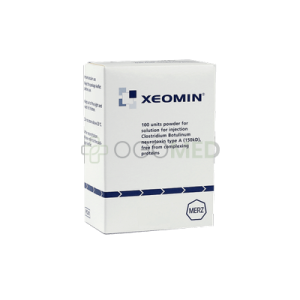
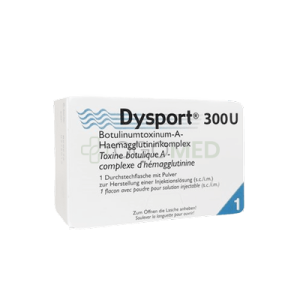
Regulatory status should be explained to patients. According to the FDA-approved Botox Cosmetic Prescribing Information (revised 10/2024), the approved cosmetic indications are glabellar lines, lateral canthal lines (crow’s feet), forehead lines and platysma bands. Injecting specifically to raise the brow is off-label, although the injection points overlap with approved crow’s feet and glabellar treatment. The label also notes that Botox Units are not interchangeable with Units of other botulinum toxins, so a plan built for Botox cannot be copied unit for unit to Dysport or Xeomin.
 Botulinum products
20 products available
Explore our Botulinum products collection and browse available products.
View category
Before and after photos of a Botox brow lift for hooded eyes often look dramatic, but the measured change is small. Three studies give a realistic range.
These are small, single-center series with short follow-up, not randomized trials. Still, they agree on two points: the lift is mostly at the tail of the brow, and it is measured in millimeters. A patient expecting a surgical result will be disappointed.
Injection sites in these studies sit in the upper-outer part of the orbicularis oculi, just under the lateral brow, and, for the inner brow, in the corrugator and procerus. Exact points and units are a clinical decision for the treating injector after examining muscle strength and brow shape; the doses above describe what was studied, not a recipe.
Timing follows the label pattern for the same muscles. The Botox Cosmetic label states that muscle weakening typically begins one to two days after injection and increases during the first week, and gives a duration of approximately 3 to 4 months for glabellar lines. The original version of this article said results last up to six months; that is longer than the label supports.
The right treatment depends on which structure is causing the hood. The table below summarizes the usual options.
| Cause of hooding | Typical sign | Botox brow lift | Better options |
|---|---|---|---|
| Mild lateral brow descent | Hood mostly disappears when the brow tail is lifted by hand | Often helpful; a few mm of lift lasting about 3 to 4 months | Repeat Botox; surgical brow lift for a lasting result |
| Moderate to severe brow ptosis | Brow well below the orbital rim; heavy forehead | Too little lift to matter | Surgical brow lift (endoscopic, temporal, direct or hairline) |
| Excess upper-lid skin (dermatochalasis) | Skin fold remains over the lashes after the brow is lifted | Does not help | Upper blepharoplasty, sometimes combined with a brow lift |
| True acquired blepharoptosis | Lid margin low over the iris or pupil | Does not help; can worsen it | Ptosis repair (levator surgery); oxymetazoline 0.1% drops (Upneeq) for some adults |
| Eyelid ptosis caused by Botox | Lid droops 3 to 14 days after brow or forehead injection | Cause, not cure | Wait for the toxin to wear off; alpha-agonist drops such as apraclonidine or oxymetazoline used off-label |
Surgical brow lifting has its own trade-offs. A 2018 systematic review of brow lift complications found the highest revision rate with the hairline approach (7.4%), the highest numbness rate with the direct brow lift (5.5%) and the highest alopecia rate with the endoscopic approach (2.8%). For patients who want to test how a higher brow will look before committing to surgery, a Botox brow lift is a reasonable, reversible trial.
Searches for “Botox for droopy eyelids” or “can Botox lift eyelids” usually mix two different problems. Botox can raise a low brow a little. It cannot raise the eyelid itself, because the eyelid is lifted by the levator palpebrae superioris, and weakening muscles never makes a weak lifter stronger.
In fact, the most familiar droopy eyelid after Botox is caused by the toxin. When product spreads from the brow or forehead into the orbit, it can reach the levator.
“Blepharoptosis occurs due to weakness of the levator palpebrae superioris muscle.”
Nestor et al., Journal of Cosmetic Dermatology, 2021 (PubMed)
The same review reports that this complication usually appears 3 to 14 days after injection and resolves on its own as the toxin wears off. Oxymetazoline or apraclonidine eye drops can at least partially reverse it in the meantime, because they stimulate Muller’s muscle, a small accessory lifter of the upper lid.
For acquired ptosis that has nothing to do with Botox, there is now an FDA-approved drop. According to the Upneeq Prescribing Information, oxymetazoline hydrochloride ophthalmic solution 0.1% is indicated for the treatment of acquired blepharoptosis in adults, used as one drop once daily; it was first approved in July 2020. In pooled phase 3 data published in Clinical Ophthalmology, the mean rise of the upper lid 15 minutes after a drop was about 1 mm. Use for Botox-induced ptosis is off-label. The label also warns that ptosis can be a sign of neurologic or orbital disease such as myasthenia gravis, Horner syndrome or stroke, so new ptosis needs an eye examination, not a cosmetic workaround.
Another question that comes up is Botox at the lash line for hooded eyes. There is no published evidence that injecting along the lash line lifts a hooded lid, and injections close to the lid margin carry their own risks to eyelid closure and tear film.
Yes. The most common way is an over-treated forehead. Many people with hooded eyes unconsciously raise their brows all day to keep the lid clear, which is why they develop horizontal forehead lines. If the frontalis is weakened too much, that support is lost, the brows drop and the hood becomes heavier. Our article on heavy eyebrows after Botox covers this complication and how it is managed.
The label data put numbers on these risks. In the Botox Cosmetic forehead line trials (20 Units forehead plus 20 Units glabellar), brow ptosis was reported in 2% and eyelid ptosis in 2% of treated subjects, versus 0% on placebo. In the glabellar line trials, eyelid ptosis was reported in 3%. The label tells injectors to treat forehead lines together with glabellar lines to minimize the potential for brow ptosis, and to keep the lower forehead row at least 2 cm above the eyebrow.
“Avoid injection near the levator palpebrae superioris, particularly in patients with larger brow depressor complexes.”
FDA, Botox Cosmetic Prescribing Information
Other risks to cover in consent:
A short checklist helps decide whether hooded eyes Botox is worth trying or whether a surgical referral makes more sense.
Patients who fail several of these points are usually better served by an oculoplastic or facial plastic surgeon. A visual field defect from a heavy upper lid, sudden one-sided ptosis or a drooping lid with double vision should be referred for medical assessment first.
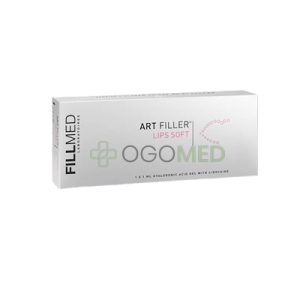
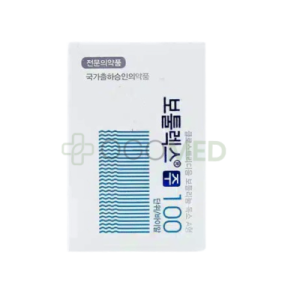
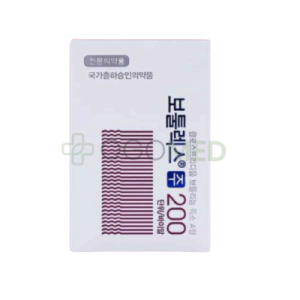
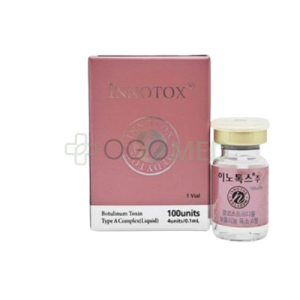
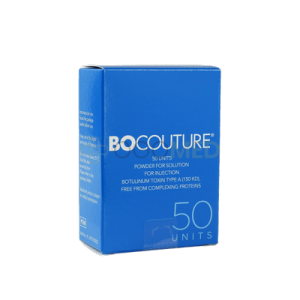
For clinics, consistent results depend on genuine product and accurate reconstitution. Licensed practitioners can order Botox in 50 and 100 Unit vials, or compare other botulinum toxin products, through a verified professional account.
Botox for hooded eyes is worth trying when the problem is a mildly low brow tail and the patient wants a subtle, temporary opening of the eye without surgery. Published measurements suggest a lift of roughly 1 to 5 mm, mostly at the lateral brow, lasting a few months. It is also a sensible way to preview what a higher brow would look like before a surgical brow lift.
It is the wrong tool for excess eyelid skin, for a true drooping eyelid or for patients who rely on their forehead muscle to keep their eyes open. Those patients need blepharoplasty, a surgical brow lift, ptosis repair or, for some adults with acquired ptosis, prescription oxymetazoline drops. An honest assessment of which structure is causing the hood is what separates a good result from heavier eyes.
Last updated: November 2026.
Sometimes, if the hood comes mainly from a low outer brow. Botox relaxes the muscles that pull the brow tail down, so it rises a few millimeters and shows more upper lid. In one study the lateral brow rose an average of 4.83 mm. Botox cannot remove excess eyelid skin or lift a drooping eyelid margin; those need blepharoplasty or ptosis repair.
Yes. Many people with hooded eyes hold their brows up with the forehead muscle all day. If that muscle is over-treated, the brows drop and the hood looks heavier. In the FDA forehead line trials for Botox Cosmetic, brow ptosis occurred in 2% and eyelid ptosis in 2% of treated subjects. Careful dosing and leaving enough frontalis activity reduce this risk.
No. A truly drooping eyelid is caused by a stretched or weak levator muscle, and Botox only weakens muscles, so it cannot raise the lid. Toxin that spreads toward the levator can actually cause temporary eyelid ptosis. Acquired ptosis in adults is treated with surgery or, for some patients, oxymetazoline 0.1% drops (Upneeq), FDA approved in 2020.
There is no FDA-labeled dose, because brow lifting is an off-label use. Published studies used about 6 to 10 units per side in the upper-outer orbicularis oculi for a lateral brow lift, and 20 units in the corrugator and procerus for the inner brow. The treating injector sets the actual dose after examining muscle strength, brow shape and forehead activity.
It depends on the cause. If lifting the brow by hand clears the hood, a brow lift, surgical or with Botox, addresses the real problem. If a fold of skin still hangs over the lashes after the brow is lifted, upper blepharoplasty is needed. Many patients have both brow descent and extra lid skin and benefit from combining the two procedures.
Usually about three to four months. The Botox Cosmetic label gives approximately 3 to 4 months for glabellar lines, and the same muscles around the brow are treated in a brow lift. Weakening begins one to two days after injection and builds over the first week, so the final lift is best judged at about two weeks.