
Content
Orthovisc vs Synvisc is a comparison of two FDA-approved hyaluronic acid (HA) injections for knee osteoarthritis (OA) that differ mainly in how the HA is made and how it is structured. Orthovisc is a non-cross-linked sodium hyaluronate (30 mg in 2 mL) given as 3 or 4 weekly injections; Synvisc is hylan G-F 20, a chemically cross-linked hyaluronan from chicken combs (16 mg in 2 mL) given as 3 weekly injections. Neither product is a steroid, and the only randomized head-to-head trial we found showed no significant difference between them at 12 months.
Both products share the same FDA indication: pain in knee OA in patients who have not responded adequately to conservative non-drug therapy and simple analgesics such as acetaminophen. Both are regulated as medical devices through premarket approval (PMA), not as drugs. The differences that matter in practice are the HA source (which affects allergy screening), the number of clinic visits, the billing code and the single-injection version each brand offers: Synvisc-One for Synvisc, and Monovisc for Orthovisc.
This updated guide compares Orthovisc and Synvisc on composition, molecular weight, dosing, FDA status, side effects, trial evidence and coding. It is written for licensed practitioners and clinic buyers, with plain-language answers for patients who are researching an Orthovisc knee injection.

The table summarizes FDA labeling for each product: the original Orthovisc labeling filed under PMA P030019, the current Sanofi Synvisc prescribing information (revised September 2025) and the Synvisc-One labeling filed under PMA P940015/S012.
| Feature | Orthovisc | Synvisc |
|---|---|---|
| Manufacturer | Anika Therapeutics; distributed in the US by J&J MedTech (DePuy Synthes Mitek) | Genzyme Corporation, a Sanofi company |
| HA type | Sodium hyaluronate, not cross-linked | Hylan G-F 20: hylan A fluid plus hylan B gel, chemically cross-linked |
| HA source | Bacterial fermentation since the 2007 PMA supplement (rooster combs in the 2004 label) | Chicken combs |
| Molecular weight | 1.0 to 2.9 million daltons | Hylan A averages 6 million daltons |
| Dose per injection | 30 mg in 2 mL (15 mg/mL) | 16 mg in 2 mL (8 mg/mL) |
| Injections per course | 3 or 4, one week apart | 3, one week apart (Synvisc-One: 1 x 6 mL, 48 mg) |
| FDA approval | PMA P030019, February 4, 2004 | PMA P940015, August 8, 1997 (Synvisc-One: February 26, 2009) |
| Avian allergy relevance | 2004 label contraindicated it (comb-derived HA); current HA is non-avian | Labeled precaution for allergy to avian proteins, feathers and egg products |
| Common adverse events | Arthralgia 12.6% (saline 17.2%), injection-site pain 2.5%, back pain, headache | Pain, swelling and effusion in the injected knee |
| Duration evidence | Final follow-up at week 27/28 in pivotal studies; 52 weeks in one head-to-head trial | 26 weeks in its longest controlled trials; benefit beyond 26 weeks “not known” per label |
| HCPCS code | J7324, per dose | J7325, per 1 mg (Synvisc and Synvisc-One) |
Two points are easy to misread. First, Orthovisc carries more HA per syringe (30 mg versus 16 mg), but Synvisc’s hylan is cross-linked and much larger, which makes it more elastic; milligrams are not directly comparable between the two. Second, an earlier version of this page said Synvisc may need up to five injections and Orthovisc three to five. Both statements were wrong: Synvisc is labeled for three injections and Orthovisc for three or four.
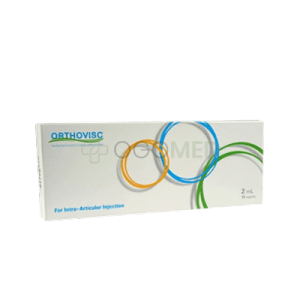
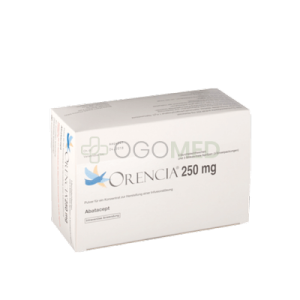
Orthovisc (full device name: Orthovisc High Molecular Weight Hyaluronan) is a sterile solution of sodium hyaluronate in physiological saline. The FDA lists its generic name as intra-articular hyaluronic acid. Each 2 mL syringe contains 30 mg of hyaluronan and 18 mg of sodium chloride, with no synthetic additives, according to the PMA labeling. The HA is not cross-linked, so Orthovisc is a viscous solution rather than a gel.
The source of the HA has caused confusion for years, and it explains why different documents disagree. The 2004 labeling states that the hyaluronan was extracted from rooster combs and lists avian allergy as a contraindication. In October 2007, however, the FDA approved PMA supplement P030019/S009, which changed the manufacturing process to one that produces sodium hyaluronate from bacterial fermentation. A 2022 supplement (S027) added an alternate supplier of fermented HA raw material for Orthovisc and Monovisc, and Anika currently describes Orthovisc as derived from bacterial fermentation. Articles that call Orthovisc “rooster comb” HA are therefore describing the original product, not the one supplied today.
The number of injections is the other common question (“is Orthovisc a series of 3?”). The label allows a series of three or four injections one week apart, and it is explicit about shorter courses:
“The effectiveness of a single treatment cycle of less than 3 injections has not been established.” FDA, Orthovisc Labeling (PMA P030019)
The same label notes that pain relief may not be seen until after the third injection, that joint effusion should be removed before injecting, and that patients should avoid strenuous activity or more than an hour of weight-bearing for 48 hours afterwards. Licensed buyers can order Orthovisc through a verified OGOmed account.
 Orthopedics products
17 products available
Explore our Orthopedics products collection and browse available products.
View category
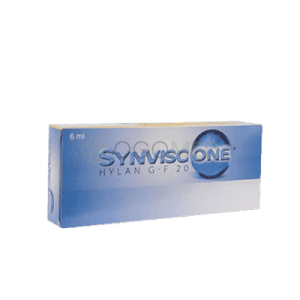
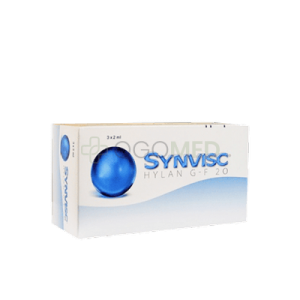
Synvisc is hylan G-F 20, which its prescribing information describes as an elastoviscous high molecular weight fluid containing hylan A and hylan B polymers produced from chicken combs. In hylan G-F 20 the hyaluronan is chemically cross-linked; the Synvisc-One labeling gives the average molecular weight of hylan A as 6,000,000 daltons, several times higher than Orthovisc. So yes, Synvisc is made from rooster (chicken) combs, and that is the reason for its avian precaution:
“Use caution when injecting SYNVISC® into patients who are allergic to avian proteins, feathers, and egg products.” Sanofi, Synvisc Prescribing Information (rev. 09/2025)
In the US this is a precaution, not a contraindication; the only hypersensitivity contraindication on the Synvisc label is known allergy to hyaluronan preparations. Each Synvisc syringe holds 2 mL (16 mg), and the label states that the effectiveness of a course of fewer than three injections has not been established.
The difference between Synvisc and Synvisc-One is packaging, not chemistry. Synvisc-One puts the full three-injection course (48 mg in 6 mL) into one syringe and was approved as a PMA supplement in February 2009. Both are billed under J7325. Our article on Synvisc-One pros and cons covers the single-injection version in more detail.
No. Orthovisc contains only sodium hyaluronate in saline, a substance that occurs naturally in synovial fluid, and it is approved as a device rather than as a drug. The same is true of Synvisc. Neither product contains a corticosteroid, which is why HA injections are sometimes considered when repeated steroid injections are undesirable.
The confusion likely comes from Cingal, a separate Anika product that combines cross-linked HA with the steroid triamcinolone hexacetonide. In a 368-patient trial published in Cartilage (2018), Cingal relieved pain faster than HA alone at 1 and 3 weeks, while results were similar from 6 weeks onward. Cingal is a different product with a different regulatory status and should not be confused with Orthovisc.
Head-to-head. The only randomized comparison we found in PubMed is a Turkish trial published in Clinical and Experimental Rheumatology (2005). It randomized 92 patients (184 knees) with Kellgren-Lawrence grade III knee OA to three weekly injections of either hylan G-F 20 or Orthovisc. Both groups improved substantially on the HSS knee score over 52 weeks, with no statistically significant difference between them and no complications reported. The trial was small and single-center, so it cannot exclude a modest difference, but it does not support claims that one brand is clearly better.
Orthovisc. The first saline-controlled trial (Clinical Orthopaedics and Related Research, 2001) enrolled 226 patients given three weekly 30 mg injections; 58% of the HA group achieved a defined pain improvement over weeks 7 to 27 versus 40% with saline, in a subgroup with limited pain in the other knee. A second trial in The Journal of Rheumatology (2005) compared four injections, three injections plus arthrocentesis, and arthrocentesis alone in 372 patients; the primary endpoint approached but did not reach significance. The FDA label is candid that neither study was significant on its own primary analysis, and approval rested on a combined analysis of patients with grade II or III OA.
Synvisc. Two German saline-controlled trials of three weekly injections showed significantly greater improvement than saline over 26 weeks, with the most relief at 8 to 12 weeks. The label is careful about duration:
“Since investigators did not follow patients beyond week 26, the duration of pain relief beyond 26 weeks is not known.” Sanofi, Synvisc Prescribing Information (rev. 09/2025)
A 2021 review of US-approved HA products in Cartilage concluded that hylan G-F 20 is the most extensively studied preparation, with consistent placebo-controlled efficacy, while placebo-controlled results for Orthovisc were less consistent. The authors reported personal fees from Sanofi, Synvisc’s manufacturer, which readers should weigh. At the guideline level, the AAOS 2021 knee OA guideline does not recommend routine HA injections for symptomatic knee OA, and its advice applies to the whole product class rather than to either brand.
Most reactions to either product are local and short-lived. In Orthovisc’s integrated safety analysis of 562 treated patients, arthralgia occurred in 12.6% (17.2% with saline), injection-site pain in 2.5% (2.0% with saline), and back pain and headache were reported at similar or lower rates than in the control groups. The label also warns that transient increases in inflammation have been reported in some patients with inflammatory OA.
For Synvisc, the most commonly reported events are pain, swelling and effusion in the injected knee. Across seven clinical trials, knee pain or swelling followed 2.2% of injections; during a second course of treatment the rate rose to 6.3% of injections. The label also describes acute inflammatory reactions with sterile, crystal-free synovial fluid, often called pseudoseptic reactions, which usually settle within a few days. Rare systemic events include rash, itching and, in post-marketing reports, thrombocytopenia.
Practical screening points for both products: avoid injecting a knee with infection or skin disease at the site, avoid quaternary ammonium disinfectants (HA can precipitate), and ask about allergies. For Synvisc, ask specifically about eggs, feathers and poultry. For Orthovisc, the avian contraindication in the 2004 label reflects the original comb-derived raw material; Monovisc, made from the same fermented HA, instead lists hypersensitivity to gram-positive bacterial proteins, so the current Orthovisc package insert should be checked for the exact wording. Our Durolane vs Synvisc comparison covers pseudoseptic reactions and another non-avian option in more depth.
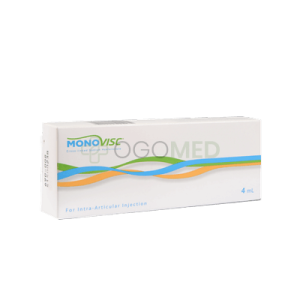
Monovisc is also made by Anika and uses the same grade and specification of fermented HA as Orthovisc, but cross-linked and concentrated into a single 4 mL injection (88 mg, about 22 mg/mL). According to its FDA labeling (PMA P090031, approved February 2014), one Monovisc injection delivers a dose equivalent to three Orthovisc injections and was shown to be non-inferior to the three-injection Orthovisc groups, though not to the four-injection regimen. In other words, Monovisc is to Orthovisc roughly what Synvisc-One is to Synvisc. Clinics weighing single-shot options can read our Monovisc vs Synvisc comparison.
There is no single Orthovisc injection price. What a clinic or patient pays depends on the acquisition cost, the payer, the administration fee and any imaging guidance. The standardized part is coding: Orthovisc is billed under HCPCS J7324 (per dose), Synvisc and Synvisc-One under J7325 (per 1 mg, so 16 units per Synvisc syringe or 48 units for Synvisc-One), and Monovisc under J7327 (per dose). Because Orthovisc may need four visits and Synvisc three, the total cost of a course also includes the extra administration visit. Payer rules such as step therapy or preferred-brand lists often decide which product is cheaper for a given patient.
On current evidence, neither Orthovisc nor Synvisc has proven superiority over the other: the one head-to-head trial found similar results at 12 months, and both are covered by the same cautious guideline statements. Orthovisc suits patients for whom a non-avian product is preferable, or clinics already set up for a three- or four-injection series. Synvisc has the larger evidence base and a single-injection version in Synvisc-One, but it requires caution in patients allergic to eggs, feathers or poultry. If one visit matters most, the realistic comparison is Monovisc versus Synvisc-One rather than Orthovisc versus Synvisc.
Whichever product is used, it should be part of a broader OA plan that includes exercise, weight management and analgesics, with expectations set by the trial data above. Viscosupplements are prescription devices and should be administered only by trained healthcare professionals.
Last updated: November 2026.
Orthovisc is non-cross-linked sodium hyaluronate, 30 mg in 2 mL, given as 3 or 4 weekly knee injections and now made by bacterial fermentation. Synvisc is hylan G-F 20, a cross-linked hyaluronan from chicken combs, 16 mg in 2 mL, given as 3 weekly injections. Both are FDA-approved devices for knee osteoarthritis pain, and a small head-to-head trial found no significant difference at 12 months.
No. Orthovisc contains only sodium hyaluronate dissolved in saline, a substance naturally present in joint fluid, and the FDA regulates it as a device, not a drug. It contains no corticosteroid. Anika’s separate product Cingal combines hyaluronic acid with the steroid triamcinolone hexacetonide, which is a common source of confusion, but Orthovisc itself is steroid-free.
Usually 3, sometimes 4. The FDA labeling describes a series of intra-articular injections one week apart for a total of three or four injections, and states that the effectiveness of fewer than 3 injections has not been established. Pain relief may not be noticeable until after the third injection. The exact number is decided by the treating clinician.
Yes. The Synvisc prescribing information describes hylan G-F 20 as containing hylan A and hylan B polymers produced from chicken combs. For that reason the US label advises caution in patients allergic to avian proteins, feathers or egg products. Orthovisc was also comb-derived when first approved in 2004, but the FDA approved a switch to bacterial fermentation in 2007.
Most are mild and local. In the integrated safety analysis of 562 Orthovisc patients, arthralgia occurred in 12.6% versus 17.2% with saline, and injection-site pain in 2.5% versus 2.0%. Back pain and headache were also reported at rates similar to the control groups. Transient pain or swelling after injection can occur, and patients should avoid strenuous activity for about 48 hours.
There is no good evidence that one lasts longer. In the only randomized head-to-head trial, both three-injection courses improved knee scores over 52 weeks with no significant difference. Synvisc’s label notes that patients were not followed beyond 26 weeks, so longer relief is not established, and Orthovisc’s pivotal studies ended at week 27/28. Individual response varies widely.