
Content
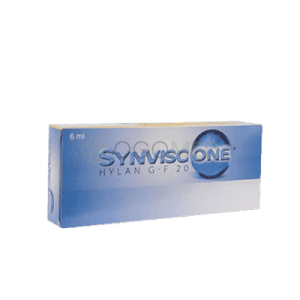
Synvisc-One is a single 6 mL knee injection of hylan G-F 20, a cross-linked hyaluronic acid derivative made from chicken combs, and its main pros and cons are easy to state: one office visit and FDA approval backed by a placebo-controlled trial on one side; a modest average benefit, temporary results, avian sourcing and occasional painful post-injection flares on the other. It is a prescription medical device, not a drug or a steroid, and it does not rebuild cartilage.
Synvisc-One was approved by the FDA in February 2009 for pain from knee osteoarthritis (OA) in patients who have not done well enough with exercise, weight loss and simple painkillers. It contains exactly the same material and total dose as a full three-injection course of the original Synvisc, delivered in one syringe.
This article covers what is in the Synvisc injection, how it is given, what the pivotal trial showed, a side-by-side table of Synvisc-One pros and cons, side effects, repeat dosing and cost, and which patients are reasonable candidates. It is written for licensed practitioners and clinic buyers, with plain-language notes for patients.

Synvisc-One (hylan G-F 20) is made by Genzyme, a Sanofi company. The current US prescribing information (revised September 2025) describes it as an elastoviscous, high molecular weight fluid containing hylan A and hylan B polymers produced from chicken combs, in which the hyaluronan is chemically cross-linked. That is why patients sometimes call it the “chicken shot for the knee” or ask whether Synvisc is made from rooster comb: the hyaluronan source is avian, although the finished product is a purified, modified gel.
Hyaluronan is a natural component of healthy synovial fluid, where it helps lubricate the joint and absorb load. In osteoarthritis the concentration and molecular weight of joint hyaluronan fall. Viscosupplementation tries to restore some of those properties; the exact mechanism behind the pain relief is still debated, and the effect is symptomatic rather than disease-modifying.
The single-syringe format is the defining feature. The label states:
“Each 10 mL syringe of SYNVISC-ONE® combines the three 2 mL doses (16 mg each) of a complete SYNVISC treatment regimen (48 mg).” Sanofi, Synvisc-One Prescribing Information
FDA indication. Synvisc-One is indicated for the treatment of pain in osteoarthritis of the knee in patients who have failed to respond adequately to conservative non-drug therapy and simple analgesics such as acetaminophen. The FDA record for PMA P940015/S012 shows a decision date of February 26, 2009. Because it is regulated as a Class III device, not a drug, it has no “dosage” in the pharmaceutical sense: the labeled dose is always the full 6 mL syringe into one knee.
Hip and shoulder. The US label states that safety and efficacy in locations other than the knee have not been established, so using Synvisc-One in the hip or shoulder in the US is off-label.
The Synvisc injection procedure is a standard knee arthrocentesis followed by injection, done in an office setting by a clinician trained in intra-articular injections. According to the label:
Ultrasound guidance is not required by the label but is used by many clinicians to confirm intra-articular placement, since the label warns against injecting outside the joint, into the synovial tissue or capsule. Practical aftercare advice for patients is collected in our article on what to do after a Synvisc injection.
 Orthopedics products
17 products available
Explore our Orthopedics products collection and browse available products.
View category
The approval of Synvisc-One rests on one pivotal trial, published by Chevalier and colleagues in Annals of the Rheumatic Diseases (2010). In 21 centers across six European countries, 253 patients with Kellgren-Lawrence grade II or III knee OA were randomized to a single 6 mL injection of hylan G-F 20 (n=123) or 6 mL of saline (n=130), both after aspiration of the knee, and followed for 26 weeks.
Synvisc-One met its primary endpoint, a greater reduction in WOMAC pain over 26 weeks, and also beat saline on patient and observer global assessments. The size of the effect was small: a between-group difference of 0.15 points on the WOMAC A pain scale (p = 0.047). The authors summarized it as:
“statistically significant, clinically relevant pain relief over 26 weeks, with a modest difference versus placebo.” Chevalier et al., Annals of the Rheumatic Diseases, 2010
The label adds responder data for pain while walking: 71% of Synvisc-One patients were responders at week 18 versus 54% with saline, and 64% versus 50% at week 26. In other words, many patients improve after any knee injection, and Synvisc-One adds a measurable but limited benefit on top of that. Several authors had financial ties to Genzyme, which the paper discloses.
Longer-term observational data exist but are weaker. A retrospective UK series in Knee Surgery and Related Research (2017) followed 82 knees treated with Synvisc-One and found 50% still classed as responders at five years, with 31% going on to arthroplasty. Without a control group, that cannot show the injection delayed surgery.
Professional guidelines look at the hyaluronic acid class as a whole. The AAOS 2021 knee OA guideline does not recommend routine use, while noting it can still be an option for some patients who have failed other treatments. The 2019 ACR/Arthritis Foundation guideline conditionally recommends against it in knee OA, which still allows use through shared decision-making. This is the honest answer to “does Synvisc work”: on average modestly, for some patients meaningfully, and not for everyone.
The table below sets the main advantages against the main drawbacks. Each point is based on the prescribing information or the studies linked above, not on patient testimonials, which cannot separate the product effect from the strong placebo response seen with knee injections.
| Pros | Cons |
|---|---|
| One injection and one visit replace the three weekly visits of classic Synvisc | Average benefit over saline is modest (0.15 points on WOMAC A pain in the pivotal trial) |
| FDA-approved since 2009, with a randomized, double-blind, placebo-controlled pivotal trial | Relief is temporary; the pivotal trial followed patients for 26 weeks, so repeat courses are needed |
| Not a corticosteroid, so an option for patients who want to limit repeated steroid injections | AAOS and ACR guidelines do not support routine use in knee OA |
| Adverse event rate similar to saline in the pivotal trial; no serious injected-knee events reported | Rare acute inflammatory (“pseudoseptic”) reactions with a hot, swollen knee |
| Same total hylan dose (48 mg) as a full 3-injection Synvisc course | Avian-derived: caution in patients allergic to avian proteins, feathers or egg products |
| Repeat injection was tolerated in the open-label phase of the pivotal trial | US label covers the knee only; hip and shoulder use is off-label |
| Widely covered under HCPCS J7325 when payer criteria are met | Coverage often requires failed conservative care and a failed or contraindicated steroid injection |
For most patients the decision turns on three questions: whether one visit matters, whether the patient has a history of avian allergy or prior post-injection flares, and whether the payer will cover it.
In the pivotal trial, the overall rate of adverse events was similar with Synvisc-One and saline (56.9% versus 60.8% of patients, regardless of cause), and injected-knee events of any cause were 35.8% versus 33.8%. The label lists the most commonly reported device-related events as arthralgia, arthritis, arthropathy, injection-site pain and joint effusion. These were mild or moderate and usually settled on their own or with rest, ice, analgesics or aspiration.
Pseudoseptic reactions. The label also describes acute inflammation after injection, with joint pain, swelling, effusion and sometimes warmth or stiffness, in which synovial fluid is sterile and crystal-free. Goldberg and Coutts reviewed these pseudoseptic reactions in Clinical Orthopaedics and Related Research (2004). A large claims analysis of 694,404 hyaluronic acid injections, published in Cartilage (2021) and co-authored by a Sanofi employee, found severe acute reactions rare for all brands and found no clear link to avian sourcing or cross-linking. Infection must still be ruled out before a flare is attributed to the product.
Avian allergy. Because the hyaluronan comes from chicken combs, the label carries a specific precaution:
“Use caution when injecting SYNVISC-ONE® into patients who are allergic to avian proteins, feathers or egg products.” Sanofi, Synvisc-One Prescribing Information
In the US label this is a precaution, not a contraindication. The contraindications are known hypersensitivity to hyaluronan preparations and infection or skin disease at or around the injection site.
Rare systemic events. Post-marketing reports for Synvisc include rash, hives, itching, fever, nausea, headache, dizziness, chills, muscle cramps, peripheral edema and, rarely, thrombocytopenia and serious allergic reactions including anaphylaxis. Cases of skin necrosis after intra-articular hyaluronic acid have also been reported. Weight gain is not listed among the labeled adverse events, so “does Synvisc cause weight gain” has no support in the prescribing information.
How many times can you get Synvisc injections? The label sets no lifetime limit. In the pivotal trial, patients who still had at least mild pain at week 26 were offered an open-label second injection; 77 received it, and 4 of them (5.2%) had mild to moderate device-related knee events. For the 3-injection Synvisc, the label reports that knee reactions were more frequent during a second course (6.3% of injections) than during a single course (2.2%). Medicare contractors such as Palmetto GBA (LCD L39260) cover a repeat series only if at least 6 months have passed and the previous series produced documented improvement.
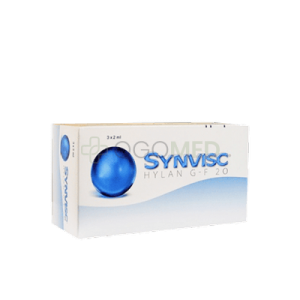
Cost. There is no single Synvisc-One injection cost. The final figure depends on the acquisition price, the payer, the administration and imaging fees, and the patient’s deductible or coinsurance. Synvisc and Synvisc-One are billed under HCPCS J7325 (hylan G-F 20, per 1 mg), so a Synvisc-One syringe is 48 units. Insurance denials usually trace back to documentation: radiographic OA, at least 3 months of failed conservative therapy, and a failed or contraindicated steroid injection. Licensed practices can order Synvisc-One through a verified OGOmed account; the full Synvisc range includes the 3 x 2 mL format.
Synvisc and Synvisc-One contain the same hylan G-F 20 at the same concentration (8 mg/mL). The difference is packaging and schedule: Synvisc is three 2 mL injections (16 mg each) given one week apart, while Synvisc-One delivers the same 48 mg in one 6 mL injection. Both share the same knee OA indication, the same avian precaution and the same J-code. Synvisc-One saves two visits and two needle sticks; the 3-injection regimen gives the clinician two more opportunities to aspirate and reassess the knee, and suits practices and payers already set up for weekly courses.
For comparisons with other brands, see our pilot article on Durolane vs Synvisc, which covers a non-avian single-injection alternative, and Synvisc or Orthovisc for a non-cross-linked option.
Based on the label and the trial population, the typical candidate:
Synvisc-One is not appropriate with a known allergy to hyaluronan products or with infection or skin disease near the injection site. Extra caution applies with avian allergy, severely inflamed knees, lymphatic or venous stasis in the leg, and pregnancy or breastfeeding, where safety has not been established. Safety and effectiveness have not been established in pediatric patients, which the label defines by an age cutoff of 21.
Synvisc-One is a reasonable option for a patient with mild to moderate knee OA who has failed first-line care and values a single visit. Its strengths are convenience, a long US track record and a generally mild safety profile; its weaknesses are a modest average effect, temporary relief, cautious guideline recommendations and an avian source that rules it out for some patients.
Set expectations accordingly: the injection belongs inside a broader OA plan that includes exercise and weight management, and it should be repeated only when the previous course clearly helped. Viscosupplements are prescription devices and should be administered only by trained healthcare professionals.
Last updated: November 2026.
Synvisc-One is FDA-approved to treat pain from osteoarthritis of the knee in patients who have not responded well enough to non-drug measures and simple painkillers such as acetaminophen. It is a single 6 mL intra-articular injection of hylan G-F 20. The US label covers the knee only; use in the hip, shoulder or other joints is off-label.
The pivotal trial measured benefit over 26 weeks, which is the basis for the commonly quoted six months. Some patients get relief for longer and some get little benefit at all. Medicare contractors cover a repeat course only after at least 6 months and only if the previous course produced documented improvement.
The most common are local: knee pain, swelling, warmth and fluid in the joint, usually mild to moderate and short-lived. In the pivotal trial overall adverse event rates were similar to saline. Rarely, an acute inflammatory flare with a hot, swollen knee occurs, and infection must be ruled out. Patients with avian protein, feather or egg allergy need extra caution.
Yes. The hyaluronan in Synvisc and Synvisc-One is produced from chicken combs and then chemically cross-linked into hylan G-F 20. That is why the label advises caution in patients allergic to avian proteins, feathers or egg products, and why non-avian products such as Durolane or Monovisc are sometimes preferred for those patients.
They contain the same hylan G-F 20 at the same 8 mg/mL concentration. Synvisc is given as three 2 mL injections one week apart, while Synvisc-One delivers the same total 48 mg in a single 6 mL injection. Both have the same knee osteoarthritis indication, the same avian precaution and the same billing code, J7325.